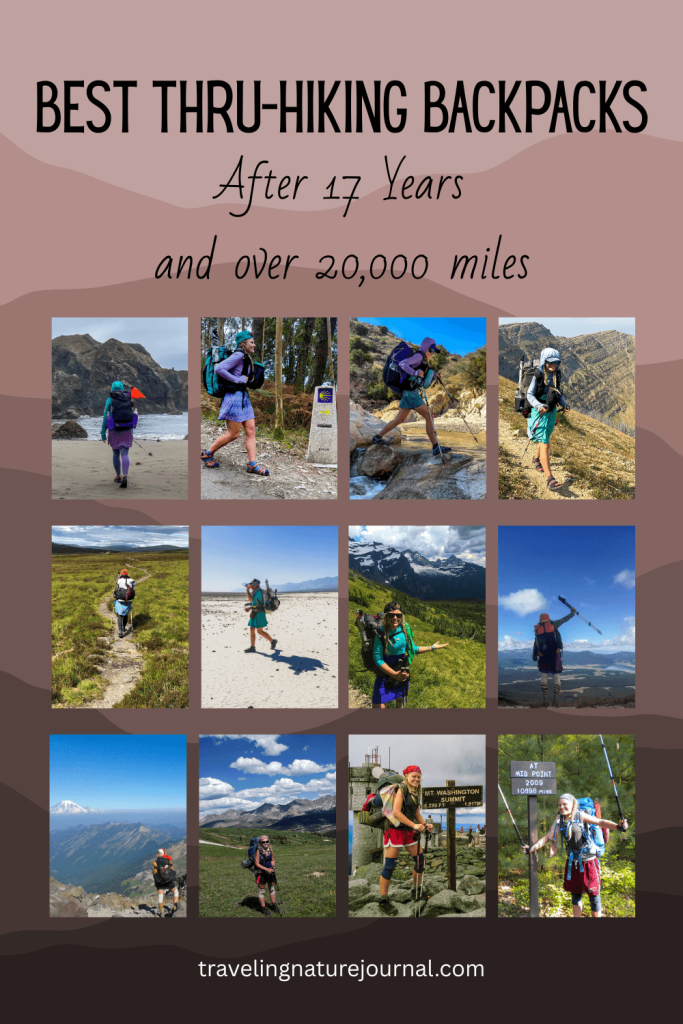
You’ve likely found this post because you’re about to embark on an epic adventure. If you’re ready throw down some miles, you’re in the right place. Let’s dive into all the ins and outs of thru-hiking backpacks.
I’ve hiked over 20,000+ miles, and these are all 13 of the thru-hiking packs I’ve used. I learned early on that a good backpack can really make or break your adventure.
The best thru-hiking backpacks not only fit your body but also your hiking style. And I don’t (fully) mean the color patterns here; rather, if you want to go light and fast, or if you’re more of a chill hard type of thru-hiker.
If you have never thru-hiked before and don’t know you’re style yet, there are backpacks for you here, too. This review post will help new hikers find their footing in the nuances of thru-hiking backpacks AND help seasoned thru-hikers decide if they want to try something new.
This post contains affiliate links. If you purchase anything mentioned, I may earn a small commission at no additional cost to you. It helps me keep my blog running.
List of Contents
How to Pick the Best Thru-Hiking Backpack for YOUR Needs
The world of thru-hiking backpacks has expanded exponentially since I started thru-hiking in 2008. 🎒
It’s amazing to see how many different thru-hiking packs are on the market now…but also fairly daunting to sort through them all. This list is not exha ustive; however, I have put in a lot of miles with these packs.
I’ve changed thru-hiking packs so many times for a few reasons:
- New options have become available as thru-hikers start their own companies.
- I’ve changed my hiking style from hanging out at camp to pushing miles to test what I can do. (Chill hard to light and fast.)
- I’ve needed to increase my water-carrying capacity for desert trails.
Because I’ve shifted what’s important to me, how I’d like to hike, and what I’m comfortable hiking without, my idea of the best thru-hiking backpack shifts.
👉 Therefore, the best thru-hiking backpack is the one that suits YOUR needs for the trail you’re going to thru-hike.
🧐 Before you buy a thru-hiking backpack, the big things you need to consider:
- How much stuff can you hike without (while still being safe)?
- What is the weather overall looking like? If it’s warm, then cold, will you have the capacity to add layers? Is it likely to have a lot of rain or not too much?
- How much water do you need to carry? (Are your side pockets big enough, or does the pack have space for a water bladder?)
⚖️ The smaller things to consider are:
- Are you going ultralight enough to forgo the waistband?
- Do you want to add a front pack? (For a camera or snacks)
- Do you want to carry items on your shoulder straps?
- Will you need to carry a bear canister?
Quick and Dirty Summary
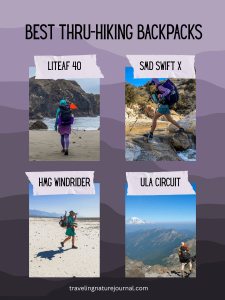
If you don’t want to read all my reviews and just want to know my top 4 picks for the best thru-hiking backpacks, this section is for you. There is a more in-depth analysis within the reviews, as well as at the end.
In no particular order, these are my top 4:
Thru-Hiking Backpacks I’ve Used, Reviewed
For these reviews, I will start with the latest pack I’ve used and work backward in time. That way, some of the newer thru-hiking backpacks are at the forefront.
I’ll also answer the same set of questions so you can compare them. At the end of the review, I’ll give any extra impressions that you should consider.
👉 My BIGGEST criteria for a thru-hiking backpack to be a ✨ worthy pack ✨ is if it can last an entire (large) thru-hike. It’s the absolute WORST when a backpack breaks in the middle of a hike. (Trust me, it’s happened to me several times…see the bottom of this list.)
Last note: It’s helpful to find someone who has a similar hiking style to yours, as well as a comparable physical size. Some packs are more adjustable than others. I also note how well the packs were made in my reviews, if you’re looking for my overall impressions.
Please remember that just because a backpack works amazingly for one person doesn’t mean it will work the same for you. It’s ok if a popular backpack doesn’t fit your body.
LiteAF EcoPak Curve Full Suspension Custom
Weight: 35 oz
Space: 40L
Miles Used: 423
Trails Hiked: Oregon Coast Trail (2025)
Favorite Aspect: The customization options.
Least Favorite Aspect: The hip belt pockets slide more than I’d like, despite the clip-ins.
Customer Service Experience: Fantastic!
Would I Buy Again? YES
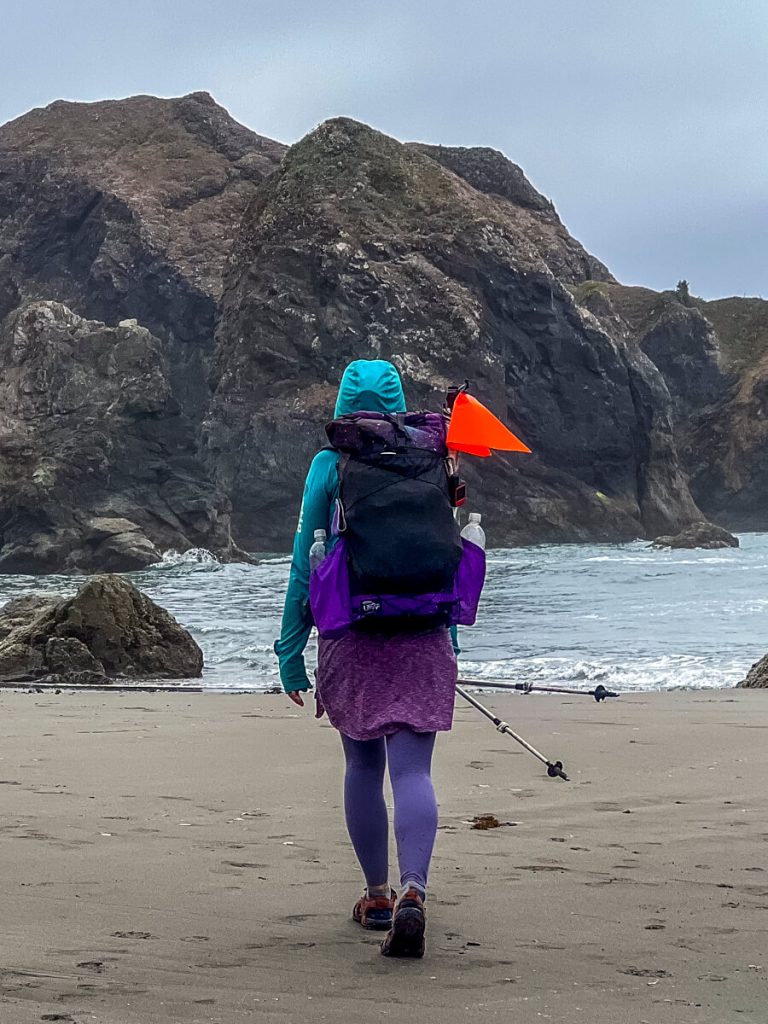
You can buy this pack premade for a less expensive price or you can customize it like crazy.
The pack I went with is WILDLY custom. You start with a base model by liter capacity and type of fabric, then customize it from there.
Available customizations include color patterns by panel, hip belt pockets, shoulder pockets, ice axe loop, type of closure, and more.
Depending on the customizations you make, the weight will differ. For example, I chose the EcoPak fabric option because it’s slightly more sustainable than DCF, but it’s also slightly heavier. I always add the ice ax loop because you never know when you’re on a later trail if you need snow gear mailed to you.
This LiteAF pack was super comfortable and functional on trail. On an overall wet trail, everything stayed dry when I needed it.
As someone who loves a front pack, the shoulder straps allowed me to easily add my camera pack with a few minor adjustments. 📸
I also greatly appreciated the LiteAF customer service. Since I live in a van and travel for work, if I order a custom thru-hiking backpack with a two-month wait time, I’m guessing the address where I can pick it up. I asked in the notes if they could email me before shipping to confirm that it was correct, and they did! They were able to switch the address for me, which was immensely helpful.
Six Moon Designs All Day Carry
Weight: 36 oz for EcoPak (33 for Robic/Ultra Fabric Options)
Space: 35L
Miles Used: 494
Trails Hiked: Portuguese Camino from Lisbon + Finisterre/Muxia Camino
Favorite Aspect: EcoPak Fabric
Least Favorite Aspect: Side water bottle holder options.
Customer Service Experience: Great!
Would I Buy Again? Only for “regular” travel, not thru-hiking
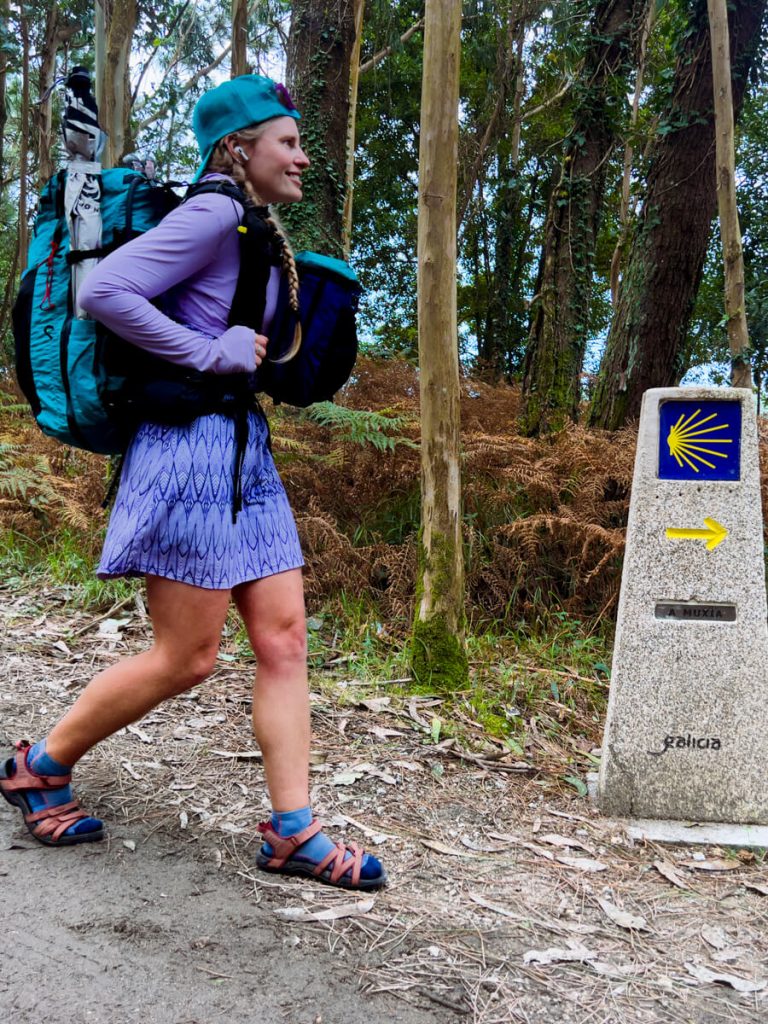
The SMD All Day Carry pack was designed for both the Camino and travel. While I loved it for hostel, hotel, and plane travel, I didn’t like it as a thru-hiking backpack.
✈️ It fits on airplanes as a carry-on easily. All the different compartments are great for separating your items out for easy access, and the ability to stow the hip belt when flying is super handy.
👣 However, as a thru-hiking backpack, even in terms of Camino hiking, it only did so-so. I no longer enjoy water bladders when hiking and prefer side pockets with water bottles instead. This pack only had one side water bottle pocket, and it was too tall to access the water while hiking. Having it only on one side made evenly portioning the pack’s weight a challenge each day.
All in all, if you’re going on a multi-month old-school style backpack trip around Europe and occasionally go backpacking, this one’s not bad. But for a longer Camino hike, I would recommend any of the other thru-hiking backpacks I’ve used instead.
Six Moon Designs Swift X
Weight: 37.9 oz (based on sm hip belt and sm harness)
Space: 50L
Miles Used: 1,800
Trails Hiked: Grand Enchantment Trail, Desert Winter Thru-Hike
Favorite Aspect: The vest harness!!!
Least Favorite Aspect: The lack of an XS hip belt option.
Customer Service Experience: Great!
Would I Buy Again? Yes!
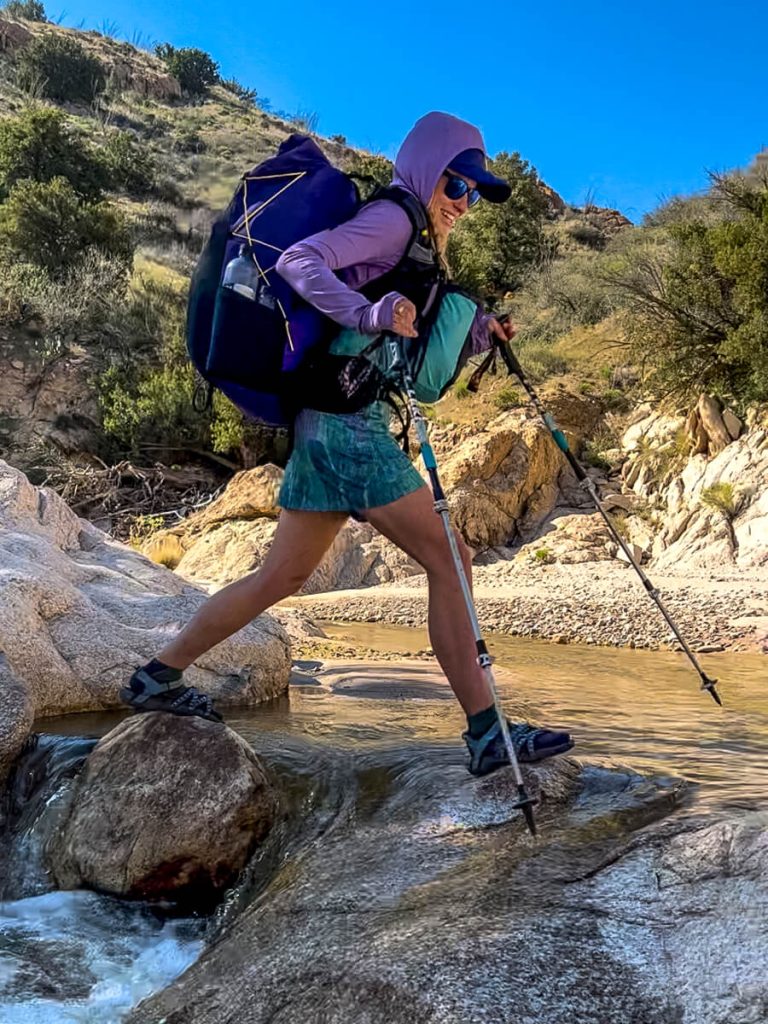
This pack is a thru-hiking backpack through and through. It was designed by thru-hikers for thru-hikers.
At a 50-liter capacity, this pack can carry a 3-day food carry, OR it can carry a 7-day food carry. It can also hold a bear canister if you are forced to have one.
The Swift X backpack was highly adjustable. You can completely remove both the shoulder strap harness AND the hip belt. Thus, if you change size on a long thru-hike, you can just swap that large hip belt for a medium, no problem.
I love the vest harness option because it allows me to have more items easily accessible while walking. The shoulder straps are not wasted space here. You can add flexible water bottles or your phone and your wallet to the straps and have them stay secure.
It was more difficult to add a front camera pack to this harness, though. I managed to add it, but it required some sewing on both my camera case and the shoulder straps to make it happen. 📸
My least favorite part here is a common issue I’ve encountered with most of the thru-hiking backpacks on this list. I’m a small human to begin with, and around the 800-1,000-mile mark on most trails, I need a smaller hip belt than most companies offer. My fix: adding a panel and a half of a Z-Lite pad to the hip belt and attaching it with hair ties.
At the end of the day, I’d use this pack again. It’s still got life in it after two desert routes with a lot of off-trail travel.
I wrote a more detailed post comparing the SMD Swift X and Swift V here for more info.
Six Moon Designs Swift V
Weight: 35.0 oz
Space: 50L
Miles Used: 2700
Trails Hiked: Continental Divide Trail (Nobo)
Favorite Aspect: The vest harness!!!
Least Favorite Aspect: The lack of an XS hip belt option.
Customer Service Experience: Great!
Would I Buy Again? Maybe. I’d probably get the Swift X instead.
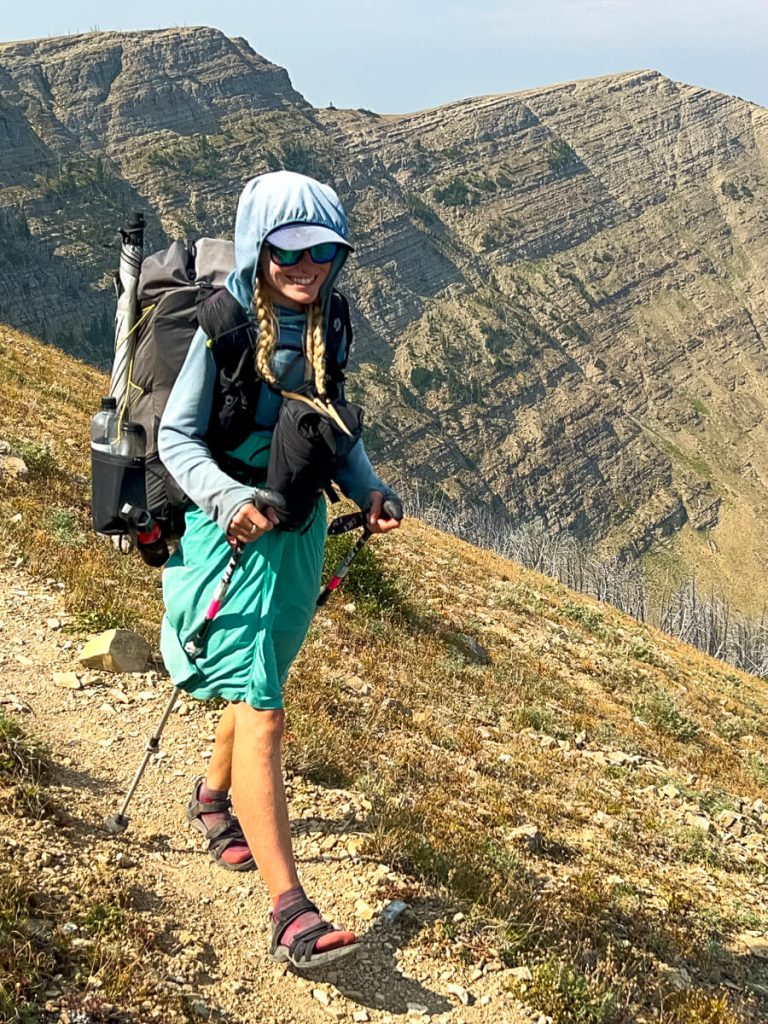
The SMD Swift V backpack handled the CDT well—it made it through the entire trail without breaking.
Just like the Swift X, I could cinch it down on smaller food carry sections, but it could also expand for larger 7-day sections. On the CDT in 2022, Karma and I pushed two different 7-day sections to skip towns we didn’t like, and it could handle the food weight. 🍜 (It was uncomfortable, but any time in any pack that you’re carrying 7 days’ worth of food is uncomfortable.)
My favorite aspect is the same as the Swift X: the vest harness. This was the first pack that fully utilized the space available on the shoulder straps. And honestly, it is now a point of no return for me. I would struggle greatly to adjust to life without shoulder straps that have pockets.
👉 The Swift V is a fantastic budget thru-hiking backpack if you want something legit, but it won’t break the bank.
In that budget, you enter the robic nylon fabric realm. The Swift V performed well for most of the thru-hike, but it has worn out faster than the X-Pac on the Swift X.
All in all, it was a great pack. If I were to buy another SMD pack, I would opt for the Swift X, though.
Hyperlite Mountain Gear Southwest 55
Weight: 29.3 oz
Space: 55L
Miles Used: 1,450
Trails Hiked: Arizona Trail, Scottish National Trail, Some Overnighters
Favorite Aspect: Its water resistance.
Least Favorite Aspect: The internal frame hit the back of my hip bones (it’s removable).
Customer Service Experience: Unknown because I didn’t need it.
Would I Buy Again? Yes.
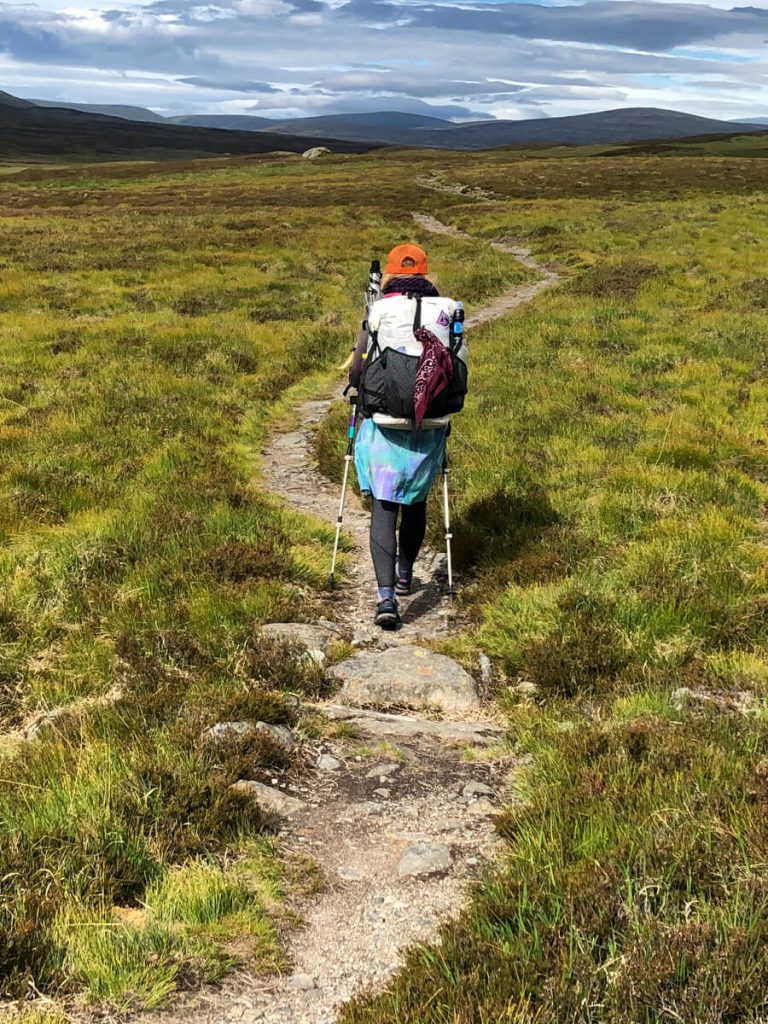
This pack was fantastic and still has life in it.
IMO, Hyperlite Mountain Gear makes fantastic backpacks that are durable and are some of the most water-resistant thru-hiking backpacks out there.
The HMG Southwest is also a very versatile backpack. I took this on a dry, desert thru-hike in the US Southwest AND a very wet trail in Scotland. It does great in both wet and dry conditions. 🌵 🌧️
My only issue is that the internal metal frame (at least between 2017-2019) hit the back of my hip bones. My solution was to remove it and send it home. Personally, it did great without it.
This was my second HMG backpack, and I switched models because I thought the outer back pocket looked cleaner. However, I did notice that it had less flexibility than the Windrider’s back pocket, and I lost smaller items in it because I couldn’t see them as easily. Similarly, the side water bottle pockets did not stretch as much as those of the Windrider.
I’ve never had any significant issues with either pack of theirs that I’ve used, so I’ve never experienced their customer service.
Would I buy an HMG backpack again? YES.
Hyperlite Mountain Gear Windrider 55
Weight: 29.9 oz
Space: 55L
Miles Used: 3,970
Trails Hiked: Hayduke Trail, Camino Primitivo, Oregon Coast Trail (2017), Wonderland Trail, Lowest To Highest Route, Appalachian Trail (Sobo)
Favorite Aspect: Its water-resistance.
Least Favorite Aspect: The internal frame hit the back of my hip bones (it’s removable).
Customer Service Experience: Unknown because I didn’t need it.
Would I Buy Again? YES
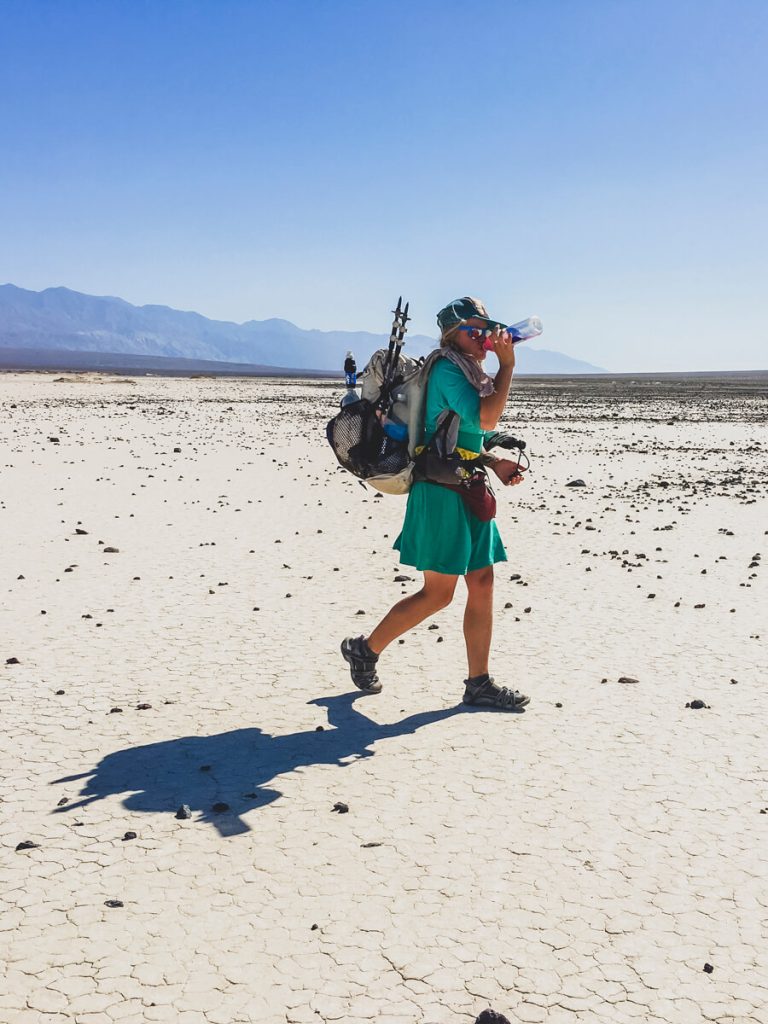
I LOVED this thru-hiking backpack and used it until it died. It put in some miles!
As you can see by the variety of trails it hiked, it can cover just about any trail you’re going to hike. The Hayduke Trail was very rough on it; we passed packs many times climbing in and out of canyons and bushwhacking through tamarisks.
By the end of the Appalachian Trail, its water-resistant abilities had diminished, and the pack was ready for retirement.
I found this outer mesh to be a more functional outer pocket than the Southwest version. However, it looks a little messier. As a side pocket mesh, it was also stretchier, which allowed us to carry more water on the sides than the fabric side pockets on the Southwest. It’s a give and take.
The internal frame can be removed to become a frameless backpack if needed. I eventually found that I had to do this; however, the pack still worked fantastically.
This thru-hiking backpack can really do it all, and I loved it.
If you want to go a smidge lighter and you carry less, definitely consider the 40L version as well.
I would 100% rebuy the HMG Windrider.
Mountain Laurel Designs Exodus
Weight: 18 oz
Space: 55L
Miles Used: 1,200
Trails Hiked: Pacific Northwest Trail
Favorite Aspect: How lightweight it is.
Least Favorite Aspect: Almost everything else.
Customer Service Experience: Unknown because I didn’t need it.
Would I Buy Again? No.
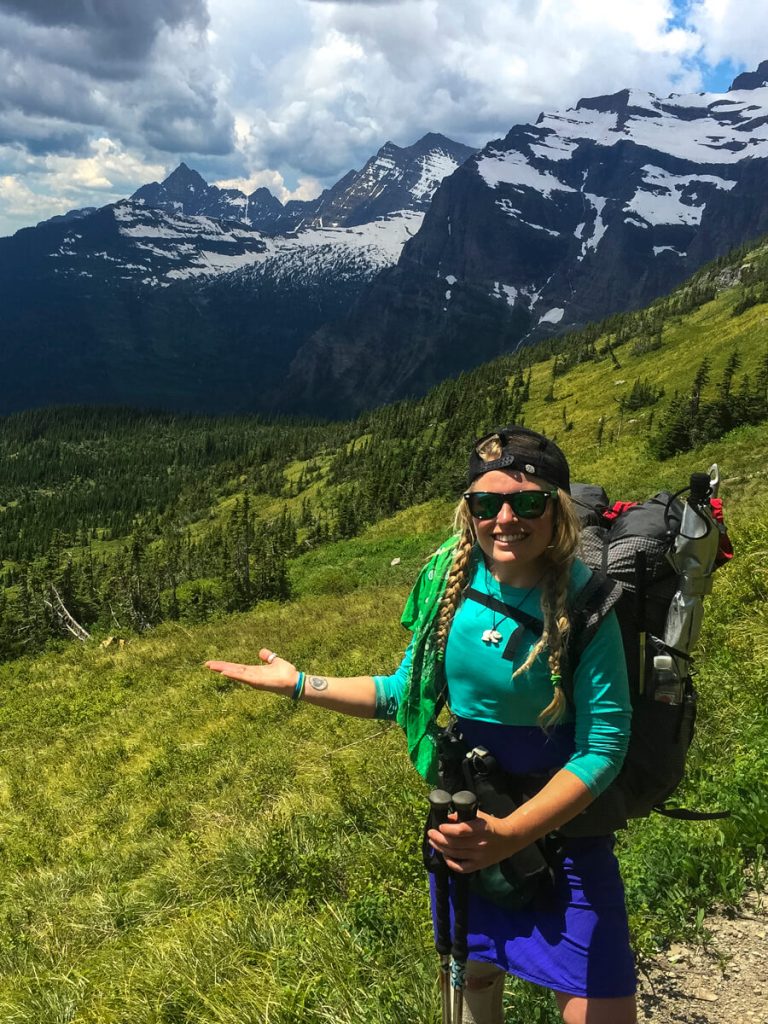
The pack, as I had it in 2016, does not exist on their current website. It appears to have undergone a redesign since then, including a material change.
I thought this thru-hiking backpack was well-made while I used it; however, it did not fit my body well.
I used this at the height of my most ultralight thru-hiking. I wanted to really push my comfort boundaries on the PNT by taking less. I stayed under the weight restrictions of the pack. While I felt comfortable with less gear, the pack really only felt good with 3 days of food or less.
Likewise, while it can hold a bear canister upright, it doesn’t do it well.
Moreover, it was a short and squat backpack that was wider than me when packed. On a trail with a decent amount of bushwhacking, I found this quite frustrating at times.
Because it’s a frameless pack, you also need to pack it carefully so that it rests comfortably on your back. Even packing my pack the same way every morning, I had to make multiple adjustments per day to make it feel good.
Who is this pack good for? IMO, this pack is excellent for those looking to go very ultralight and simultaneously not have any large food carries.
Would I buy it again? No.
ULA Epic
Weight: Approx. 40oz
Space: Variable
Miles Used: 2700
Trails Hiked: Continental Divide Trail (Sobo)
Favorite Aspect: Waterproof!
Least Favorite Aspect: The outer pocket.
Customer Service Experience: Unknown because I didn’t need it. I’ve heard good things, though.
Would I Buy Again? Maybe
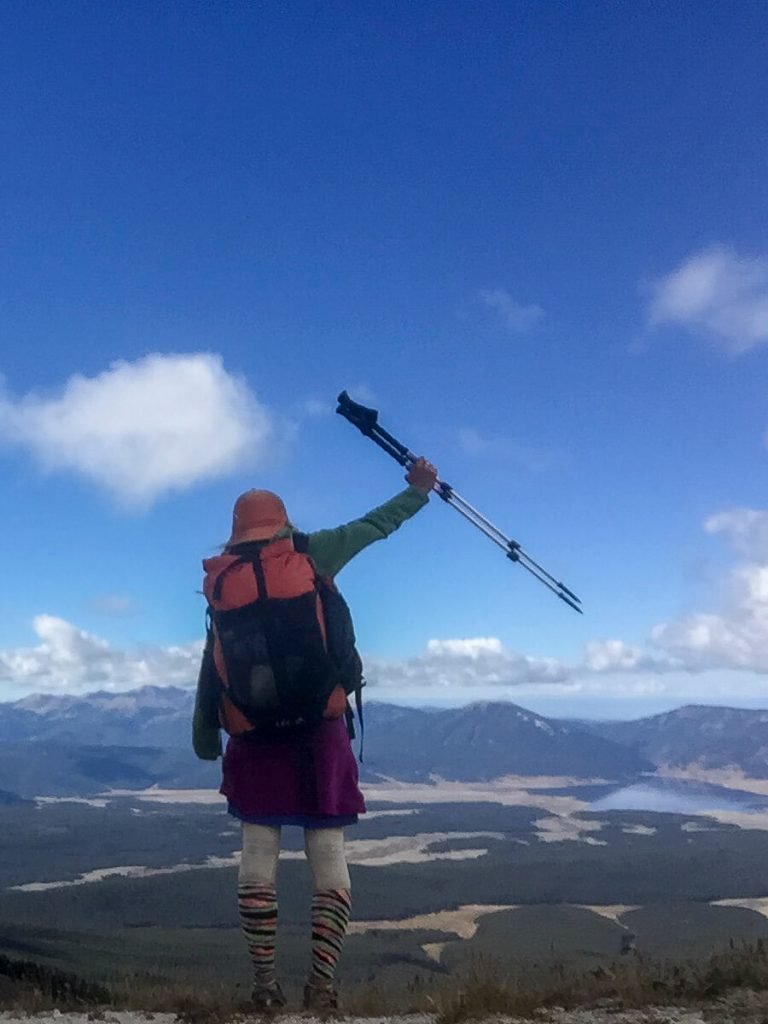
This pack doesn’t exist on the ULA website anymore.
The ULA Epic was not a typical thru-hiking backpack. It was designed for packrafting. It’s essentially the same shoulder strap harness and hip belt system as the ULA Circuit. However, the main body of the backpack is a dry bag. Therefore, the liter capacity of this pack depends on which dry bag you stick in it!
So why did I hike the whole CDT with it? Because the best piece of advice I got for hiking the CDT Sobo was from Slam, who said, “Be prepared to be cold and wet.”
Therefore, what’s better for keeping your key items waterproof than a backpack meant to be strapped to a raft going down a river???
This pack was exactly what I needed…in 2015. It was pre-HMG and cuben fiber (now DCF fabric). It worked. My stuff stayed dry the entire time.
My least favorite aspect was the zippered outer mesh pocket. It held only a few items. I just wanted it to be bigger.
The harness and hip belt system is actually still good enough to use again, although if I do, I’d replace the dry bag after each thru-hike.
Would I buy it again? Maybe. As a thru-hiking backpack, there are lighter options available now that are more versatile. If I wanted to get into packrafting, I’d probably rebuy this.
ULA Circuit
Weight: 38.5 oz
Space: 68L
Miles Used: 2660
Trails Hiked: Pacific Crest Trail, some overnighters.
Favorite Aspect: The outer back pocket.
Least Favorite Aspect: N/A
Customer Service Experience: Unknown because I didn’t need it. I’ve heard good things, though.
Would I Buy Again? Yes
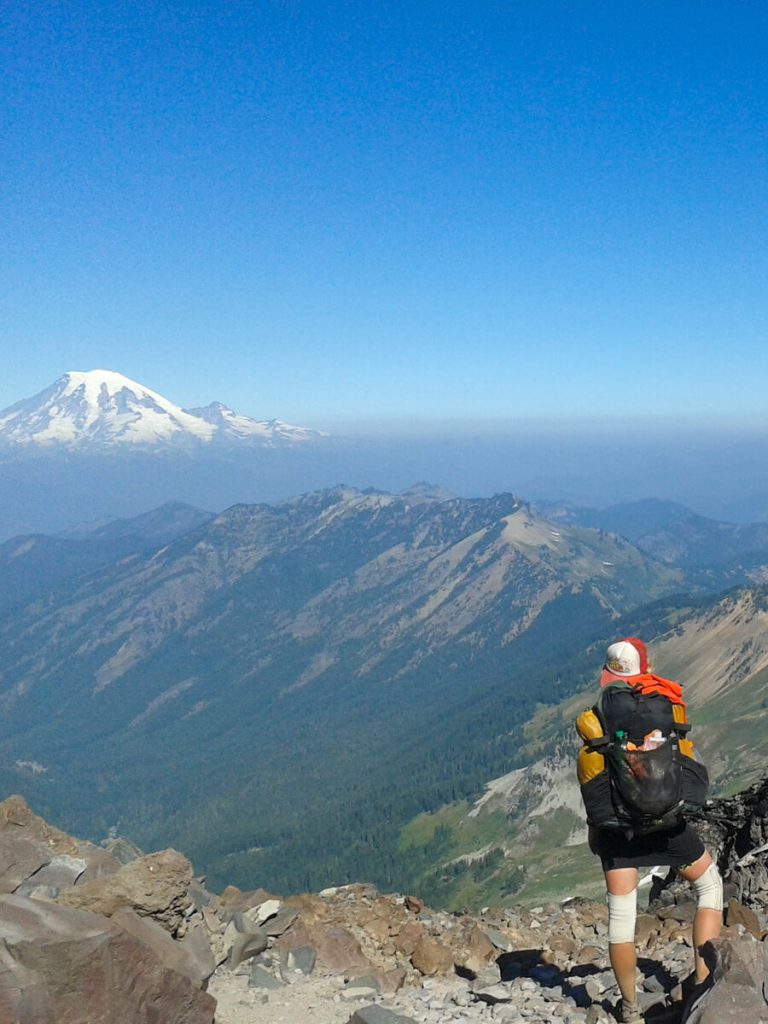
The ULA Circuit was a fairly revolutionary pack back in 2010-2012, and it’s still a mainstay as a solid thru-hiking backpack.
It broke the mold of internal-framed backpacks because it significantly reduced weight (see the weight of the following four packs that I used before this one 😬). By making the main body of the backpack one giant pocket, it eliminated a lot of excess fabric and zippers. To counteract the lack of extra pockets, it had an outer back pocket to make items more easily accessible.
For me, it was the first backpack that lasted the entire length of my thru-hike. That became the standard that I’ve since used to determine whether a thru-hiking backpack is worthy or not.
It performed well in the desert, held a bear canister in the Sierra, and did well in the Washington rain (with a pack cover).
Would I buy the ULA Circuit again? Yes, but it might not be my first choice. If you’re on the budget side, this is a solid choice.
Gregory Deva 80
Weight: 5 lbs 3.5 oz 😱
Space: 80L
Miles Used: 400
Trails Hiked: Colorado Trail (part)
Favorite Aspect: Hip Belt
Least Favorite Aspect: Everything else
Customer Service Experience: Unpleasant
Would I Buy Again? No
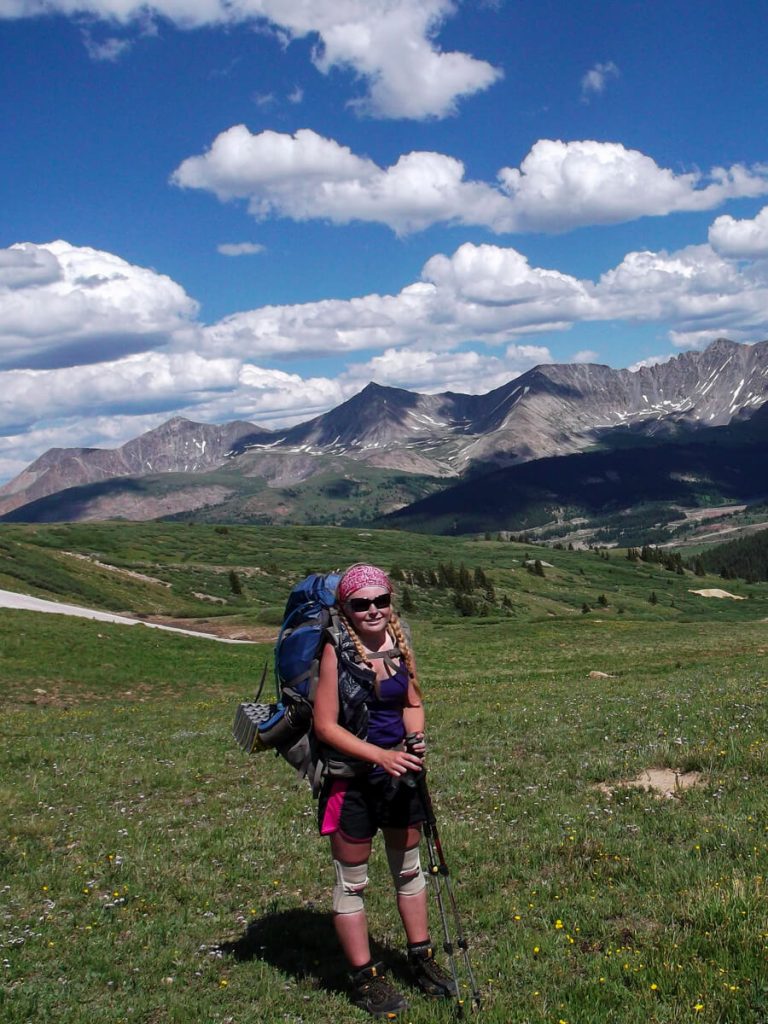
This was never meant to be a thru-hiking backpack. I used it on a NOLS semester course in New Zealand. It’s massive and HEAVY.
It was also essentially my backup backpack in 2011.
When my first Gregory backpack broke for the third time, I had this one overnight shipped to me so I could continue hiking while I sent the other pack to get fixed (again).
I pulled off every possible extra part. I took the brain off (the top part of the pack) and removed any straps that I could to lessen its weight.
Basically, the only reason I used it on a thru-hike is because my other one broke, and I didn’t want to buy another yet.
Two of the zippers broke while I was finishing the Colorado Trail, and that’s when I decided to stop using Gregory backpacks altogether.
I don’t recommend this for a thru-hike.
Osprey Ariel
Weight: 4 lbs 12.3 oz 😨
Space: 55L
Miles Used: 550
Trails Hiked: Part of the Appalachian Trail (Nobo)
Favorite Aspect: Customer Service
Least Favorite Aspect: Overall Fit.
Customer Service Experience: Excellent!
Would I Buy Again? No
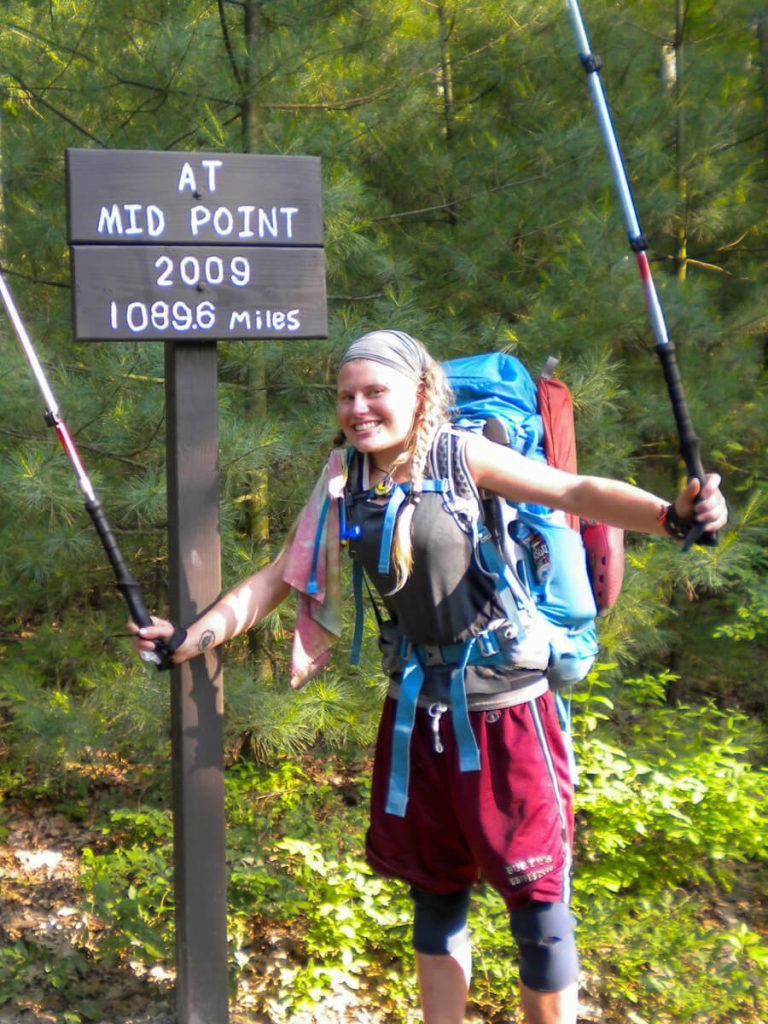
I had a challenging time with thru-hiking backpacks on the Appalachian Trail. This was the third backpack I used on my 2010 Nobo thru-hike.
The customer service experience in getting to this pack was great. They were very understanding and willing to work with me.
I used this after the first Osprey backpack wore blisters into my back. Then, I used it until my first Gregory backpack was fixed (which took about 6 weeks 🙄).
The Osprey Ariel backpack worked well enough. It did not rub blisters into my lower back. However, it still did not fit my body well. It felt like I was borrowing someone else’s backpack for a trip that worked well enough but was never meant for me.
Overall, most Osprey packs are on the heavier side for thru-hiking and thus, are less ideal. In 2010, they were one of the better options on the market that were readily available.
They’re durable, still readily available, and a great starter backpack if they fit your body. It just wasn’t for me. I sold it to a friend to use for hostel hopping.
Osprey Aura
Weight: 4 lbs 7.4 oz 😬
Space: 65L
Miles Used: 750
Trails Hiked: Part of the Appalachian Trail (Nobo)
Favorite Aspect: Customer Service
Least Favorite Aspect: The lower back padding.
Customer Service Experience: Excellent!
Would I Buy Again? No
I bought this pack because my first Gregory backpack broke for the second time. It was available in Hot Springs, North Carolina, where I got to with the broken Gregory, so I gave it a chance.
However, it just did not fit my body well. This particular backpack featured a ridged foam piece with a tight mesh covering it, where it rests on your lower back. That piece rubbed a massive blister-wound into my lower back, no matter how I adjusted it.
By the time I got to Harper’s Ferry, it was getting bad. I had shoved my entire fleece around the blistered spot to keep the pack off my back.
When I described my problem to the gear shop employee, he called Osprey and got a return authorization to swap it for any Osprey in the store.
While I got it because it was available, I felt confident trying the Osprey Aura because it was quite popular at the time.
The pack itself was durable, easy to pack, and it was great for the time (2010). I don’t even have any halfway decent photos of me in it. I took it off for all the photos in this section of the AT (probably because it hurt).
Moral of the story: Just because a backpack works amazingly for one person doesn’t mean it will work the same for you. It’s ok if a popular backpack doesn’t fit your body.
Gregory Deva 60
Weight: 4 lbs 10.2 oz 🫣
Space: 60L
Miles Used: 2080
Trails Hiked: Camino frances, Camino del Norte, Part of the Appalachian Trail (Nobo)
Favorite Aspect: Hip Belt
Least Favorite Aspect: How often it broke.
Customer Service Experience: Unpleasant
Would I Buy Again? No
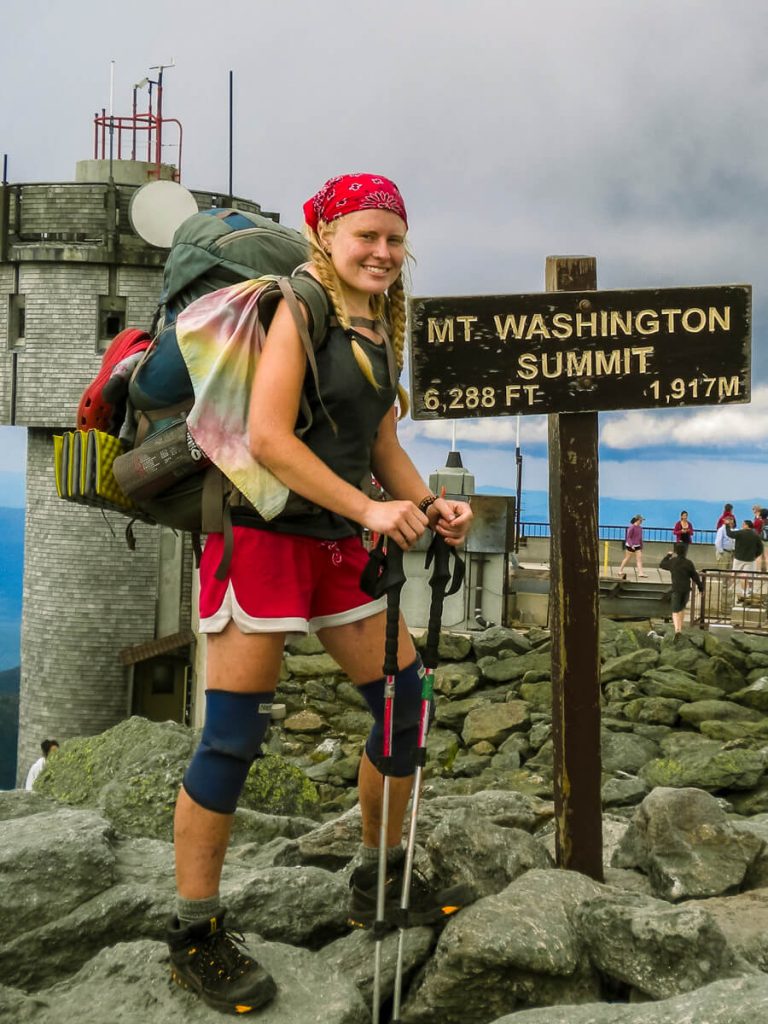
This backpack has a saga for me. I’ll condense it down for you, but my main point is that I would NOT recommend this for thru-hiking.
I kept trying to make this pack work because it actually fit my body well despite how heavy it was. As a whole, I find most thru-hiking backpacks to have uncomfortable hip belts (especially around mile 900 of using them), and this hip belt was awesome.
Let’s keep in mind that I used this backpack between 2008 and 2011, and there weren’t many options available back then—especially for women.
The internal frame support broke the first time toward the end of the Camino frances, and I brought it back to where I got it (Eastern Mountain Sports). They initiated the six-week fix-it period, and I got it back later.
The second time it broke was on the Appalachian Trail. Some random overnighter dudes at the shelter helped me jerry-rig fix the frame support with some safety pins and a stove. I sent it off to Gregory to fix in the next town.
For round three, it broke just before Breckenridge on the Colorado Trail. I zeroed in Breck while my Mom dutifully overnighted my backup backpack.
This time, they sent me a new one. I’m not one for baseball, but three strikes is OUT. I sold it on Craigslist.
There are way too many better thru-hiking backpack options available now to use Gregory backpacks for thru-hiking.
The Best Thru-Hiking Backpacks (Ones That I’d Buy Again)
In no particular order, I would buy another thru-hiking backpack from:
My favorite models that I’ve used from those companies are:
These four companies have made great products that are durable. They’re all also designed for thru-hikers by thru-hikers. This makes a huge difference. While backpacking and thru-hiking overlap, thru-hiking needs more durability to last the long haul.
If you’re looking on a budget, a good thru-hiking backpack will be just under $300. Based on my experience, I would recommend either the SMD Swift V or the ULA Circuit. Those are great backpacks without going into the higher price ranges.
Noticeably absent from this list is Gossamer Gear. That’s not intentional. While their backpacks intrigue me, I’ve always felt more drawn to other packs when it comes down to actually purchasing. The Gorilla 50 has been on my radar for a while. I’ve heard nothing but great things about them, though.
You’ll also notice the super duper ultralight backpacks are absent from this list. That’s because I prefer to have a backpack that can crush a big food carry if I need it to. I want the ability to skip a town if I don’t like the hitch or the vibe.
Final Thoughts
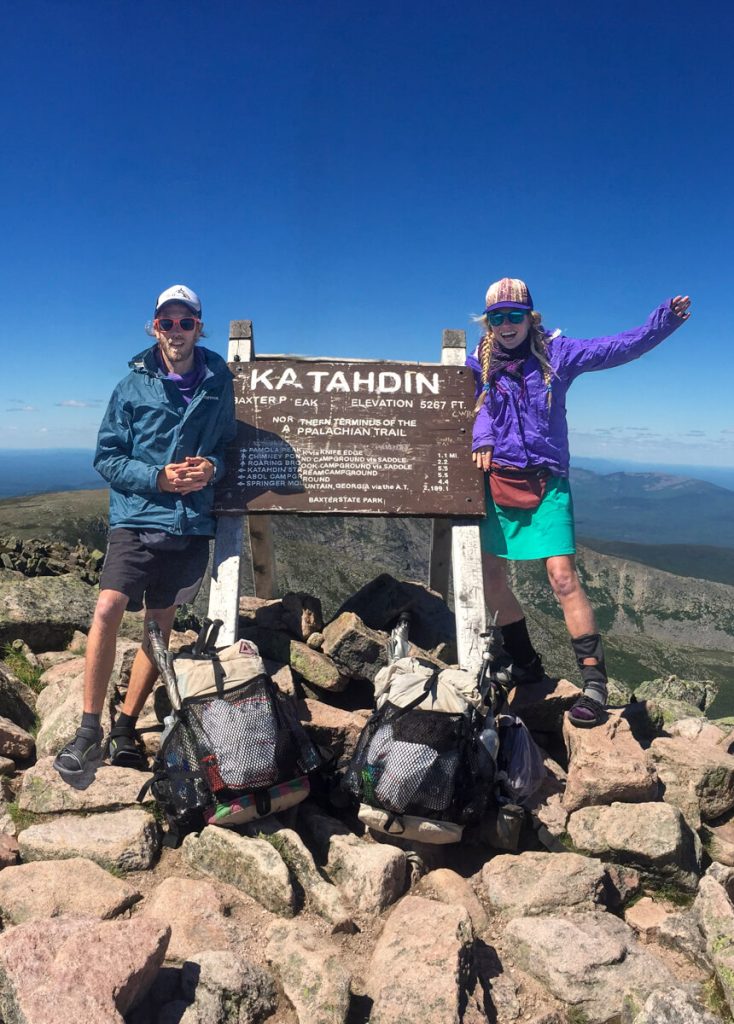
I hope that reading my stories about the various thru-hiking backpacks I’ve used has helped you determine what’s important to you in a backpack.
Please note that as you move back in time (read further down the list), fewer options were available. The evolution of ultralight gear changes rapidly as new thru-hikers throw down miles and want different things out of a pack.
If you have any other questions, please feel free to leave a comment or send me an email.
📌 Pin it to Remember Later!