Quaking Aspen: Following the Growth of Catkins
Almost a decade ago, I saw a grove of Aspen Trees for the first time, and I remember it vividly to this day. I thought they had eyes. Finally, a tree that could look back at me. Back then, when I thru-hiked the Colorado Trail from Denver to Durango, I always wondered about the trees and plants I passed, but I rarely looked them up.
Eventually, I wanted to know more about the natural world, so I went to grad school to find out. Hilariously, one of the first habitats we learned about in Field Ecology was the habitat that aspen trees create. I was beyond stoked as we dove deep into facts about the Quaking Aspen.
For once, the scientific name actually made sense to me: Populus tremuloides. I memorized the name by remembering that aspen trees always occur in multiples (therefore, they are populous) and they tremble or quake in the wind (then “tremuloides“).
This post contains affiliate links. If you purchase a product or book through these links, I can make a small commission at no cost to you. It helps me to keep writing helpful posts!
Aspen Regeneration

What I did not learn that year in grad school, or I forgot due to the high volume of information, was that aspen trees grow “catkins” in the spring. Most of the time, an aspen stand regenerates itself through cloning from its extensive underground connected root structure. But, sometimes, given very specific conditions, they can introduce genetic diversity through seed germination. Those seeds are called catkins. Male and female catkins grow on different stands of aspens and can occasionally bring about a new genetically diverse aspen grove.
I found these particularly interesting this May in Colorado because of the quarantine conditions. Limited to countless hours of walking around and around the block, day after day, week after week, I watched the same aspen trees grow catkins from a few millimeters to several inches. I never had the time to watch the same trees produce seeds that way. By consistently walking the same loop for over a month in a neighborhood, I saw something new within a routine.
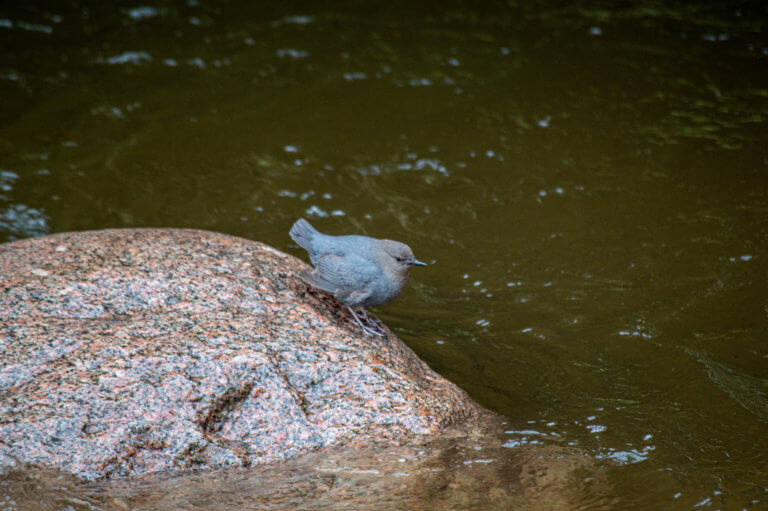
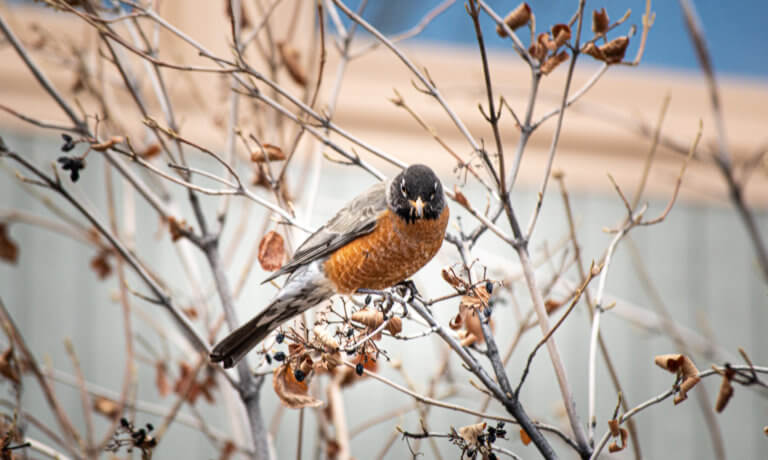
As I watched the Catkins grow, I saw robins, bluebirds, black-capped chickadees, magpies, crows, and ravens. Thus, I found delayed gratification in watching the seeds grow and instant gratification in watching the birds fly in and out of this shifting habitat.
Quaking Aspen & The Journal

Since the Quaking Aspen has so many fun facts, diverse abilities, and cool stuff going on, in this journal entry, I focused on the basics and the catkins. If you’re traveling west through the Rockies, keep an eye out for these trees. Once you identify them once, you’ll know them forever. I used this Rocky Mountain Plant Guide as my go-to guide.
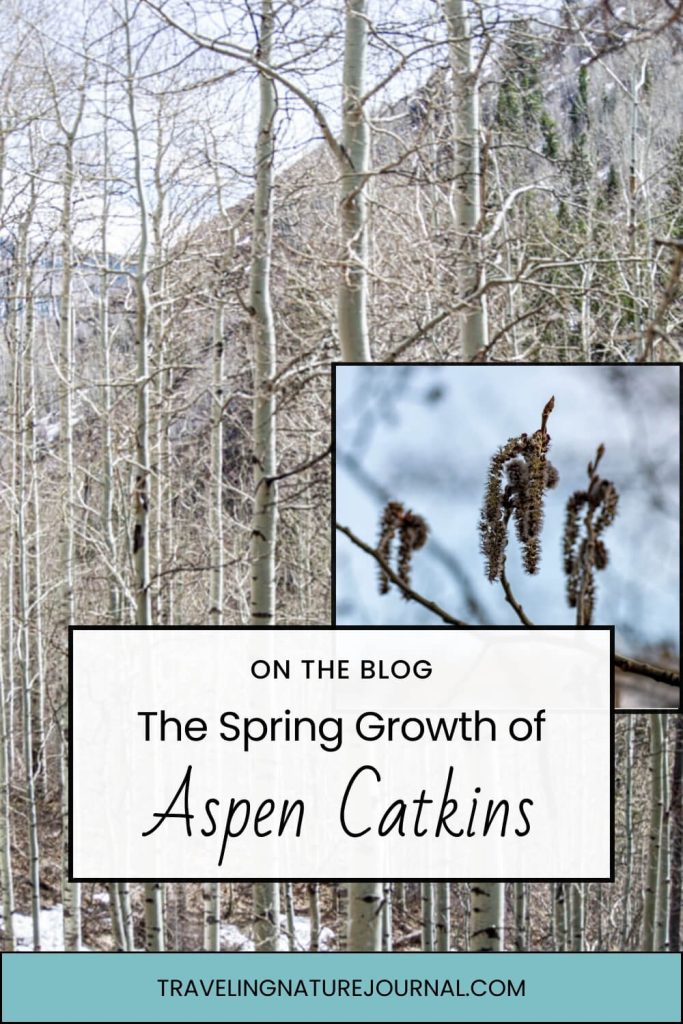
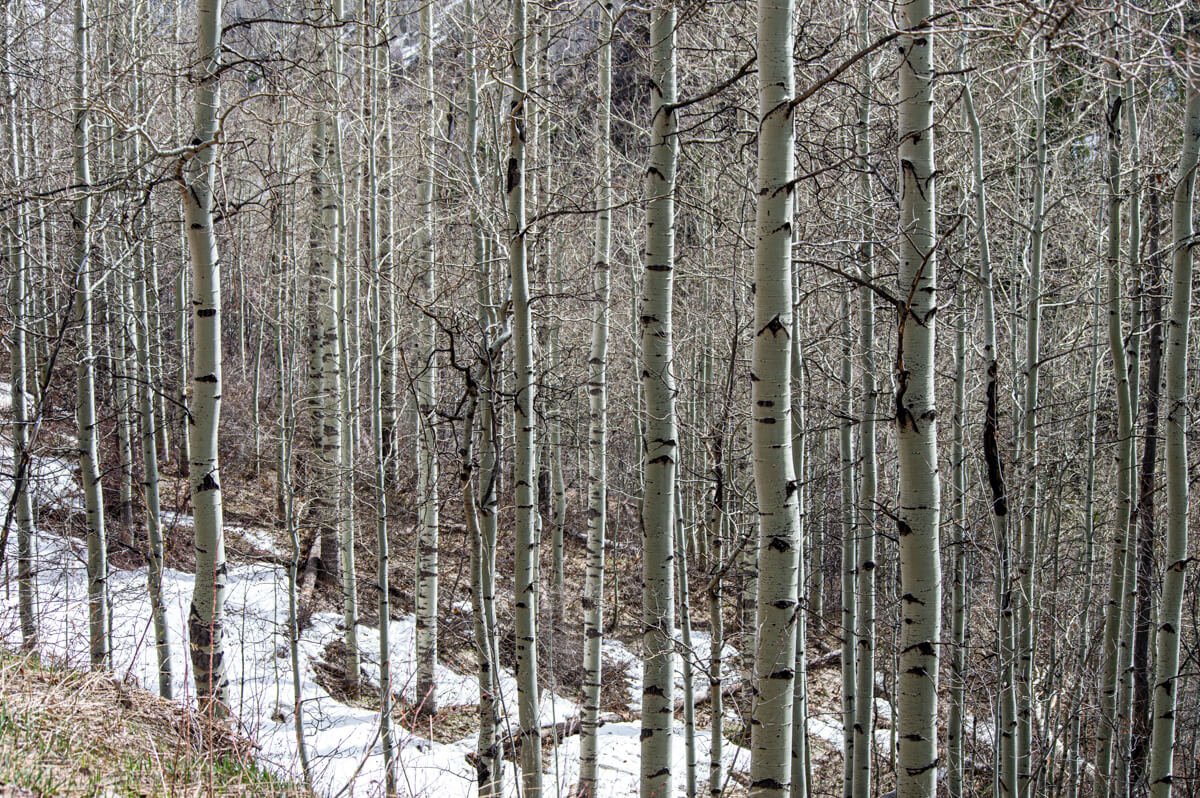
The polaroid photo I chose for this post focused on the view of a grove of aspens. I also chose one without leaves to place a larger emphasis on the identifiable bark. The photo depicted where the lower epicormic branches have broken off, forming the scarred “eyes.”
I further emphasized these scarred eyes in the sketch of the aspen trunk. Because these lower branches had broken off, they did not make for great trees to climb. However, they have eyes, am I right?
I did do a sketch of an aspen leaf because I think, despite the focus on the catkins, the leaf shape fell into basic identifiable facts. I had fun sketching the catkin to roughly the actual size of the ones I picked up off the ground.
When all the catkins fell toward the end of May in Colorado, they formed large groups on the pavement. These clusters of catkins blew around everywhere for about two weeks. They filled corners of parking lots, made piles against other trees, and floated down creeks engorged with snowmelt water.
Build Your Own Nature Journaling Kit!
📓 For everyday use, I like the Leuchtturm Plain.
🎒 For hiking, I like the small, plain Moleskine for packability.
👀 Grab a monocular or some binoculars to see more.
📚 My favorite plant book is Plants of the Rocky Moutains.
📷 Grab a landscape lens for your camera.
🎞️ Add a photo from your phone or camera with a Polaroid printer.
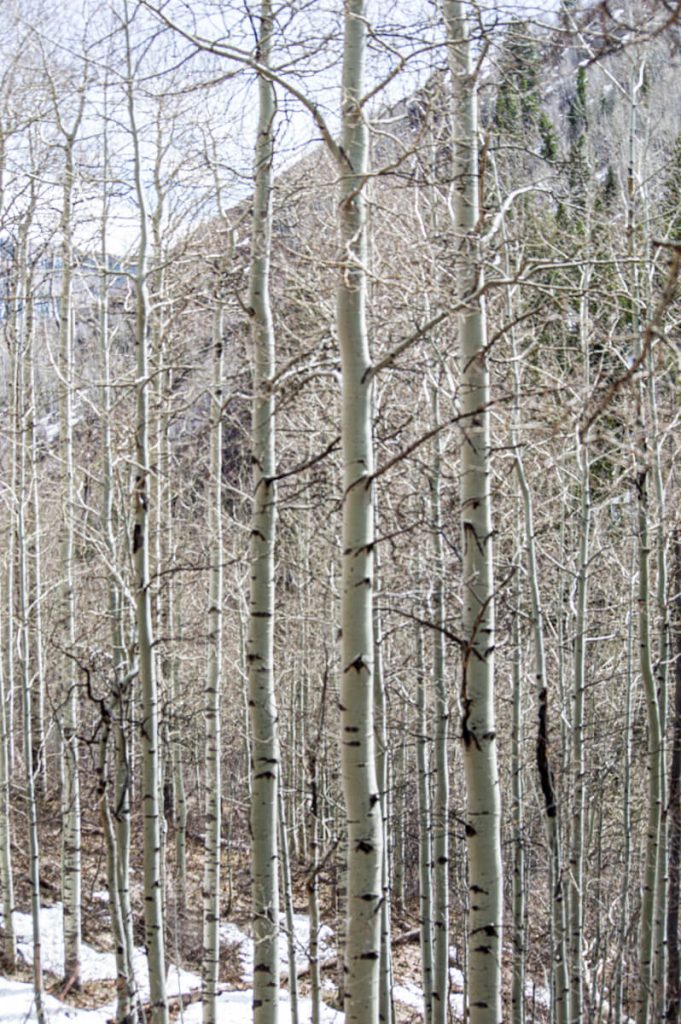
Before I get too into how cool the catkins looked, here are some essential points about aspen. ⬇️
Family
Salicaceae
General Characteristics
- 30 – 90 feet tall
- Often in large stands connected by large root systems in the Rocky Mountains
- Usually reproduce through cloning
- White bark with black scars that look like eyes
- Deciduous with slender trunks, short crowns
- Can recolonize burned areas quickly due to extensive root systems
- Stands can live for thousands of years
Leaves
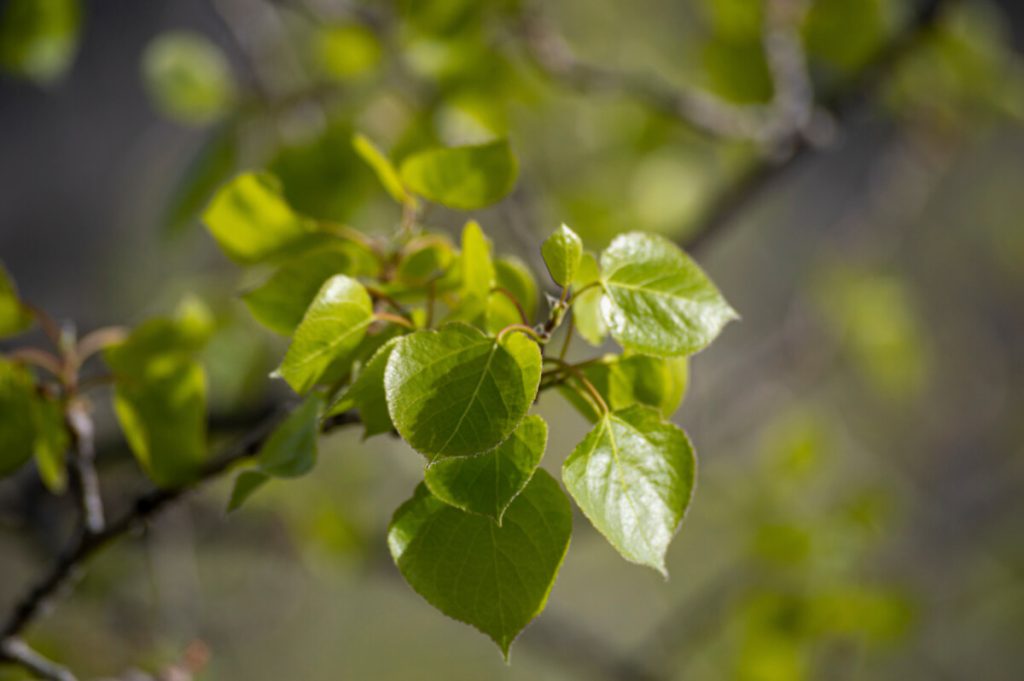
- Heart-shaped, alternate, pointed at tip
- At 90 degree angle to stem, making distinctive “quaking” sound in wind
- In autumn, turns to yellows and oranges
Flowers
- “Catkins” = small dense hanging clusters
- 1 – 4 inches long, March – May before leaves grow
- Male and Female catkins on different trees (different stands)
Fruit
- Conical, 3 – 6 mm, in catkins
- Tiny seeds with a few hairs
Aspen Catkins Growth over 3 Weeks
See their growth below in the gallery over two and a half weeks this past spring.
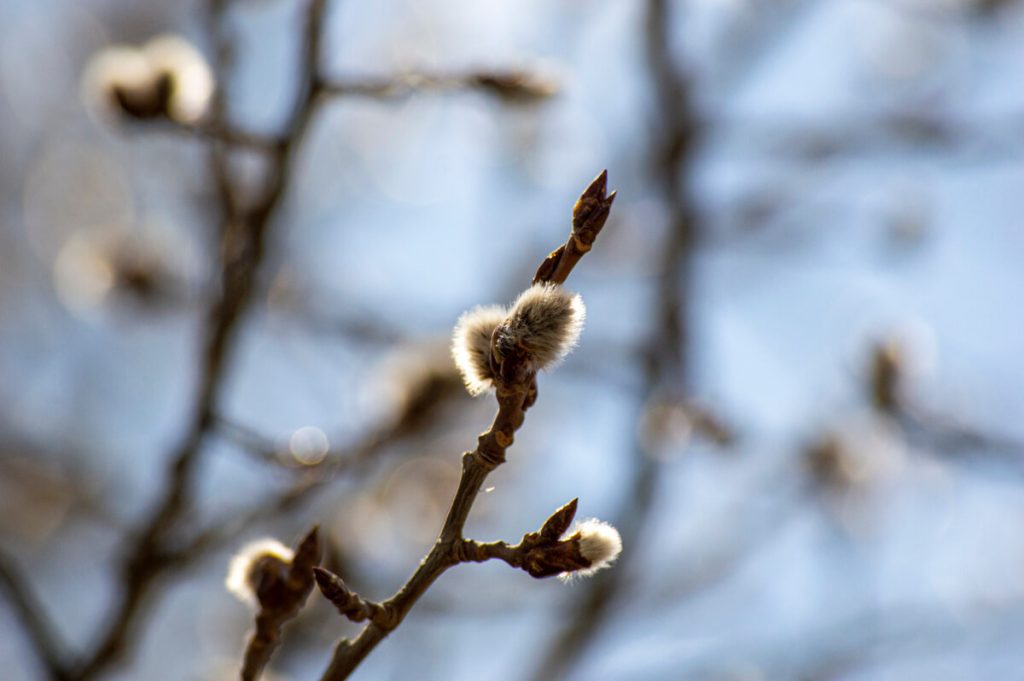
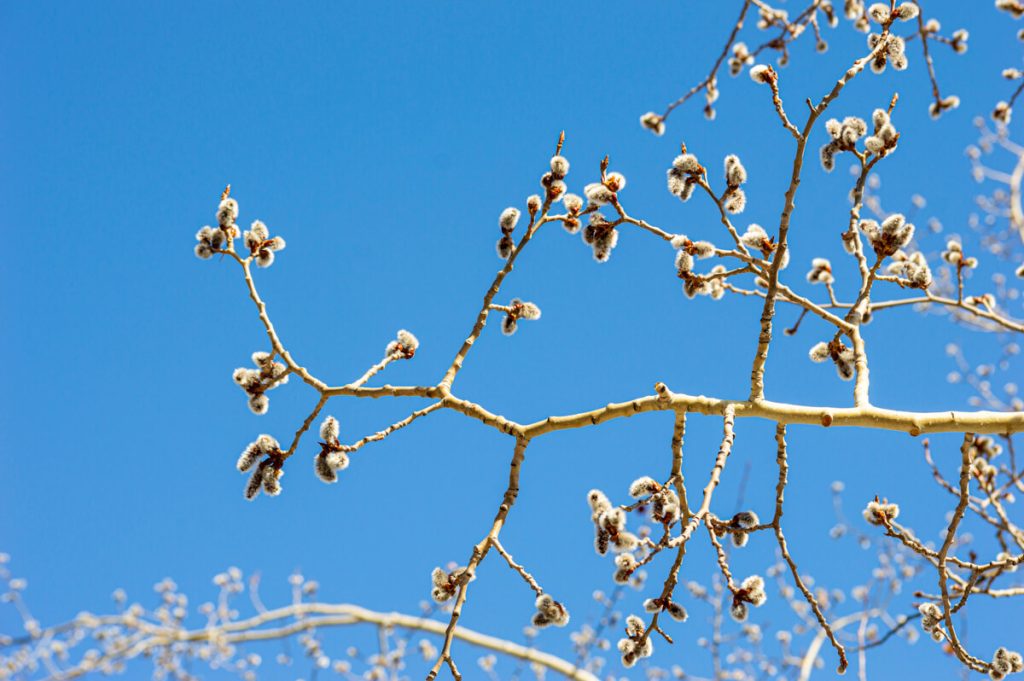
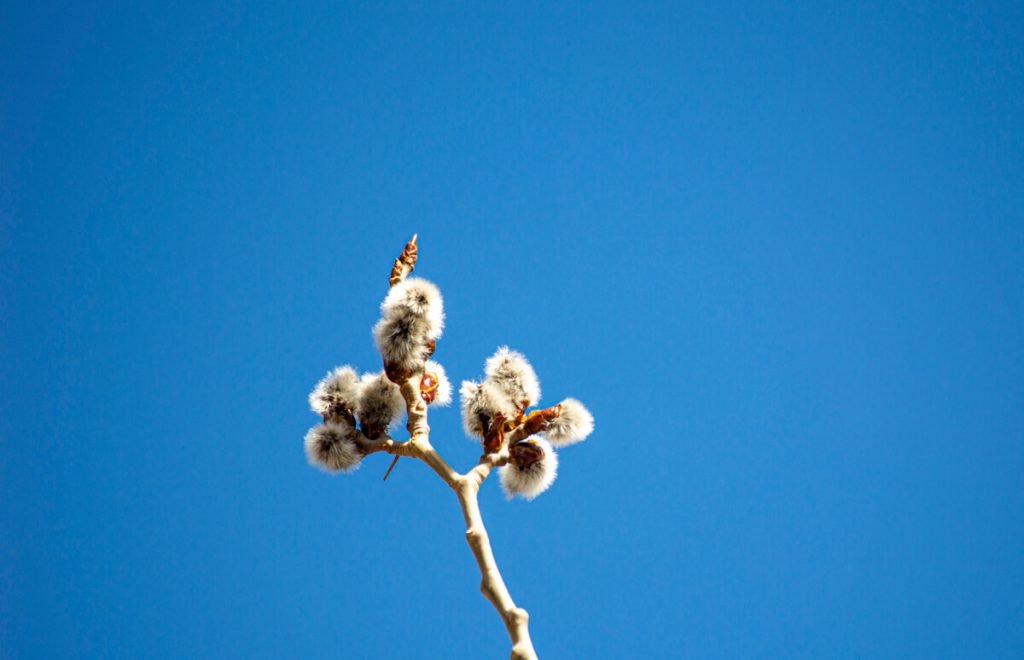

As you can see, the aspen catkins begin like small fuzzballs and then elongate over 2.5-3 weeks. When they reach this final length, they fall and cover the roads.
📌 Pin it to Remember Later!