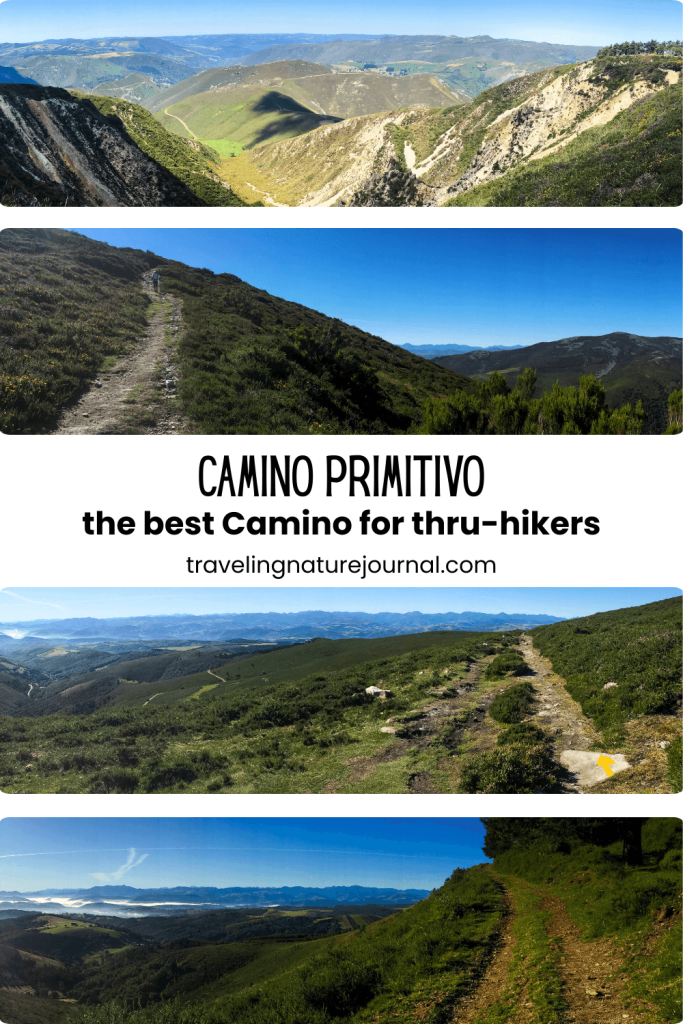
Camino Primitivo: Everything You Need to Know
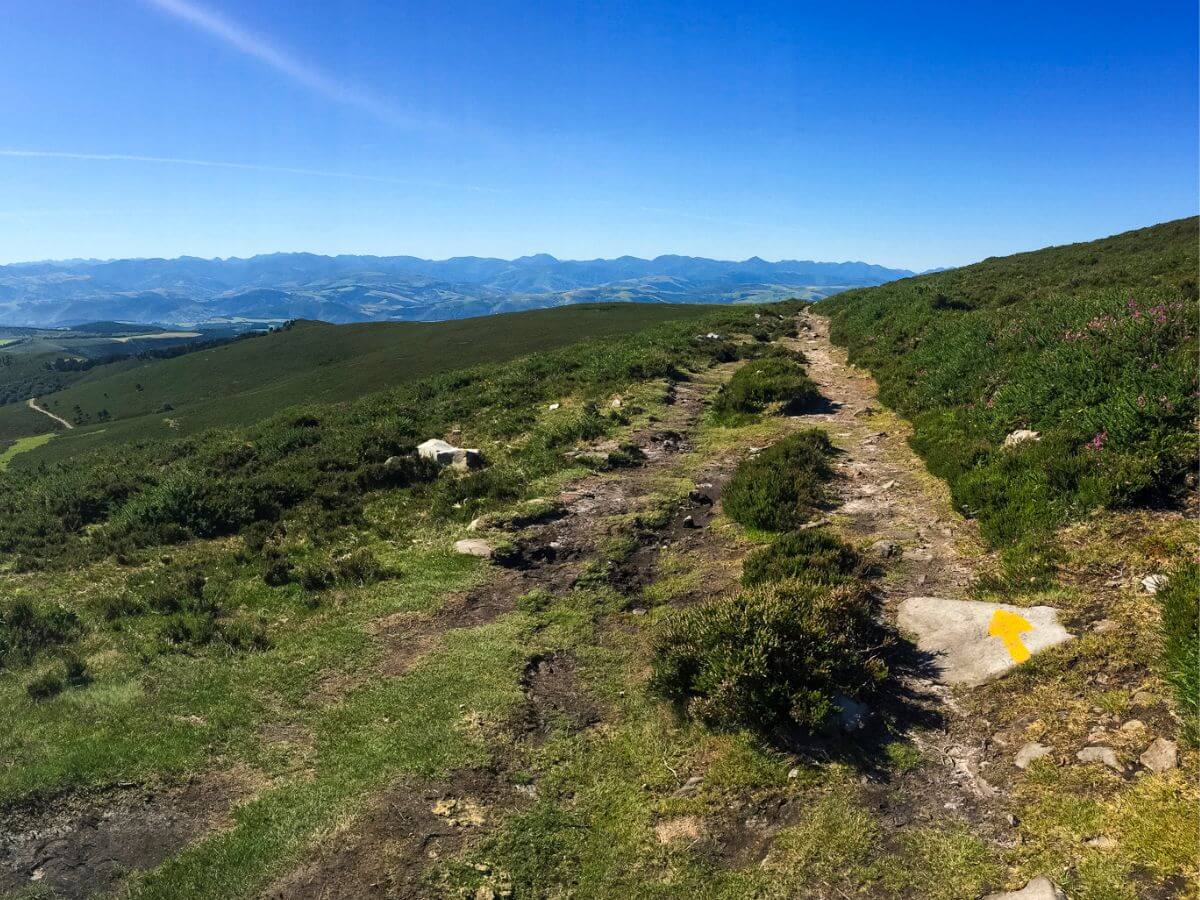
If you’re looking for the Camino de Santiago that has the most hills and trails, you’re in the right place with the Camino Primitivo.
The Camino Primitivo is shorter, but more rugged than the other, more popular routes. If you’ve heard about road walking on Caminos, this route has less of it.
With more trail time comes less town time. However, while it has fewer towns and services, it does have them well spaced for walking.
I walked the entire length of the Camino Primitivo with my Mom. I’ve hiked three other routes, and the Primitivo is tied for my favorite.
If you’re a thru-hiker looking at hiking a Camino, this is one of two that I’d recommend.
However, you can definitely do this as a first-time long-distance hike as well!
Here’s how to hike the Camino Primitivo with all of my knowledge from over 20,000+ miles of thru-hiking, including four Caminos.
This post contains affiliate links. If you purchase a product or book through these links, I can make a small commission at no cost to you. It helps me to keep writing helpful guides.
Walking the Original Way: Quick Facts
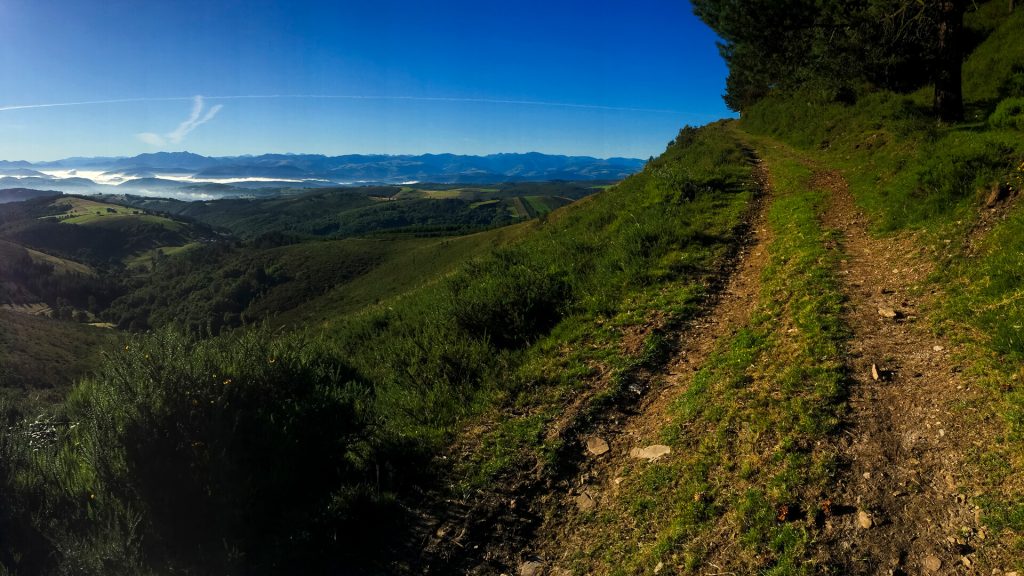
Running from North Central Spain to Santiago de Compostela, the Camino Primitivo heads straight into the mountains.
It is also known as the Original Way because it was one of the first routes.
This is the Camino Primitivo at a glance.
Start: Oviedo, Spain
Finish: Santiago de Compostela, Spain
Miles/Kilometers: 192.6 miles/310 kilometers
High Point: 3986 ft/1215 meters
Additional (Optional, but Recommended) Add-On: Extend with the Camino Finisterre (55.9 miles/90 km) or Camino Muxía (54.3 miles/87.5 km).
Transportation to Oviedo/From Santiago de Compostela
Getting to and from the Camino Primitivo is *relatively* simple. (At least, far simpler than starting the Camino Frances.)
For those traveling from the U.S., I’ve found that usually the most cost-effective option is to fly into and out of Madrid on a round-trip ticket.
Getting to Oviedo, Spain:
🚇 Use the Metro between the Airport and the Bus Station
🚍/🚊 Take either the Bus or the Train from Madrid to Oviedo
Leaving Santiago, Spain:
🚍/🚊/✈️ Take either the Bus or the Train to Madrid (or fly if you know your timing well)
🚇 Use the Metro between the Bus Station and the Airport
✈️ Fly Home
For those traveling from within Europe, there are more regional options.
🚍 Take the Bus from Asturias to Oviedo (about 40 minutes).
Best Times to Hike the Camino Primitivo
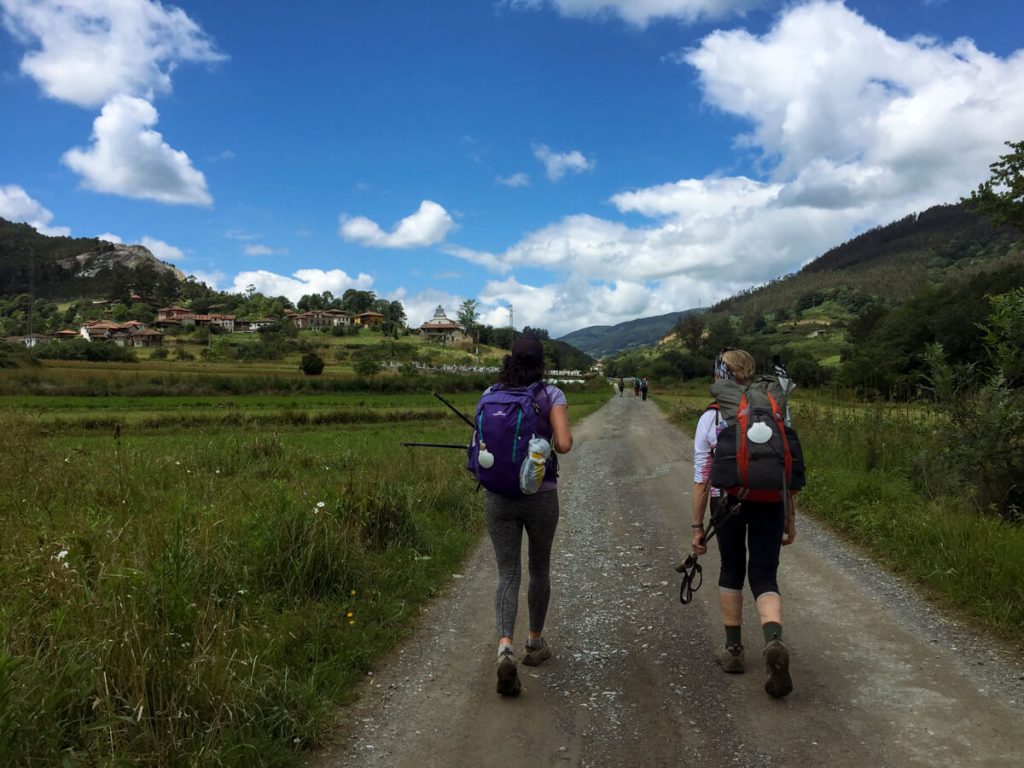
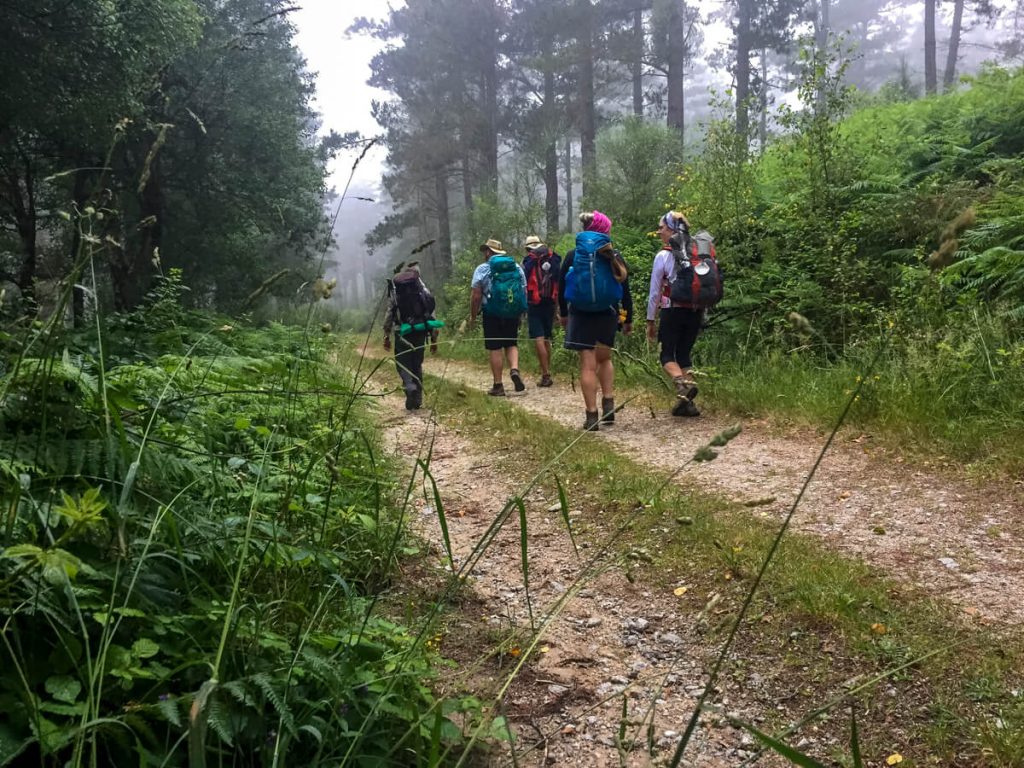
Since the Camino Primitivo walks you through the mountains of North Central Spain to Galicia, you’ll want to go when it’s warm enough, but not too busy.
I hiked this route with my Mom when we both happened to have time, which was July. The weather was mostly favorable, but we did encounter crowds when the Camino Primitivo merged with the Camino Frances toward the end.
If we just think about the weather, the best time to hike the Camino Primitivo is from June to mid-October. You’ll want a few extra layers in early June and from mid-September on.
However, if you also want to avoid the biggest crowds, avoid July to mid-August.
There are larger numbers of people out walking in July and August for two reasons:
- It’s a “normal” vacation time, and kids don’t have school.
- July 25th is Santiago’s saint day, so those who walk for religious reasons often try to reach Santiago on or around that date.
That leaves June and mid-August to mid-October. June and October can sometimes be rainy, so I’d say the ideal month to hike the Camino Primitivo is from mid-August to mid-September.
How long does it take to walk the Camino Primitivo?
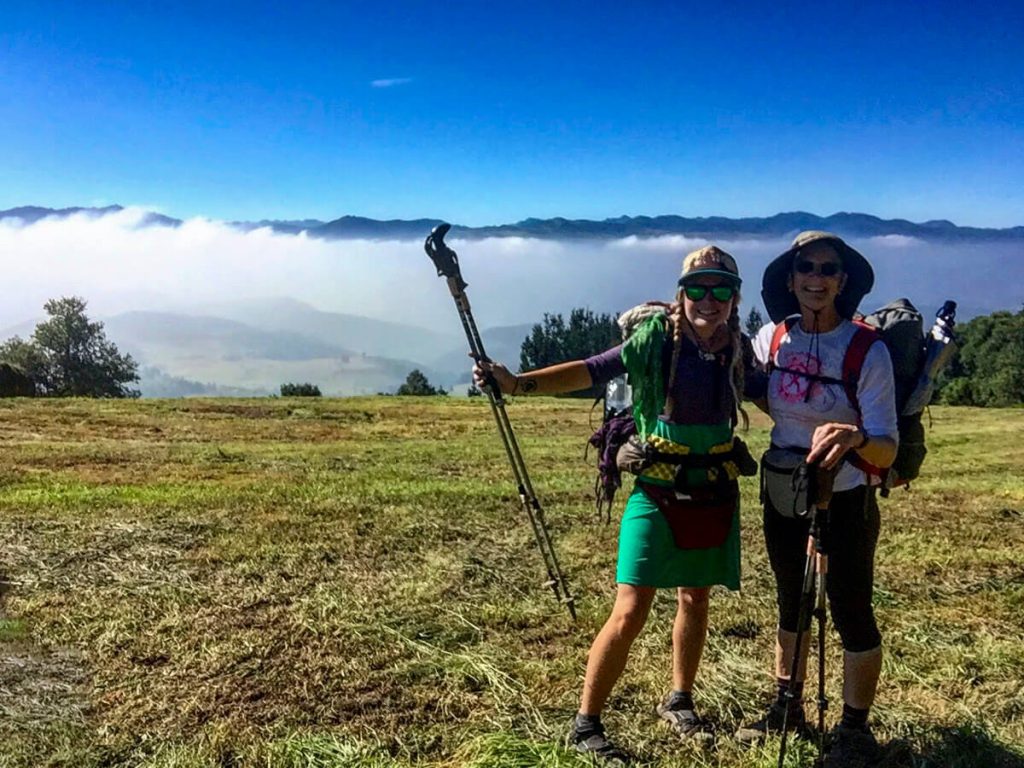
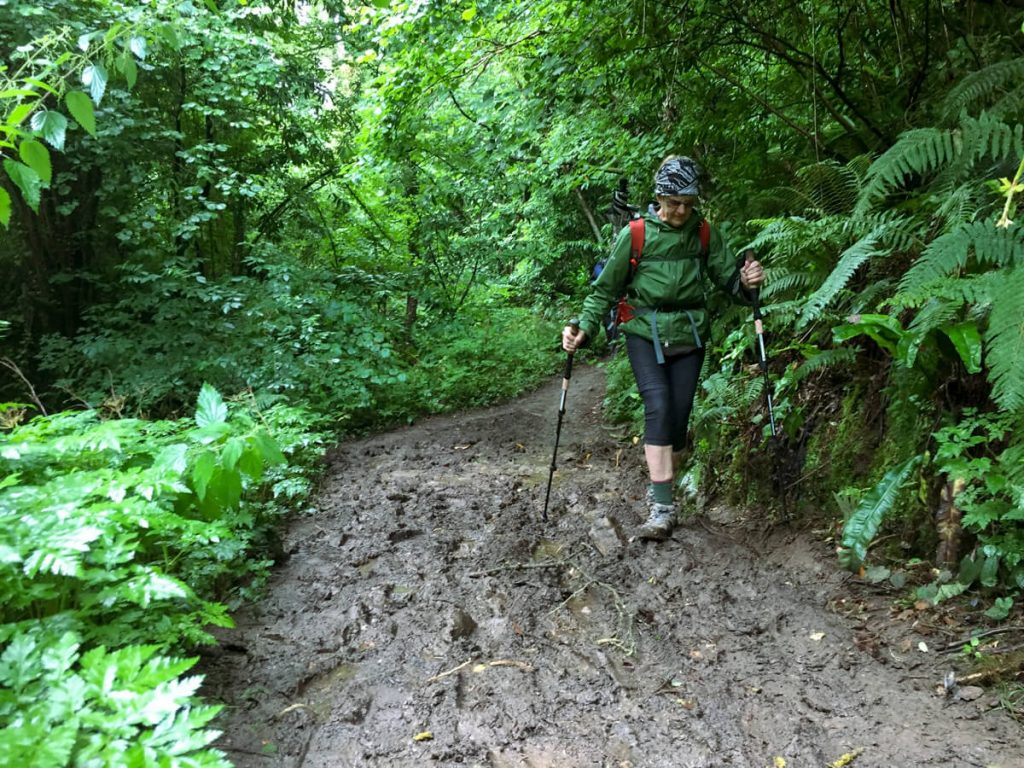
The Camino Primitivo is one of the shorter routes to Santiago, but it is also harder.
Thus, it would take the average person about 13-15 days to hike from Oviedo to Santiago. This puts your average mileage at about 13-15 miles per day or 21 to 24 kilometers per day.
As with any hike, some days will be shorter and some longer, depending on how the albergues are spaced.
If you wish to walk at a slower pace or have a few half days of walking, that’s certainly possible.
When I hiked the Camino Primitivo with my Mom (in her mid-60s), here’s how our trip timed out:
- From Oviedo to Santiago took 14 days.
- We continued to Finisterre to see the ocean with 4 more days of walking.
- We walked from Finisterre to Muxía in 2 short days.
- Then, we had too much time before the flight, so we walked back to Santiago as slowly as possible in 5 days. I don’t necessarily recommend this. We tried it instead of going back to Madrid early and having to buy non-hiking clothing. 😂
Our shortest day was 7 miles, and our longest day was 21 miles. However, most days were 13-17 miles.
Camino Primitivo Maps & Guidebooks
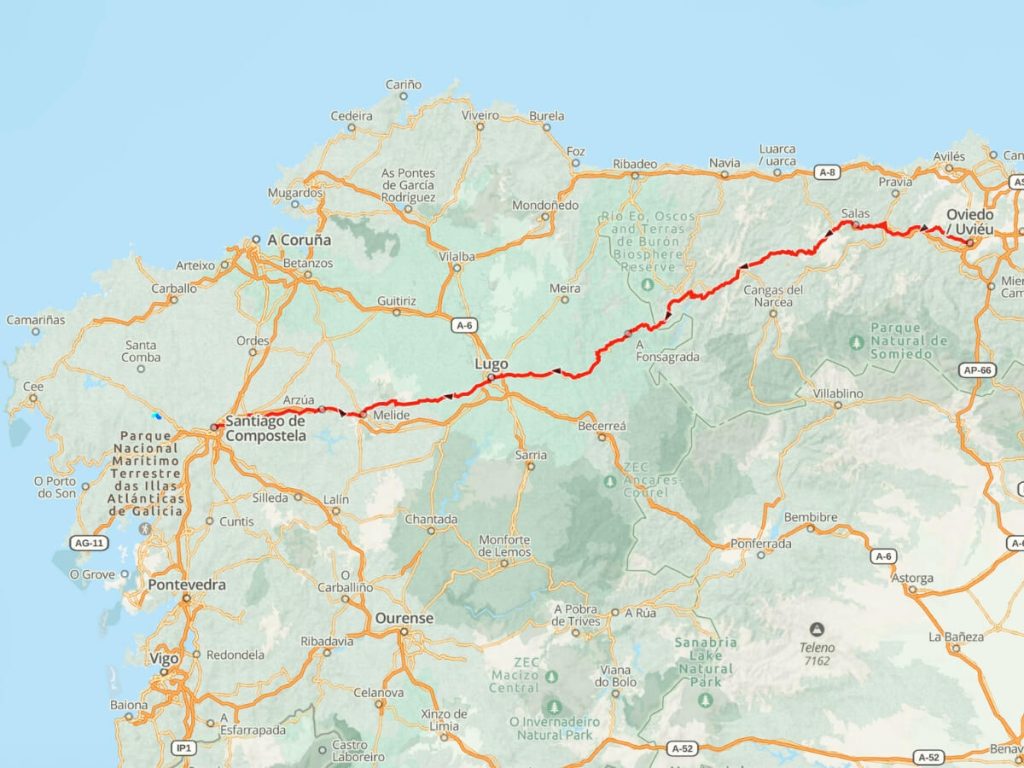
When my Mom and I hiked the Camino Primitivo, I had a GPX track on my GaiaGPS app, and we carried a heavy guidebook.
Do I recommend that now? No.
We hiked as the transition to digital resources was beginning. Now, I would recommend using a combo of phone apps with an eSIM.
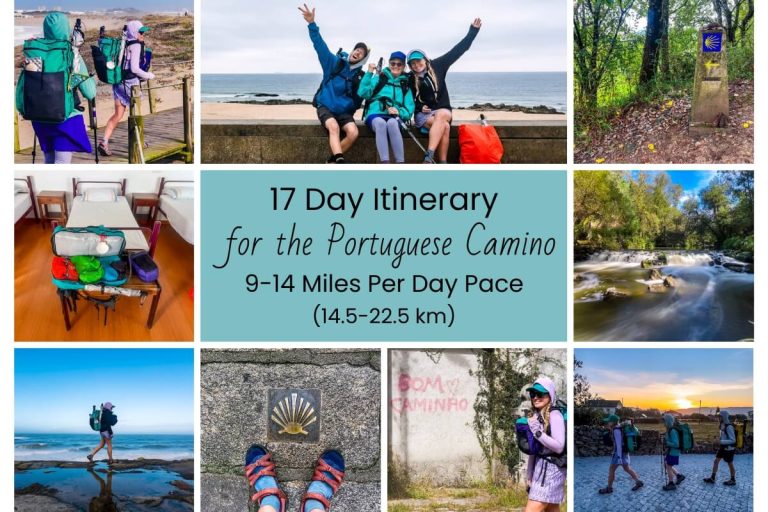
I tested this theory when my Mom and I hiked the Portuguese Camino recently, and it worked fantastically.
If you still prefer the extra information from a guidebook, get one, but read it at home beforehand and leave it there.
I tested four different Camino Apps and here are my recommendations:
- Wise Pilgrim – Best overall. The map was accurate, and the albergue locations were helpful. The albergue prices are often outdated. Worked better on data than offline mode.
- Buen Camino – Decent, but opinionated. I found that I stopped reading the guidebook-like descriptions and liked it better. The map was decent, the albergue locations were good, but the albergue prices were often outdated.
- Camino Ninja – Helpful to conceptualize the spacing of towns throughout the day. However, the distances were almost always wrong (compared to my GPS watch tracking), and just because a café is listed here does not mean it’s open–so, double-check it.
- Airalo eSIM – While all of these apps technically worked with offline downloaded maps, they glitched enough that I used them on eSIM data instead. I’ve used Airalo in multiple countries, and it works great. eSIMs are SOOOO much better than switching your physical SIM card.
Real Talk: Walking Difficulty
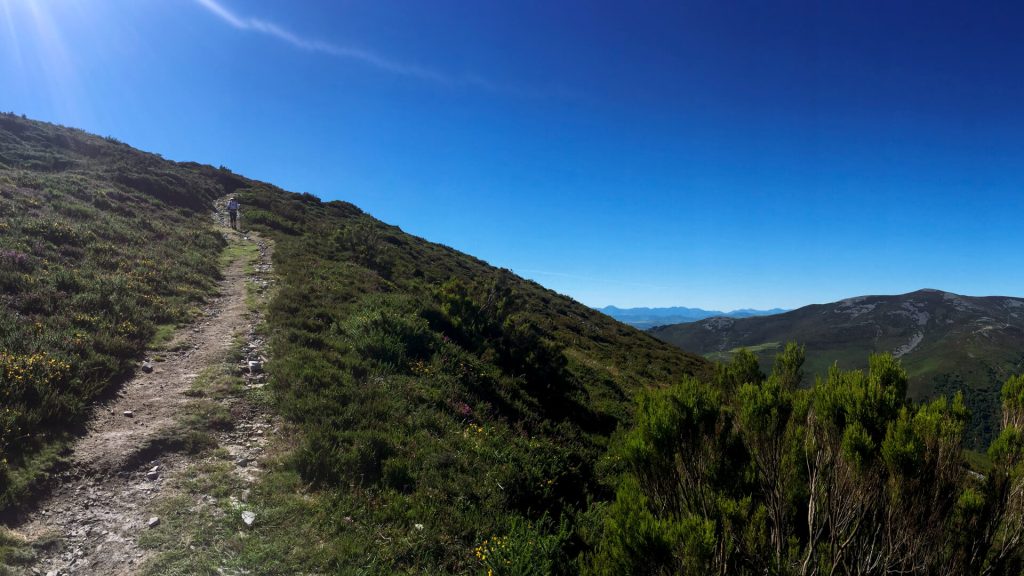
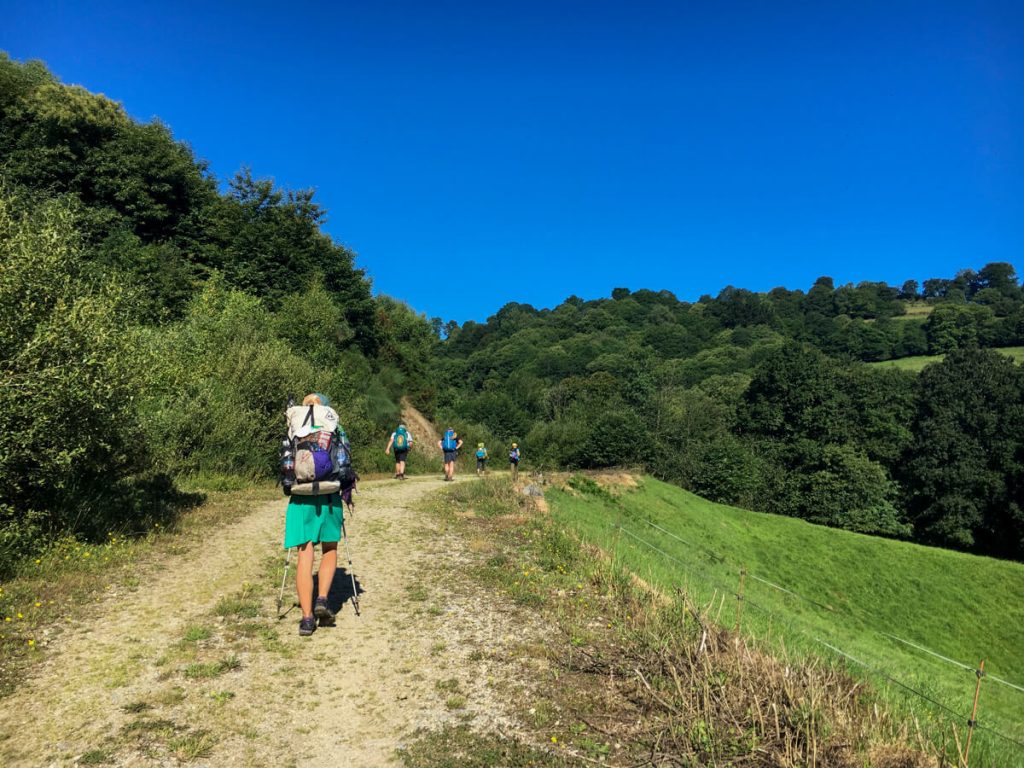
Difficulty can sometimes be hard to quantify objectively.
Thus, I’ll rate the difficulty of the Camino Primitivo for the brand-new hiker and separately for the thru-hiker looking for something different.
The difficulty level for a brand-new hiker is likely somewhere between moderate and strenuous. Why? Because it has more hill climbs and trail than other Caminos (like the Camino Frances or Camino Portugués) AND because it has fewer albergues and towns. It’s on par with the Camino del Norte in terms of difficulty.
Thus, you have fewer options for how long your walking days are, and the walking miles have more ups and downs.
In contrast, the difficulty level for a thru-hiker is somewhere between easy and moderate.
If you’ve done any US thru-hikes like the Appalachian Trail, Pacific Crest Trail, Arizona Trail etc, terrain wise – no problem.
Where you might find yourself frustrated as a thru-hiker is that the albergues aren’t always where you want your mileage to be, and there is no wild camping.
High Route on the Camino Primitivo: Is It Worth It?
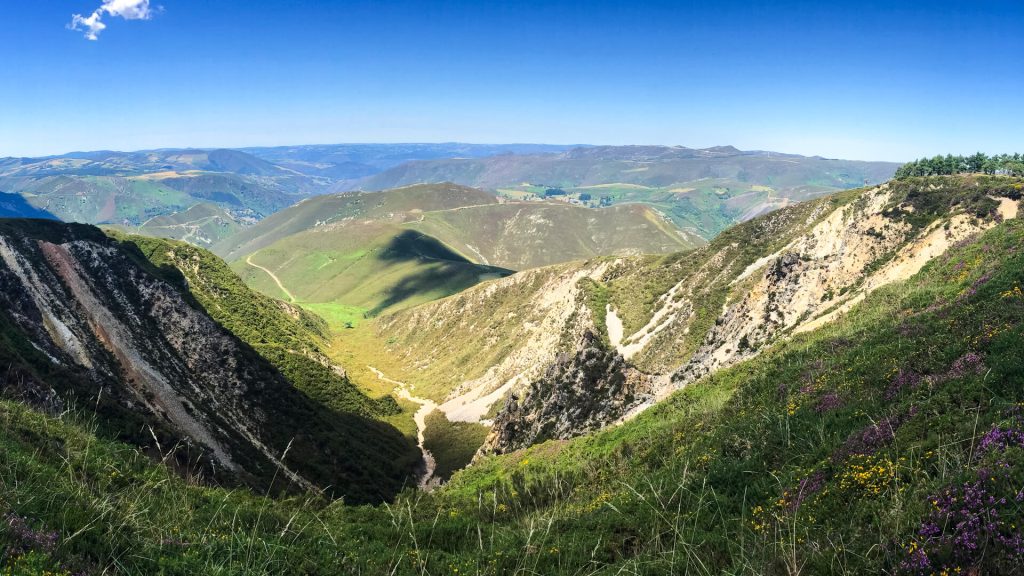
Near the beginning of the Camino Primitivo, you will encounter a small route split.
This allows you to take the “high route” up into the mountains with no services (only for one walking day, and you’ll still sleep at an albergue). You’ll need to hike about 18 miles through the hills with all your food and water for the day.
Alternatively, you can opt for the “low route,” which is slightly longer but has an albergue in the middle. This option allows you to go two 10-ish mile days with less up and down.
Since the split comes toward the beginning of the Camino Primitivo, you won’t have much time for the trail to get you in shape.
Thus, I highly recommend the high route for anyone who
- 🏃🏼♀️ Is in good physical fitness overall.
- 👣 Has already hiked one 15-mile day on the Camino Primitivo.
- 🌤️ Has checked the forecast and sees favorable weather the night before.
As a thru-hiker, this was the highlight of the Camino Primitivo for me. It was beautiful, and I enjoyed the terrain.
That being said, we had a foggy morning that gave way to a sunny afternoon.
If we had bad weather, most of the route is very exposed, with no shelter from the rain.
I had just completed the Hayduke Trail before, so I was in excellent shape. I carried all the extra items, food, and extra water for my Mom, and she made it through great! Lol…after so many 6-liter water carries there…it was no biggie for me.
Camino Primitivo Packing List
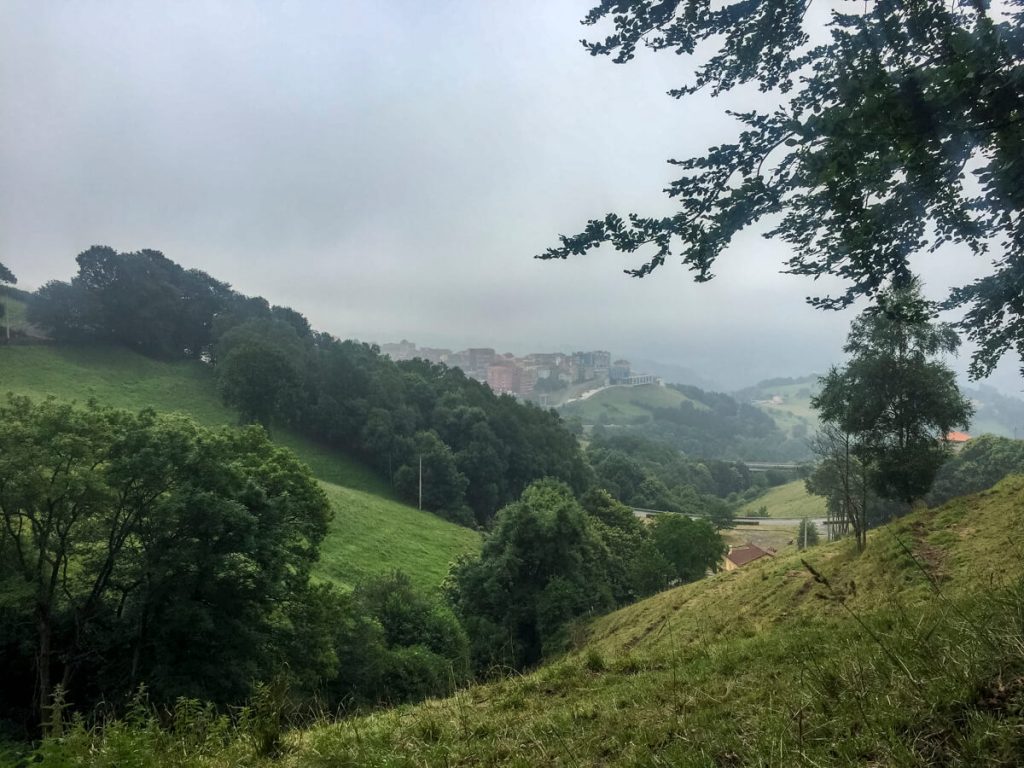
After four Caminos, my Camino packing list is mostly the same. However, the Camino Primitivo was just a little bit chillier overall than the others.
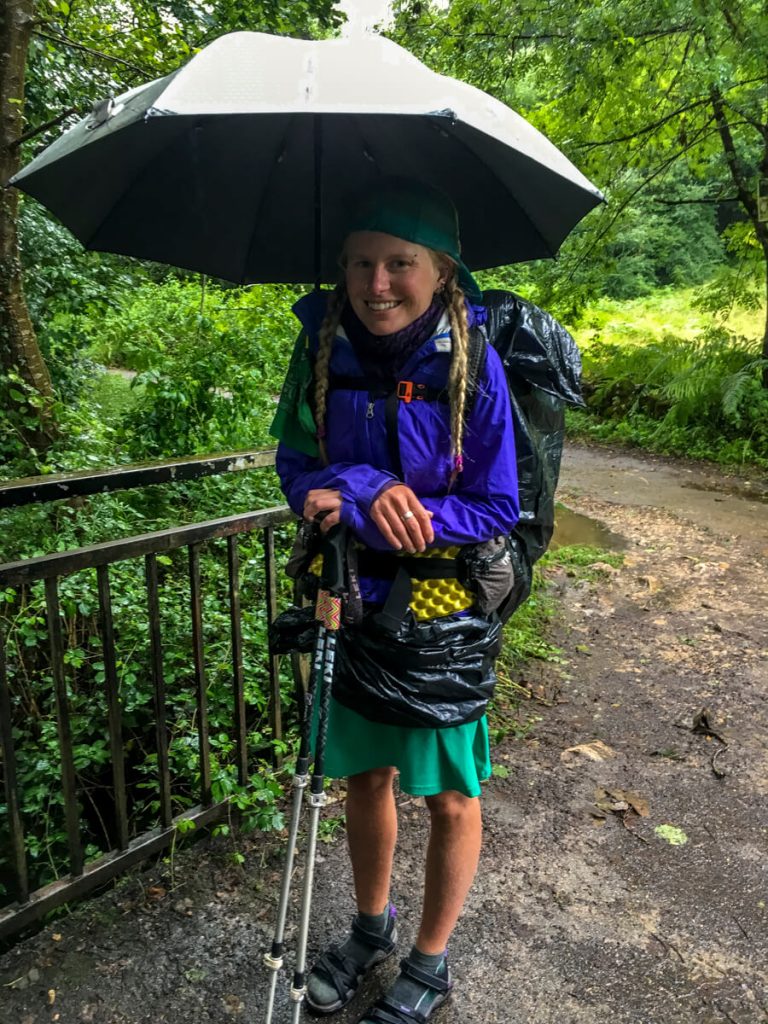
Layers are more important here. I consistently used my fleece mid-layer, especially at night. I also used my rain jacket for both rain and wind more than in other Caminos. Going in the middle of summer, I didn’t feel the need for a puffy jacket as well–but if you’re going in spring or fall, consider it!
Because it got a little colder at night in the albergues, I was very happy to have a lightweight sleeping quilt. While albergues often have blankets, they never have enough. Personally, I also find the blankets at albergues a bit gross. They hardly get washed, and I’ve seen bed bugs in them (on the Portuguese Camino).
That being said, here is my go-to Camino packing list (for more explanations on each item, click here for the detailed list):
👟 Footwear (I prefer my Tevas 🩴)
😴 Lightweight Sleep/Town Clothes (I used this shirt and shorts)
🧢 Hat with a brim!
🪑 Sit Pad
🧥 Fleece Mid-Layer (This is an easily available Melanzana look-a-like)
🌧️ Rain Jacket
☔️ Ultralight Umbrella (rain or sun!)
🚶♀️Trekking Poles (With Rubber Bottoms Added)
🧖♀️ Fast Drying Towel
🛏️ Silk Liner (Super light sheet)
🛌 Lightweight Quilt (Bed bugs in old blankets are gross)
🛍️ Reusable Bag
📔 Camino Passport (you can get ahead of time or in Porto)
⌚️Athletic Watch (didn’t have this in 2017, but I won’t hike without it now!)
Albergue Options
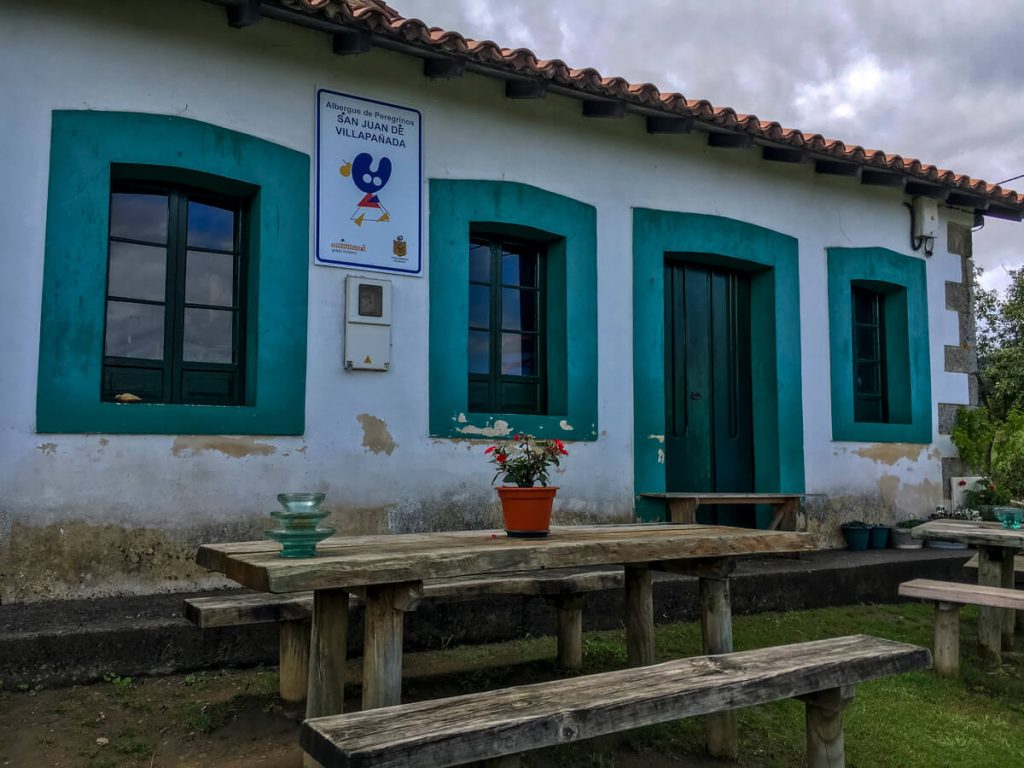
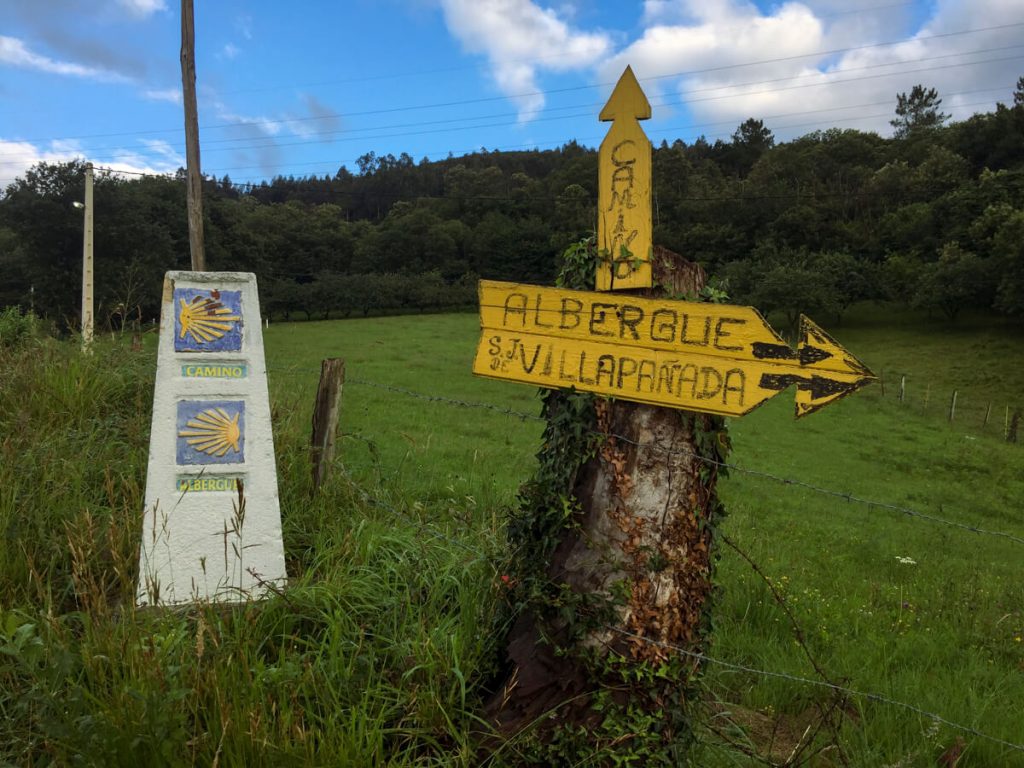
Like any Camino, the Camino Primitivo has many accommodation options, including types and sizes of albergues.
You will mostly find that municipal and private albergues are the best and most affordable options. However, in larger towns, you have the option to stay at hotels and guest houses for private rooms.
I found that the Camino Primitivo albergues were well spaced for either 8-10 mile or 15-20 mile days.
🛌 PRO-TIP 🛌 When my Mom and I hiked, we mostly stayed in private albergues because I could book them one day in advance. We loved this because then we could take as many breaks as we wanted throughout the day, knowing we had a bed reserved.
Food Options: Restaurants/Cafés/Grocery Stores
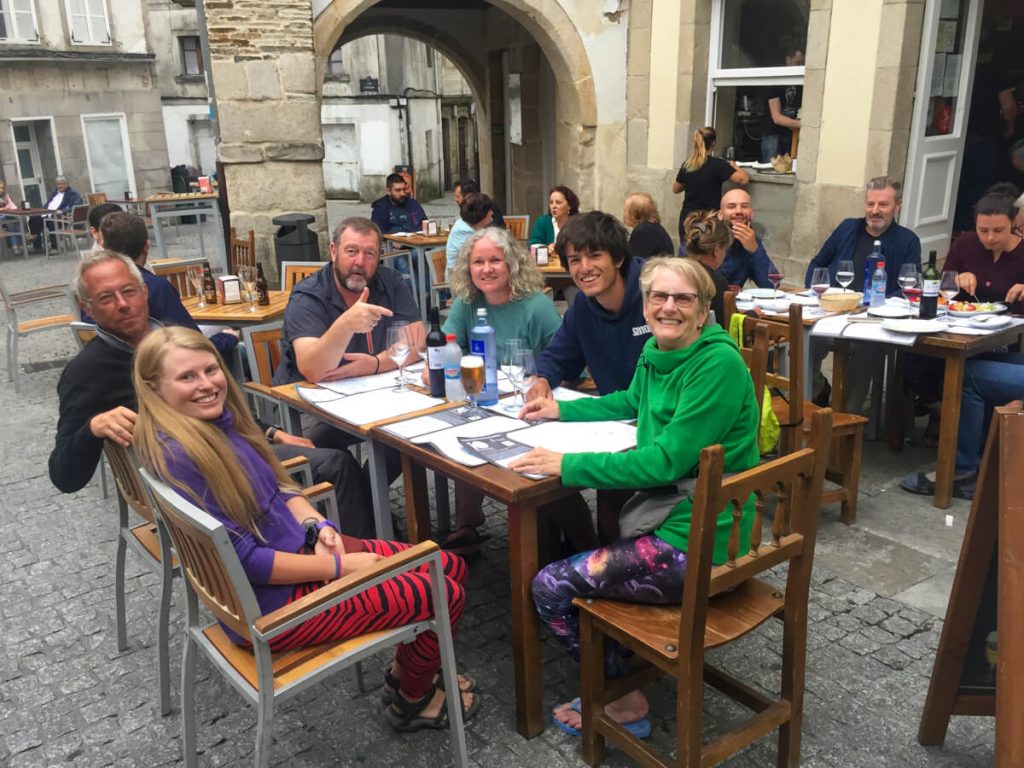
Since there are fewer towns on the Camino Primitivo compared to other Caminos, there are fewer food options.
There is plenty of food, just not as many options.
You will still find a few cafés and restaurants every day. Some of those will have pilgrim menus (2-3 course meal for a set price).
Occasionally, an albergue will also offer a group meal for an additional cost. I highly recommend these because they foster genuine community at the albergue.
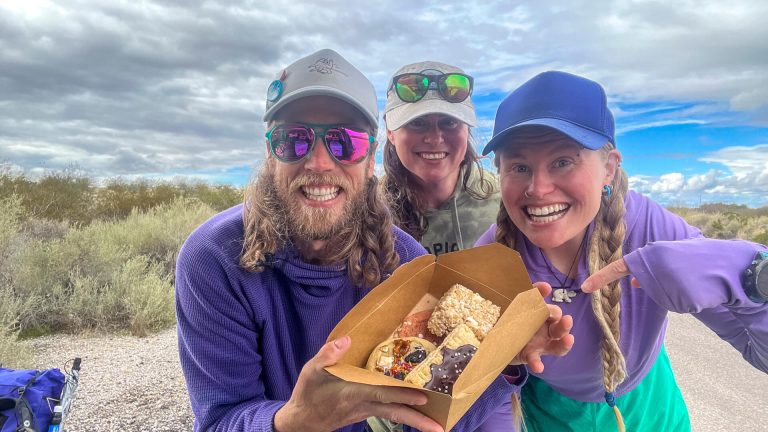
My Mom and I joined one such albergue dinner in the first few days of the Camino Primitivo and found our Camino Family there. We hiked the rest of the way with the fantastic people we sat next to. To this day, 9 years later, we still have a WhatsApp group chat!
If you have any dietary restrictions, I highly recommend keeping tabs on where the grocery stores and markets are each day. This way, you can find snacks and have an emergency meal in your pack.
Personally, I love having my snack breaks at viewpoints rather than always having my breaks at cafés. That’s why I always carry some snacks in my backpack while hiking.
While Spain as a whole still seems to love its ham products, I’ve seen a significant increase in plant-based options. This still mainly applies to grocery stores and markets, but I also saw vegan pilgrim meals appearing near Santiago on the Portuguese Camino recently.
Getting Your Credential Certificate in Santiago
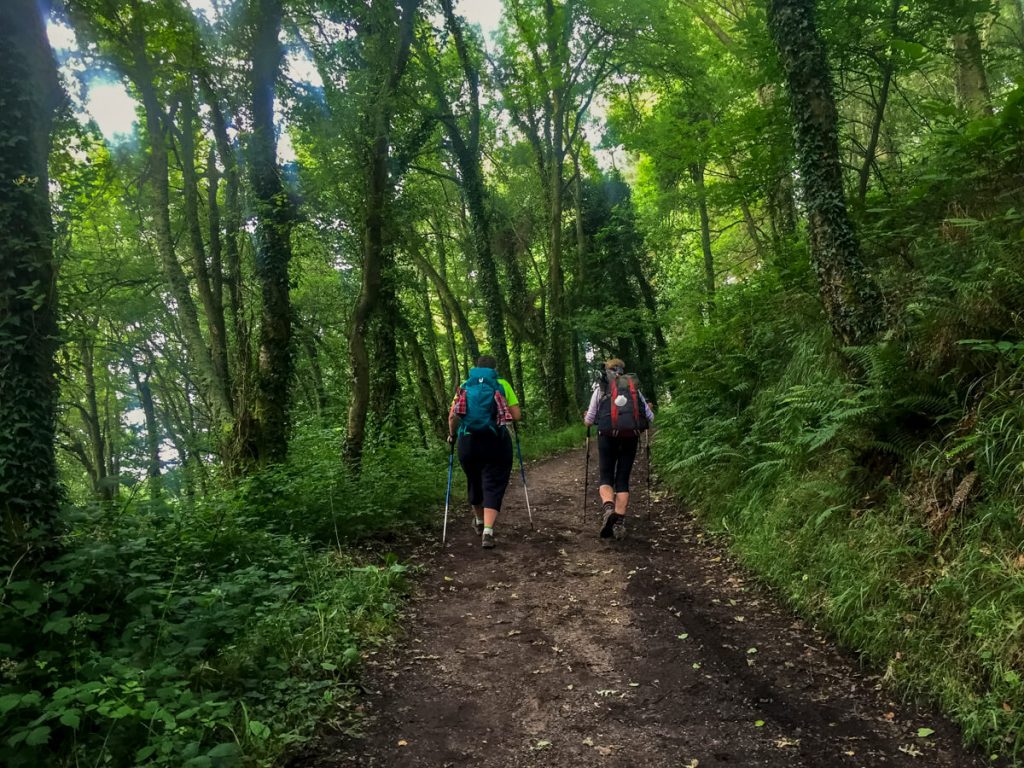
When you get close to arriving in Santiago de Compostela (yay! 🎉), you need to start the process to get your certificate (the Compostela).
The process has only recently reached the digital age (although the website is still reminiscent of the early 2000s web design).
🚨 A day before you get to Santiago, fill out this form to get your finishing certificate or Compostela. This form will get you a QR code. Check your spam if you don’t see it in your email (it went to mine).
When you get to Santiago, to get a place in line to get your Compostela, you need that QR code. They literally won’t let you into the building without it.
Once you scan your QR code, you’ll get another QR code with your place in line to get your Compostela.
🚨 If you have limited time, make sure you do this ASAP when you get to Santiago. During busy times, you may need to wait hours or until the following day.
Is It Worth It To Continue To Finisterre or Muxía?
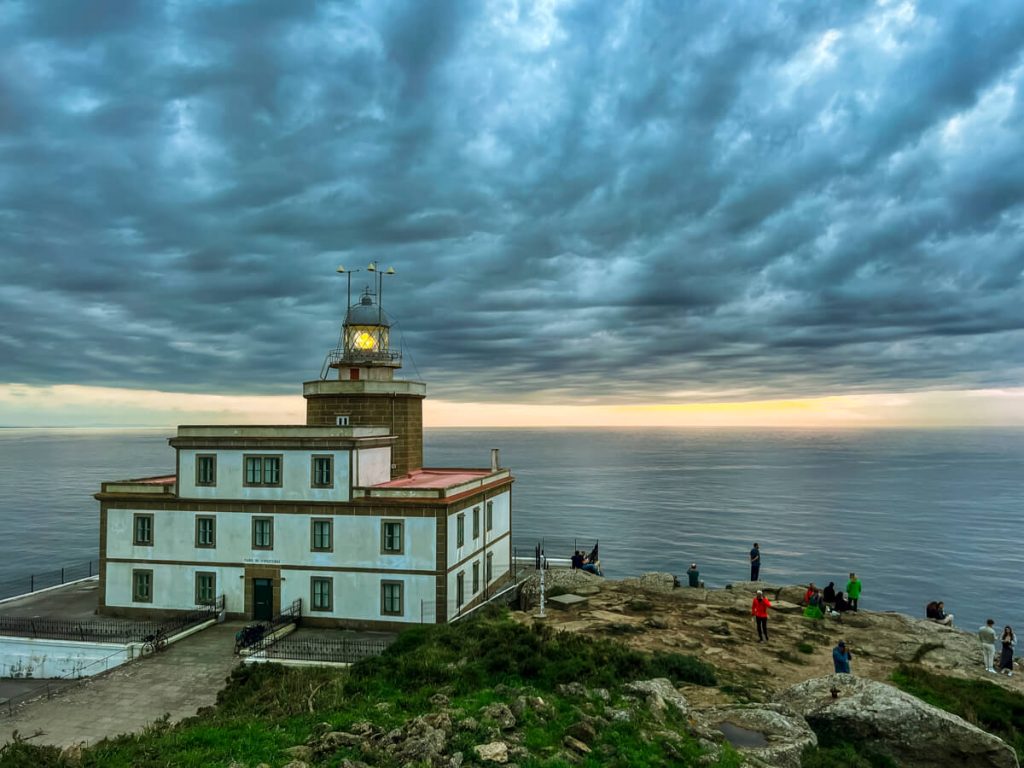
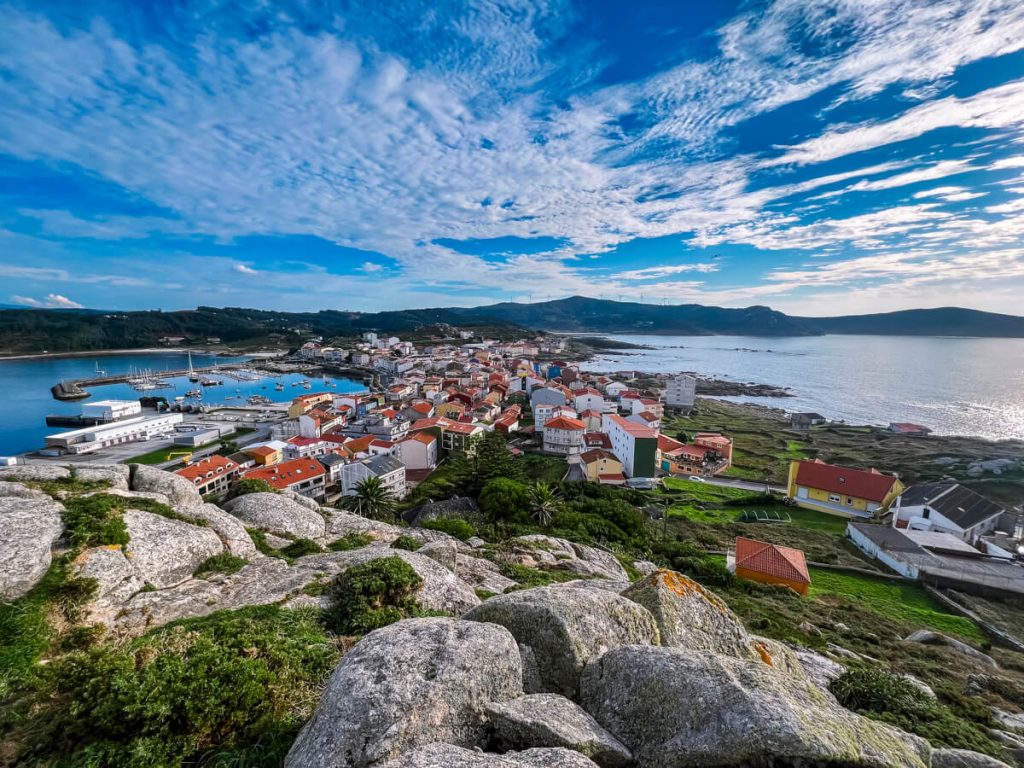
After each of the four Caminos that I’ve hiked, I continued my hike to Finisterre, Muxía, or both. That is to say, I highly recommend it!
Since the Camino Primitivo is (relatively) short, adding an extra 90 km should be a piece of cake.
You can walk to Finisterre or Muxía at a quick pace in 3 days or take your time with 4-5 days.
Continuing your walk as far west as you can go feels so good when you reach the Atlantic Ocean.
Finisterre offers rugged cliffs, an imposing lighthouse, and wide-open western skies. Traditionally, people burned their socks here to symbolize the end of their journey. (I never did because that would void the Darn Tough lifetime warranty!)
On the other hand, Muxía is a quiet fishing town that boasts a massive stone monument and waves crashing on large boulders.
Muxía also has my all-time favorite albergue, Bela Muxía. The hosts are some of the kindest people I’ve ever met, and I highly recommend the private bunk rooms!
If you don’t have time for the walk, I still recommend going via bus or private tour!
The most affordable way is to take the local bus to Finisterre or Muxía in the morning, then catch an afternoon bus back to Santiago.
⚠️ If you do this on your own, buy both bus tickets at once because they can sell out!
Alternatively, if you’re tired of planning and want to see a little more, there are fantastic one-day tours available. These will take you to both Finisterre and Muxía, and will also stop at other unique locations.
I have taken other similar tours in other locations, and it’s fantastic to just jump on and have fun without worrying about planning.
Final Thoughts
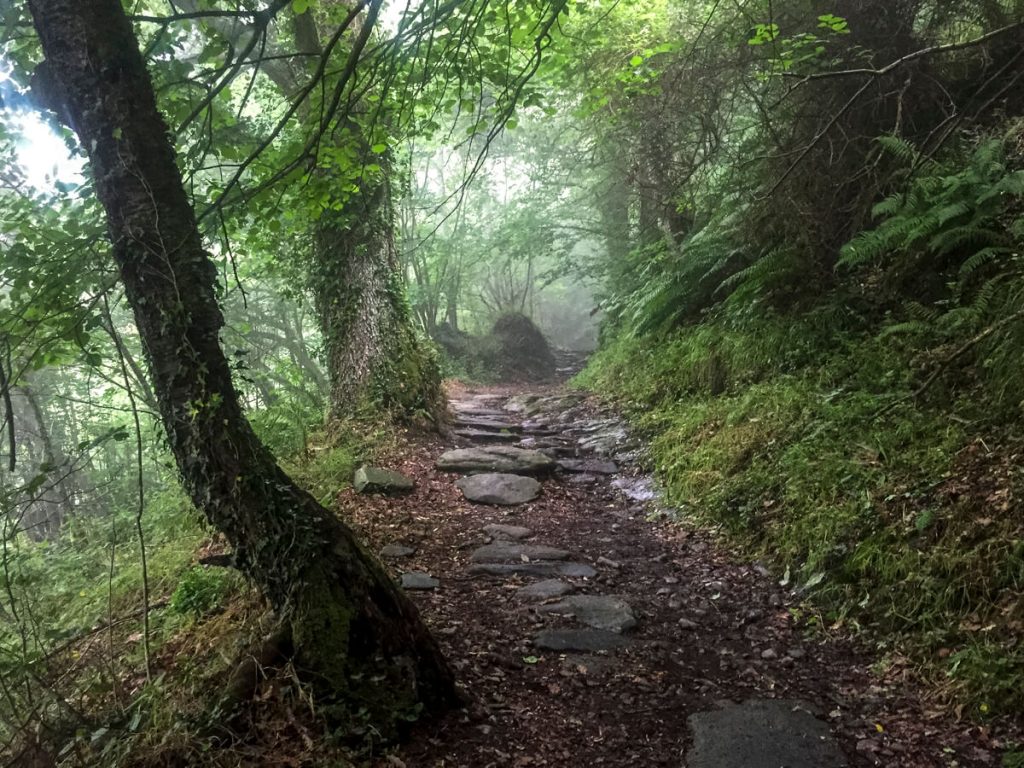
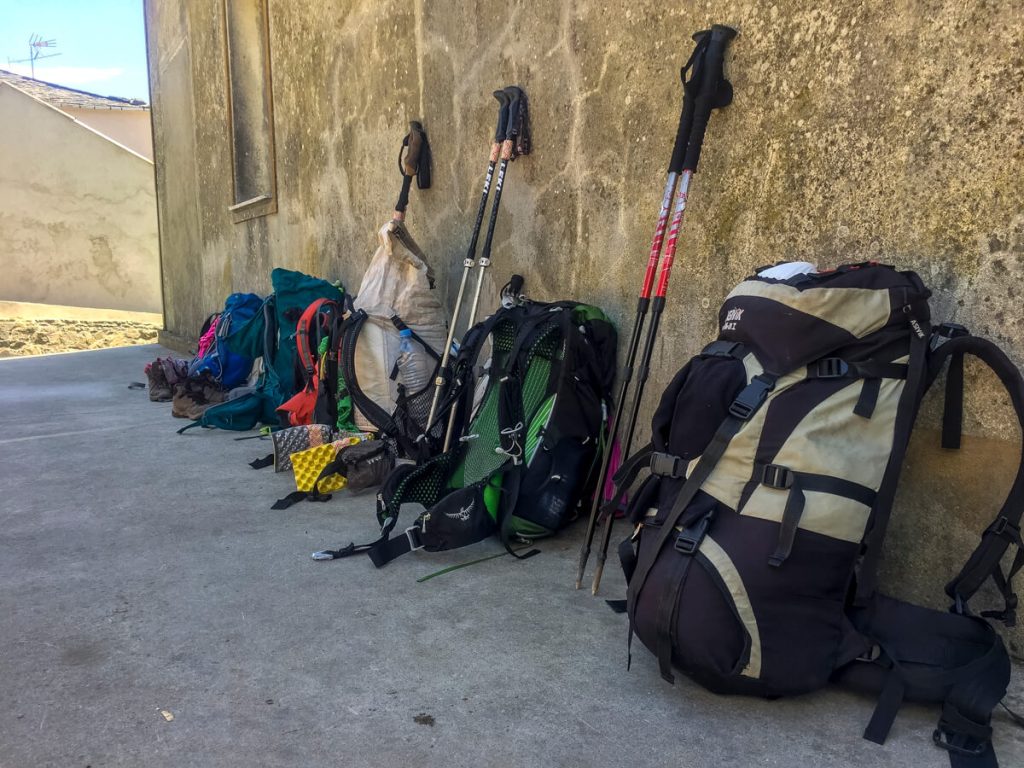
The Camino Primitivo, or Original Way, is a beautiful, challenging route. With fewer towns than many other Caminos, it gives more of a rugged feeling.
While it’s not for the faint of heart, it is still a marked route that is feasible with good physical preparedness.
The Camino Primitivo is one of two Caminos that I recommend specifically to thru-hikers (the other being the Camino del Norte). You’ll still sleep in a bed every night instead of camping. However, the terrain will be much more to a thru-hiker’s liking than other routes like the Portuguese Camino or the Camino Frances.
I would also recommend the Camino Primitivo to those who have backpacked and hiked in mountainous terrain.
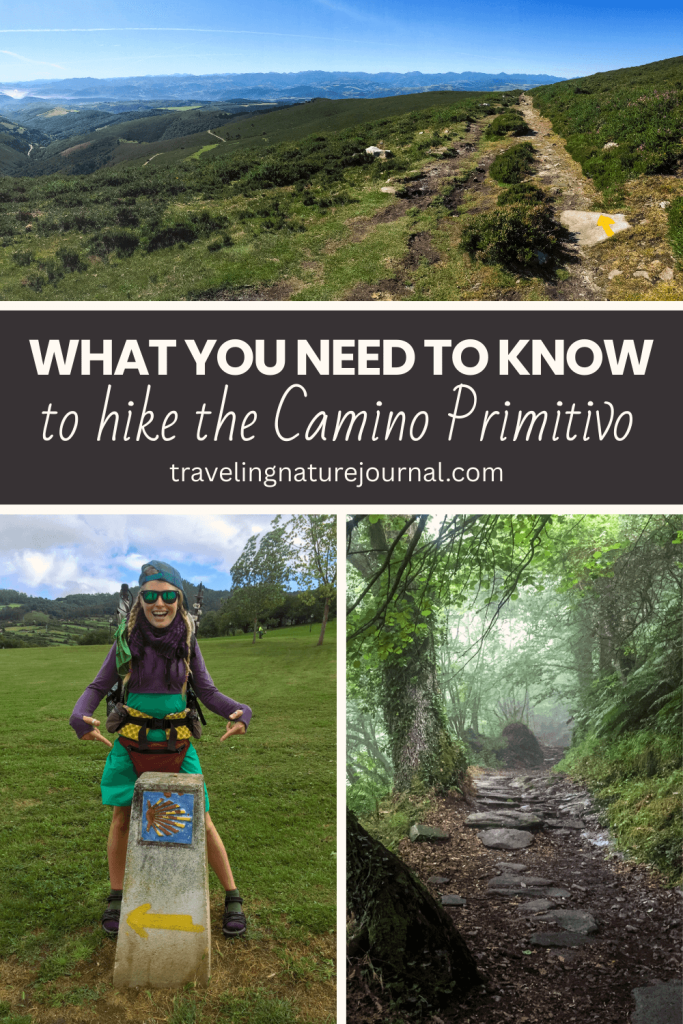
📌 Pin It To Remember Later!