How to Check for Bed Bugs on the Camino de Santiago
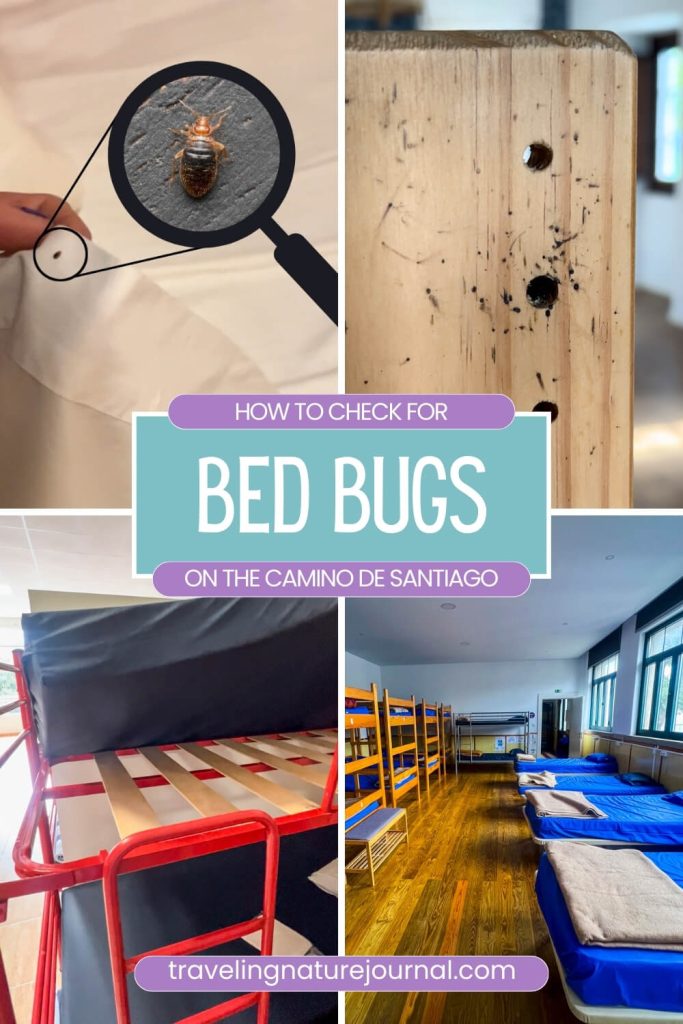
The worst ick of hiking any Camino de Santiago is the possibility of getting bitten by bed bugs. However, once you know how to check for bed bugs, you can use these tools to decrease your chances of getting them.
After hiking FOUR Caminos de Santiago, I’ve gotten them TWICE and found adult bed bugs in albergues two other times.
Bed bugs are miserable little creatures that can suck the fun and peace out of your hike. They itch like crazy, and they can leave you with phantom itches for months afterward.
Now, I systematically check every albergue bed before I settle in. My checklist not only prevents bites but can also help you get a refund!
Before you begin your Camino adventure, familiarize yourself with this list. When you’re out there hiking, tell others what to look for—we’re all in it together.
This post contains affiliate links. If you purchase a product or book through these links, I can make a small commission at no cost to you. It helps me to keep writing helpful guides.
List of Contents
How bad is the bed bug situation on the Camino de Santiago?

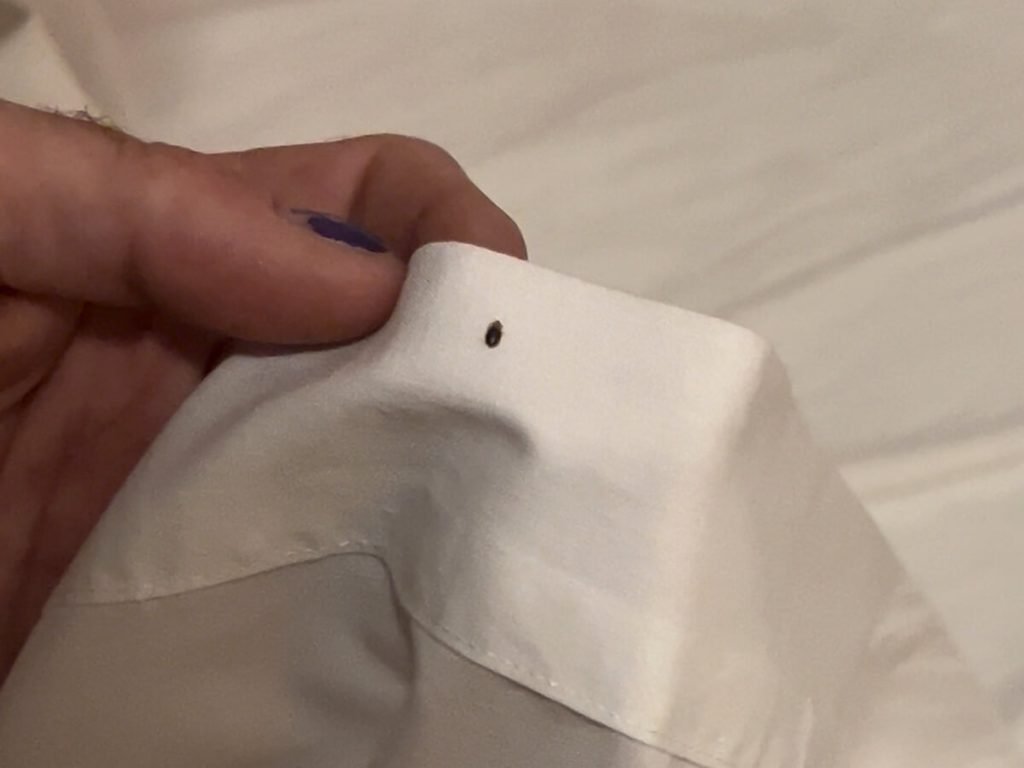
It’s hard to put precise numbers on how bad the bed bug situation is on the Camino de Santiago. However, bed bugs certainly exist on the Caminos. Whether you encounter them depends on where you choose to stay and some potential bad luck.
The best I can do to quantify this problem is with numbers from my personal experience.
I’ve hiked 4 Caminos.
The total number of nights I spent in albergues is 126.
I got bitten by bed bugs AND got them in my backpack 2 times.
I have found bed bugs in my bed bug checklist and left the albergue 2 times.
By that math, I experienced bed bugs in some form on 3% of my nights over 4 Caminos.
Bed bugs have inherently survived because they are travel parasites. They can survive in any dark place, especially those with wood. Because they’re primarily nocturnal, we as humans often don’t see them until it’s too late.
It’s the nature of a Camino walk to only stay one night in each place. That creates a high bed turnover and an increased chance for bed bugs to travel. Thus, it’s essential to check for bed bugs on the Camino at every albergue.
The Most Common Places to Get Bed Bugs
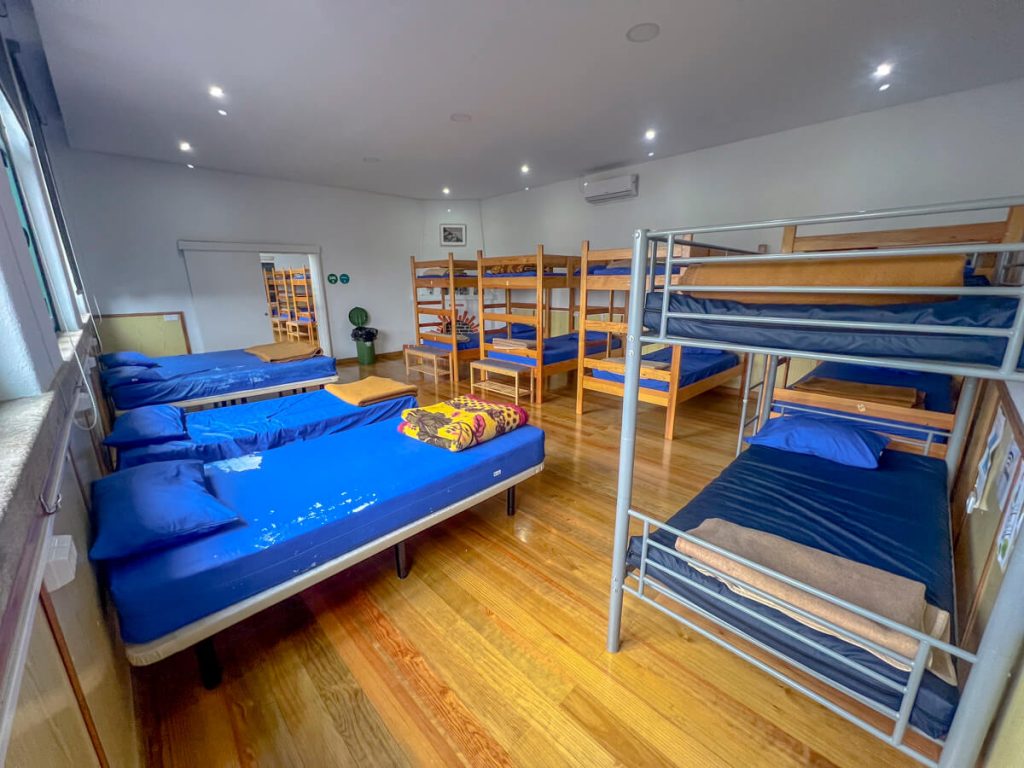
The most common places to get bed bugs on the Camino are albergues, hostels, guest rooms, and hotels.
You’re more likely to see them at the cheapest accommodation that doesn’t have the staff to clean enough. The cheaper accommodation might not have the budget for metal bed frames or vinyl mattress covers.
Unfortunately, that’s usually the municipal albergues.
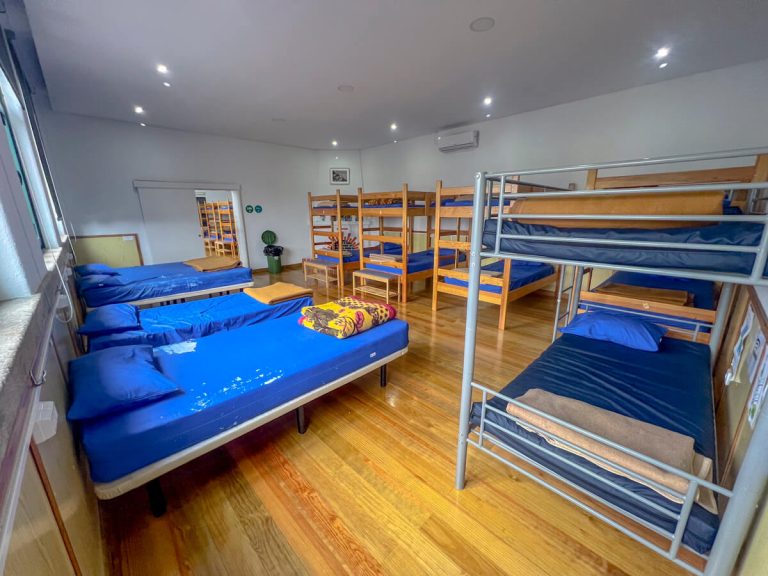
I found no bed bugs in the albergue pictured above. However, I immediately removed the blanket.
If we return to my personal bed bug experience:
- I was bitten once at a municipal albergue and once in a private guest room.
- I saw adult bed bugs two other times, once at a municipal albergue and once at a private albergue.
Therefore, based on my bed bug experiences on the Camino, I encountered them at municipal albergues 50% of the time.
At your accommodation itself, you’re most likely to get bed bugs from the mattress, the bed frame, or the wood baseboard next to the bed.
That’s why you should always check for bed bugs before you settle into your accommodation on the Camino.
What Bed Bugs and Bed Bug Bites Look Like
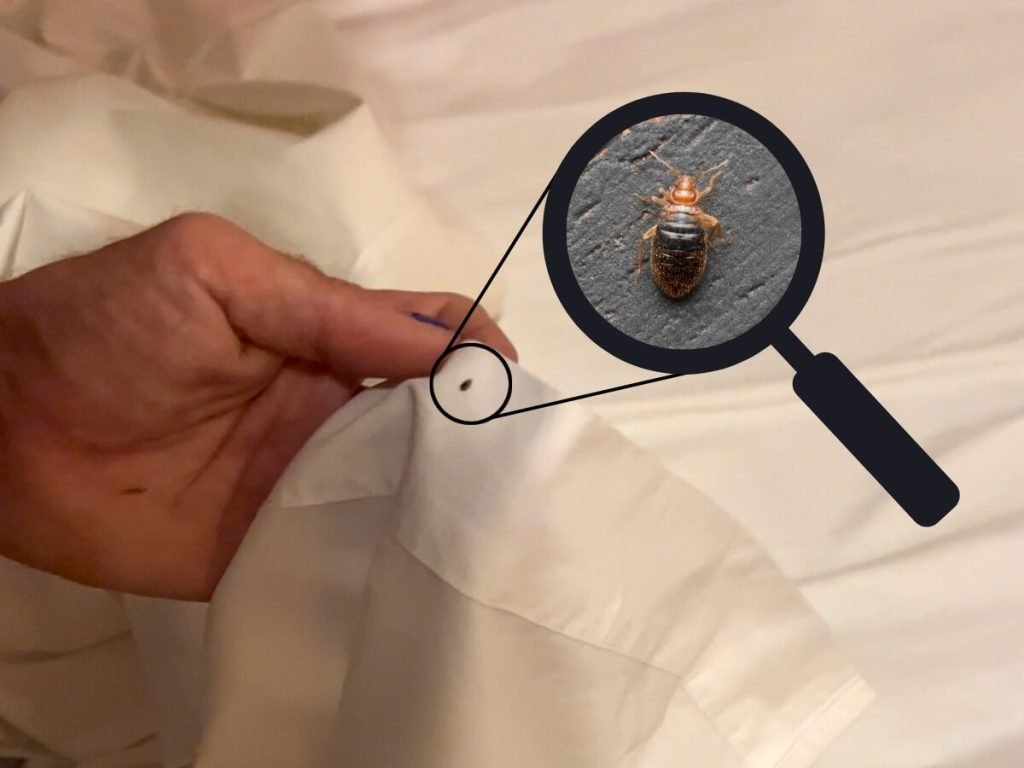
Bed bugs go through four phases of life: egg, nymph (with multiple nymph stages), unfed adult, and fed adult.
Therefore, bed bugs can look very similar to ticks in their various stages. They look remarkably similar to ticks EXCEPT the tick’s legs splay more to the side and back. In contrast, bed bug legs are skewed farther forward.
Bed bugs target exposed skin while you’re sleeping. This means they often aim for hands, wrists, arms, ankles, calves, and faces.
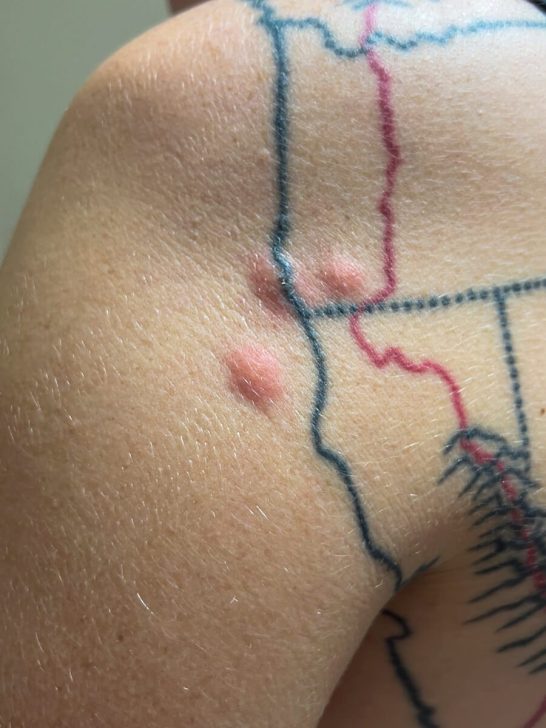
Bed bug bites are often in twos and especially threes. They usually bite in a straight line but sometimes in a cluster. Sometimes, you can see them start in a line. Then, you roll in your sleep, and the line might not be straight.
For most people, bed bug bites are relatively small.
For some people, a localized allergic reaction can take place. In that case, they’ll get bigger and become the size of average mosquito bites. A hive-like reaction is also possible, although I’ve never seen this in person.
If you’re trying to figure out if you have bed bug bites vs mosquito bites, their placement is usually the best sign. Bed bugs bite close together and often in a line because they have to walk between bites. Mosquito bites can be all over the place.
Either way, bed bug bites are miserable. That’s why it’s important to check for bed bugs and recognize not only the actual bugs but also their signs.
Telltale Signs of Bed Bugs on the Camino de Santiago
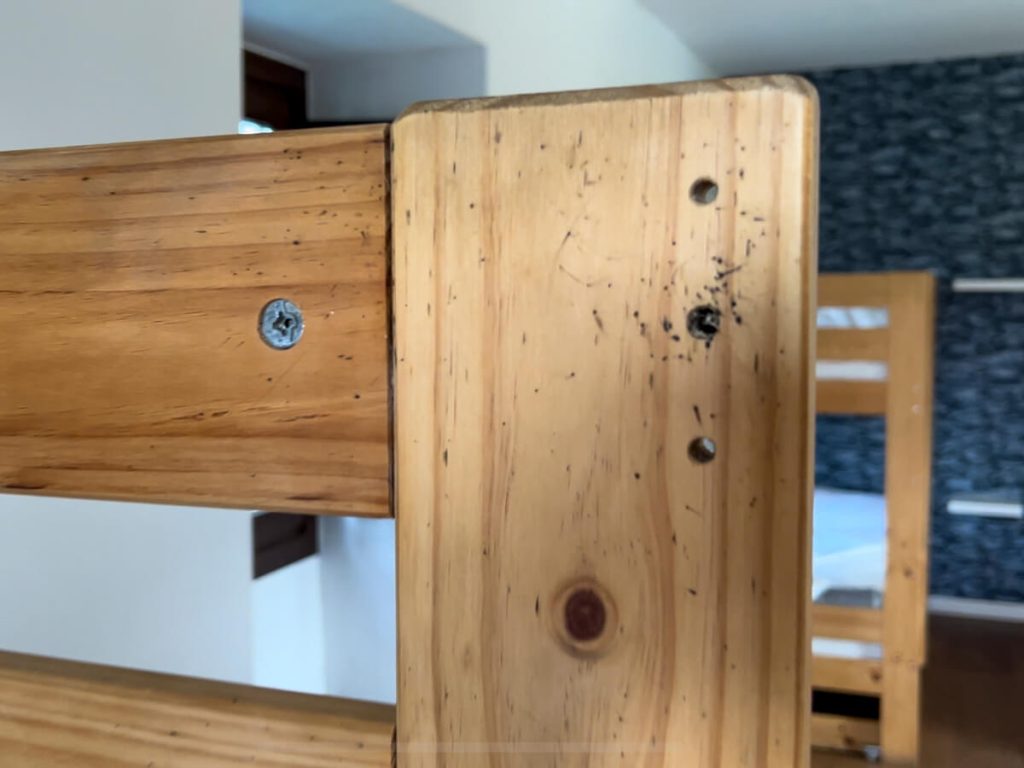
When you check for bed bugs on the Camino, this is what you’re looking for:
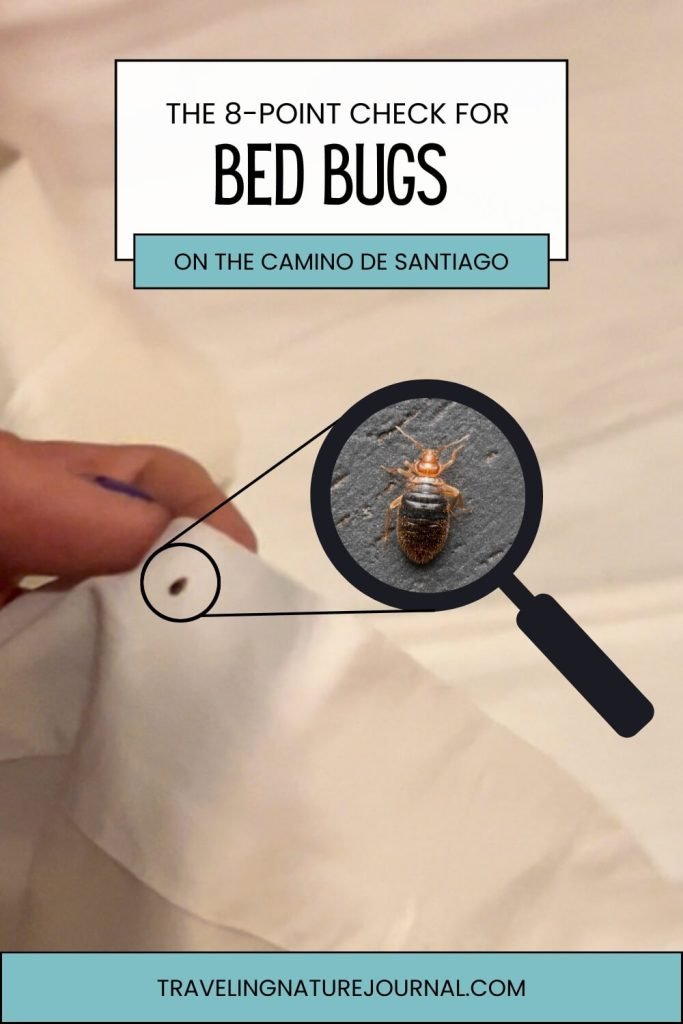
First, you’re looking for adult bed bugs. They’re roughly tick-sized but have different leg attachments. These are the only ones you’ll likely see with your eyes.
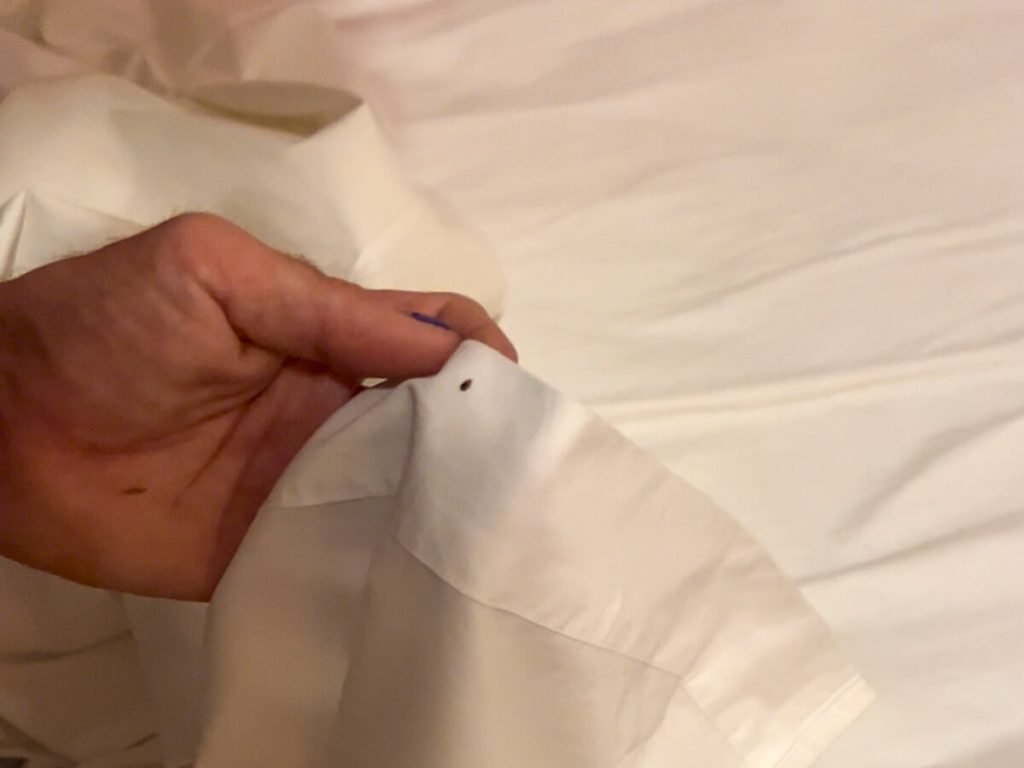
Second, you’re looking for tiny black dots. This is bed bug poop. Gross, I know. The black spots usually aren’t more prominent than a pinprick to a tiny pinhead. This is the most common telltale sign of bed bugs.
Third, you’re looking for shed casings. Bed bugs sometimes leave shed casings as they grow between various nymph stages. These look like the body portion of the bed bug. They’re small, oval, and anywhere from yellow to brown in color.
8-Point Check for Bed Bugs on the Camino de Santiago
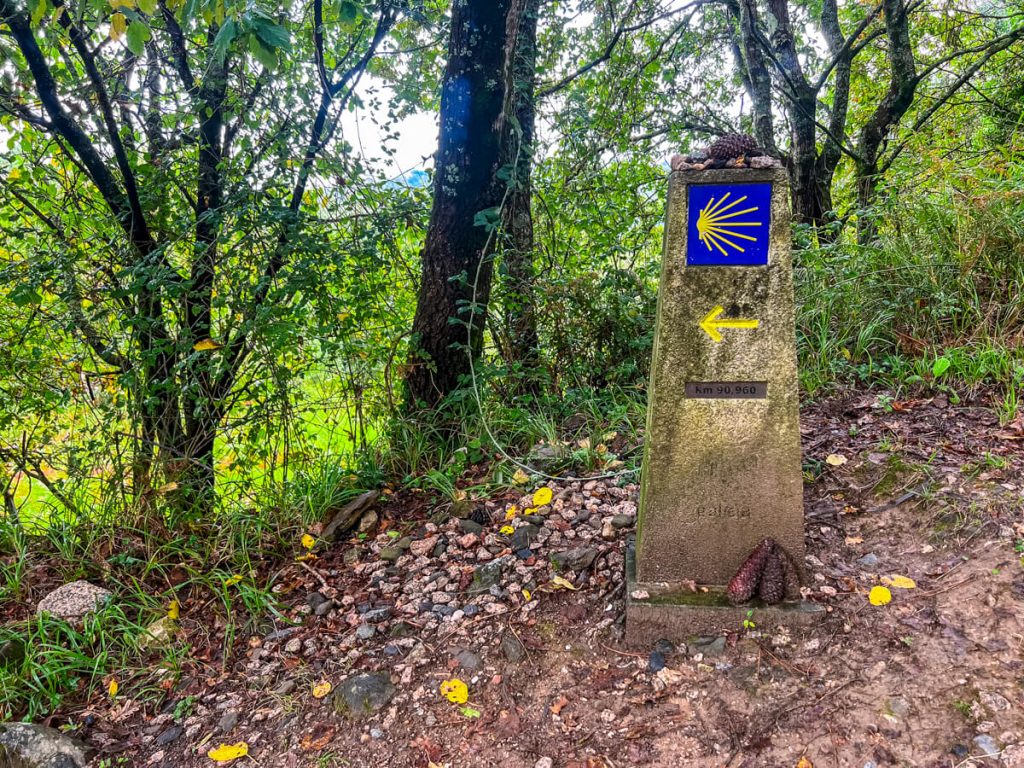
Back when I first started hiking Caminos in 2008, I just showed up to an albergue and did a check for bed bugs. Then, I found albergues by using a paper guidebook and followed signs for them in town.
Now, on my most recent Camino hike, I used the power of the internet before I even entered an albergue.
Personally, I’ve grown to prefer booking my albergue stays one night in advance. This not only allows me to take my time on the walk, but it allows me to read reviews first.
Before I book an albergue, I skim the reviews left on Wise Pilgrim, Buen Camino, Booking, and Google.
If someone got bed bugs…they’ll be mad about it and write a scathing review somewhere. Look for those within the same hiking season (spring to fall of the same year).
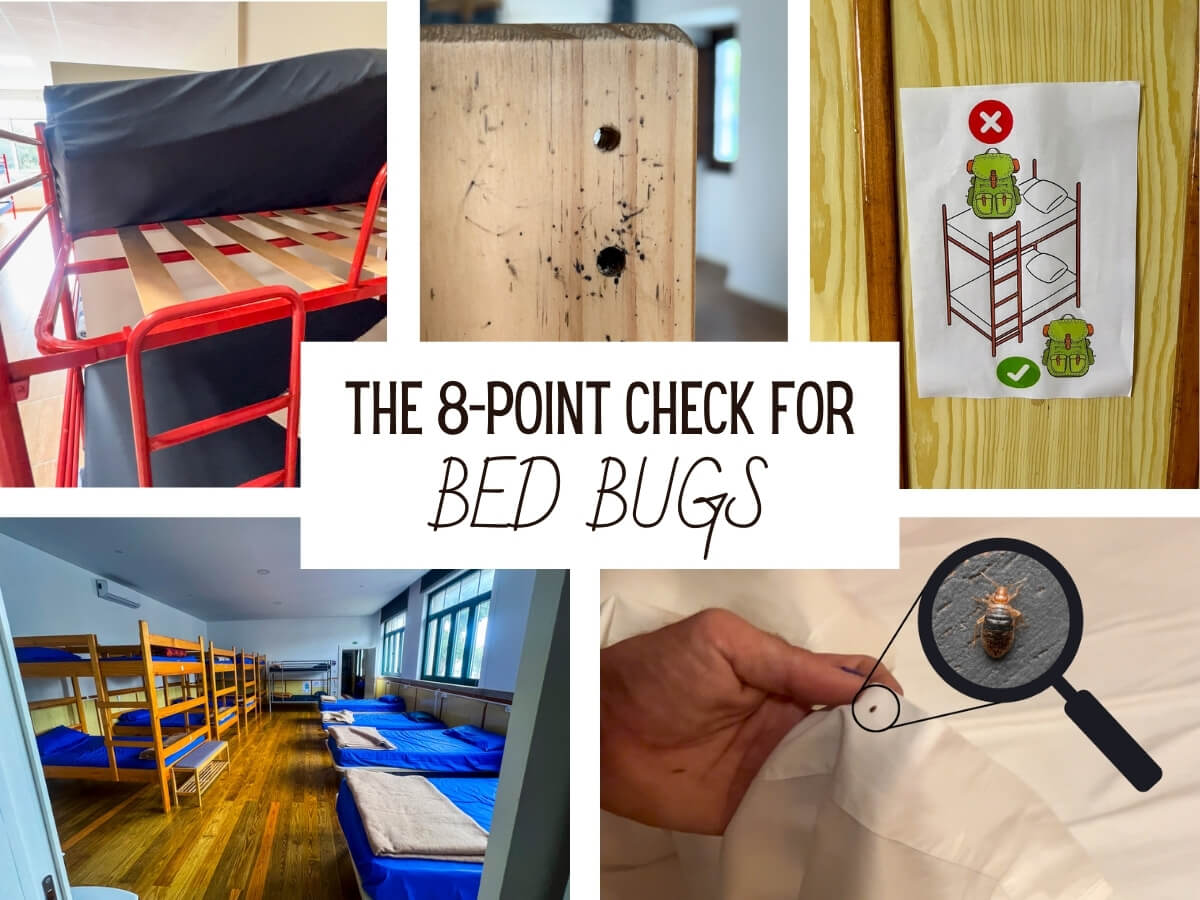
Then, when I actually arrive at the albergue, I do this 8-point check for bed bugs on the Camino.
🚨 PRO TIP: Do this before you use any of the albergue services like the shower!
1. Does the bed have a wooden frame?
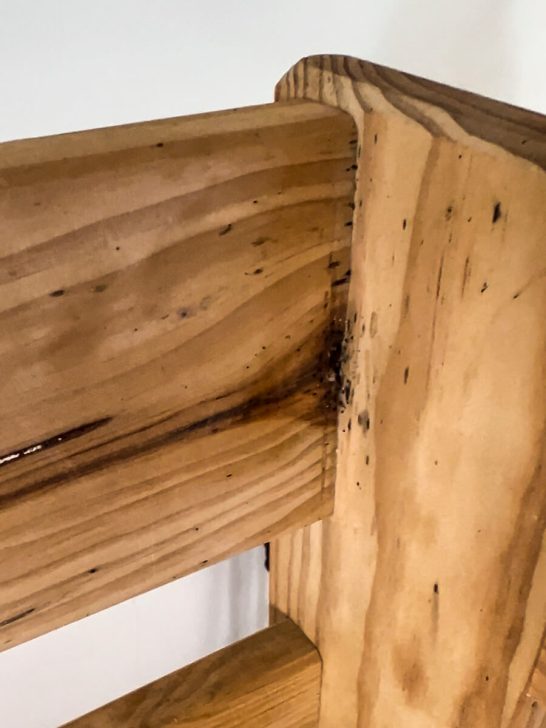
The first thing I look at is the wood bed frame. Bed bugs love to live in wood. Here, I’m looking for tiny black spots, cracks, holes, and bed bugs themselves.
Often, you can also avoid places with wood bed frames by looking at the booking photos online beforehand.
2. If a wood bed frame is present, are the cracks and any holes sealed?
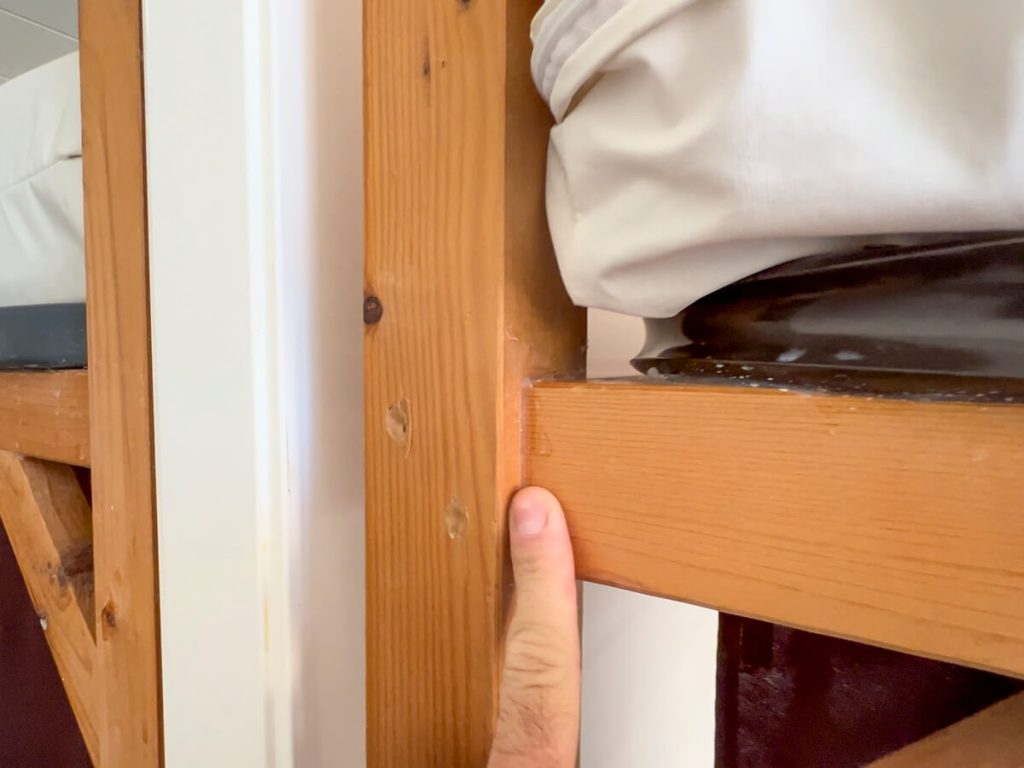
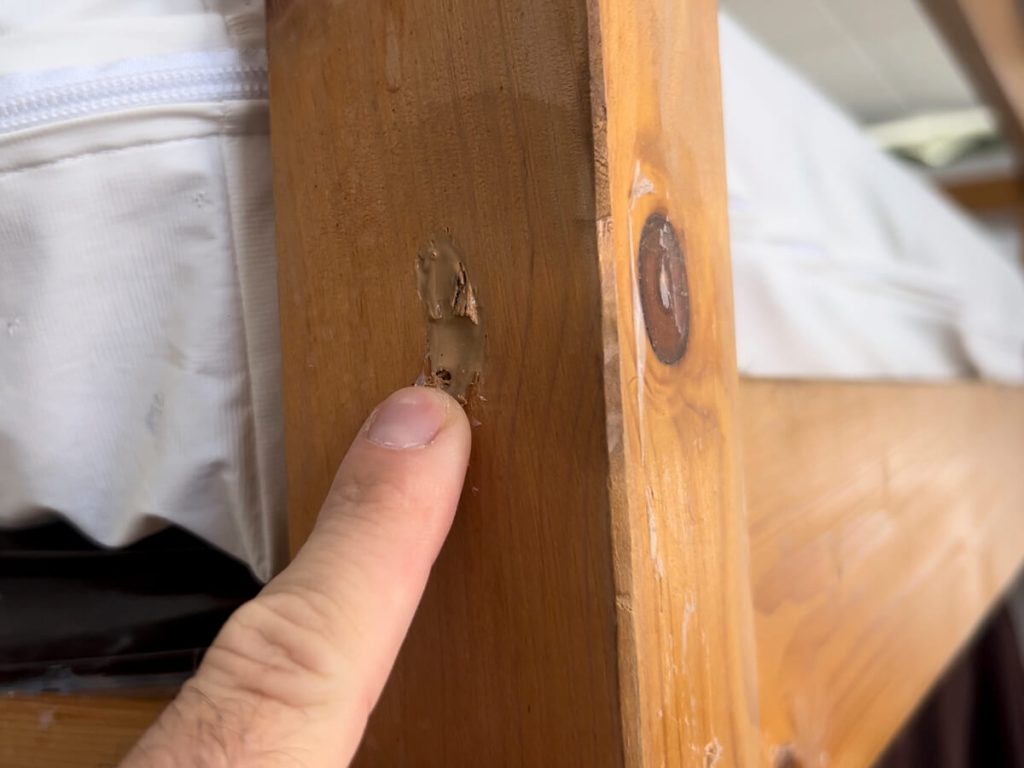
Just because the albergue has wood bed frames doesn’t mean it has bed bugs.
Some albergues will use hot glue to seal all the places the wood connects. They’ll also seal any natural cracks and holes in the wood. If these places are sealed, they are less hospitable for bed bugs to lay eggs and mature.
3. Does the mattress have a vinyl cover?
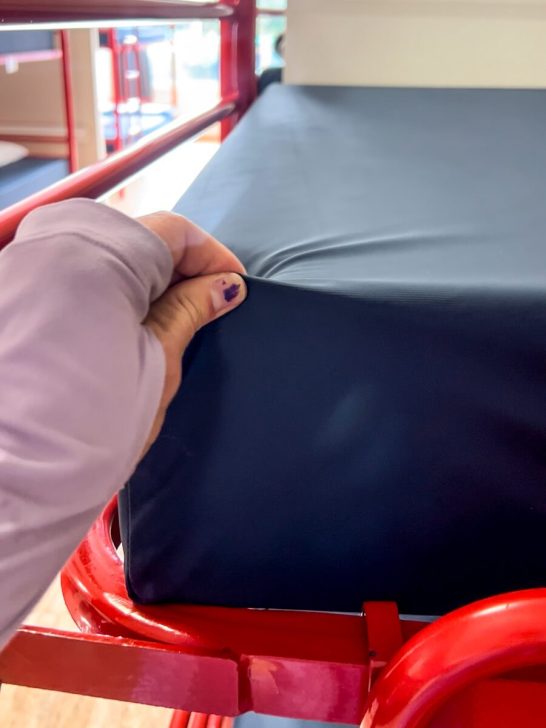
Besides wood bed frames, bed bugs hide in the dark corners of mattresses.
First, check to see if it has a vinyl mattress cover. This is essentially a mattress cover to prevent bed bugs from staying long-term. Bed bugs do not like these because they cannot access the mattress underneath.
Second, if it doesn’t, check for bed bugs in each corner! Look around the seam that rounds each corner. You’re looking for not only adult bed bugs but also their casings and tiny black dots. Check both the mattress itself AND the sheets!
4. Check the sheets for tiny black dots. (And elsewhere)
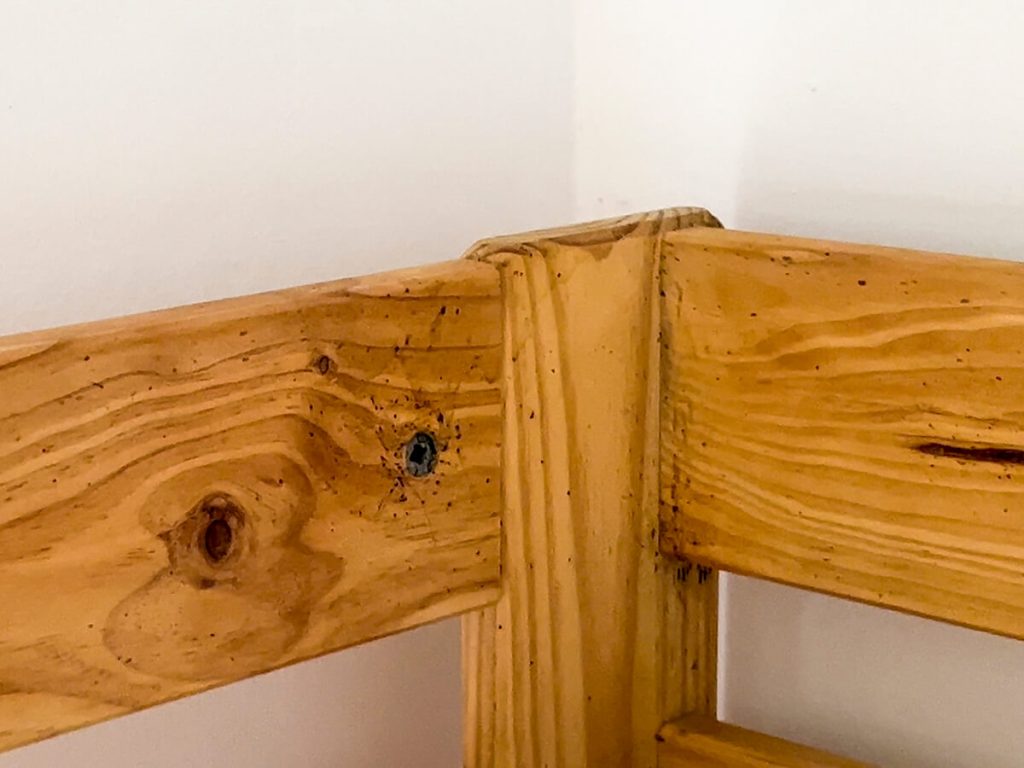
Always look at the sheets themselves, especially under the pillow and in the corners. Signs of bed bugs on sheets are usually tiny black dots of their poop.
If the sheets haven’t been cleaned at all, you could see bed bug casings as well. This is what they shed in their various growth stages.
Personally, I’ve never seen the black dots on the sheets. I think that’s the one thing the albergues consistently clean. Or, they’ve switched to disposable fitted sheets in plastic wrap.
I have, however, seen what the black dots look like in a wood bed frame, as pictured above.
5. Lift the mattress
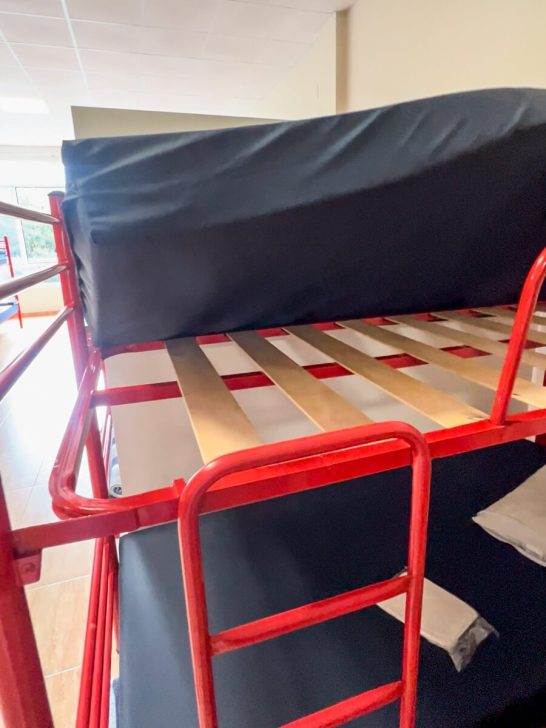
Remember to look at the bottom corners of the mattress as well. If there is no vinyl mattress cover, take an extra close look at the corner seams.
ALSO, metal bed frames can have wood bed slats under the mattress. These are great for bed bugs to live in long-term. You’re going to check for bed bugs themselves and their little black dots.
6. Remove the provided blanket and look closely!
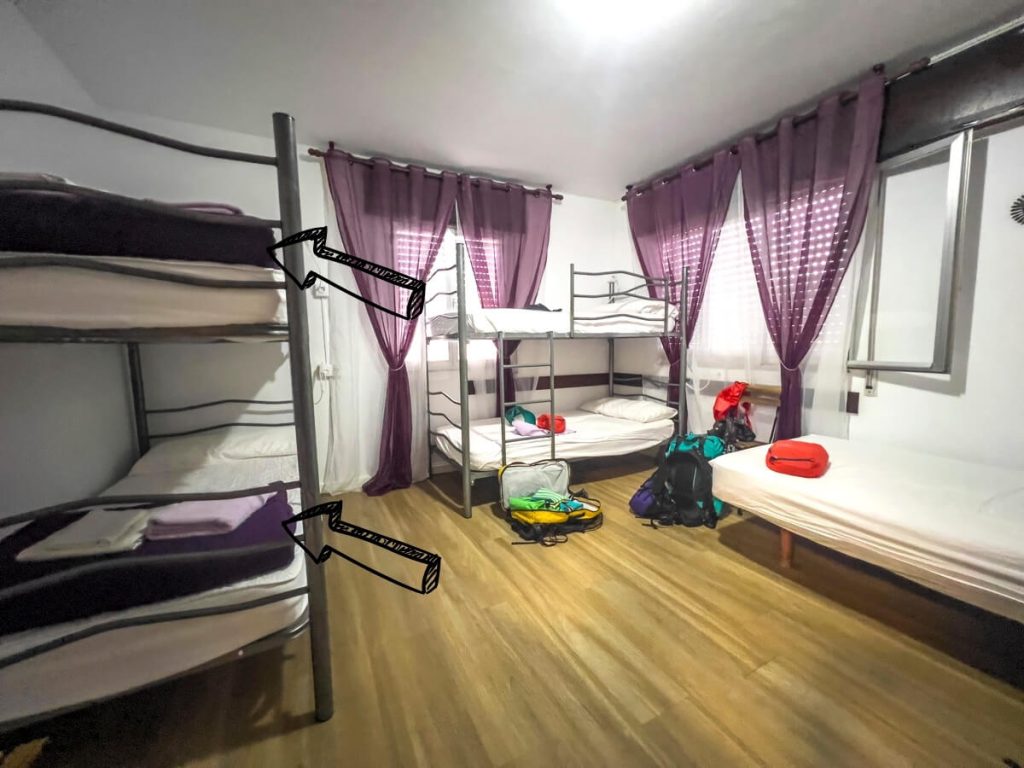
You should NEVER use the provided blankets on a Camino, in my opinion. I’ve seen adult bed bugs twice, hiding in the blankets and resting on the bed.
While the sheets get washed, the blankets only get washed at the end of the season!!!
Instead, a lightweight sleeping bag/quilt and a silk liner are worth their weight in gold. Using these instead of the albergue blankets is 100% worth it and likely the best way to avoid bed bugs on the Camino.
7. Is there a wood baseboard, and is the bed against it?
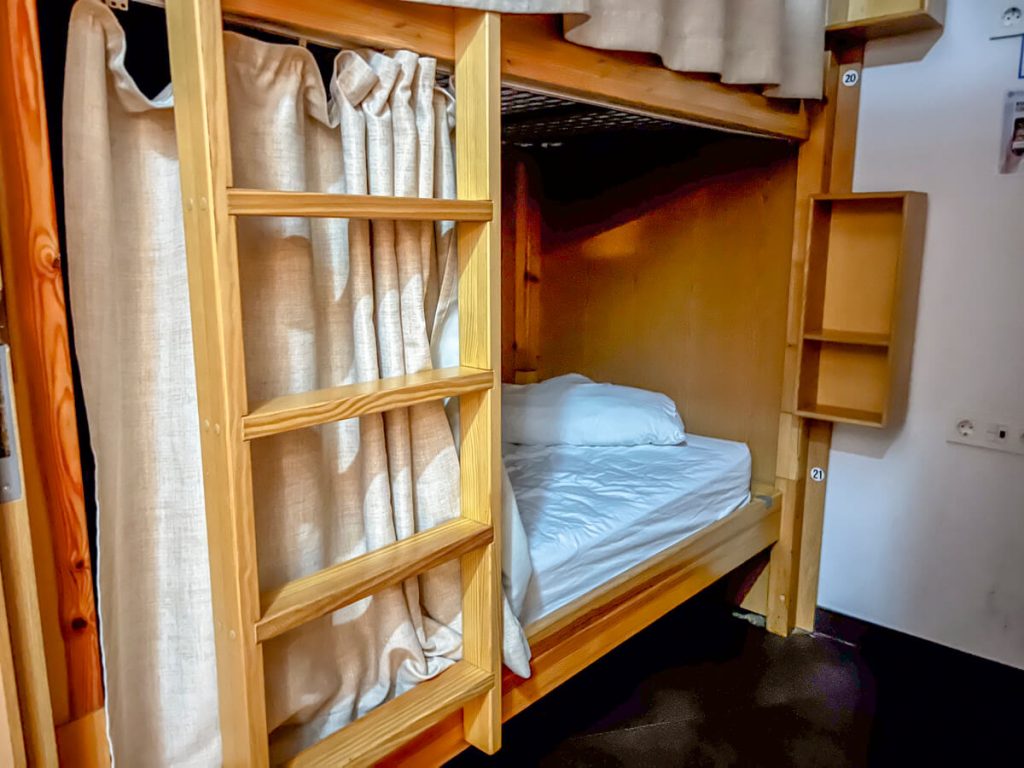
After you check for bed bugs all over the bed, examine the area around the bed. One of the big places bed bugs hide and live is in wood baseboards.
Check the baseboard out. Is it wood? How much of the bed is against it (the side and top or just the top)? If you can, pick a bed away from the wall as much as possible.
Look to see if the albergue has added hot glue or caulk at the top of the baseboard. If you see any seal, that’s a good sign. A crack or an opening in a wood baseboard is a spot where bed bugs would easily hide.
Bed bugs like wood baseboards because they have a safe living space for the day hours to hide. Then, at night, they are close to the bed to crawl up and get a blood meal.
8. Is there space for your backpack off the bed, off the floor, and away from the wall?
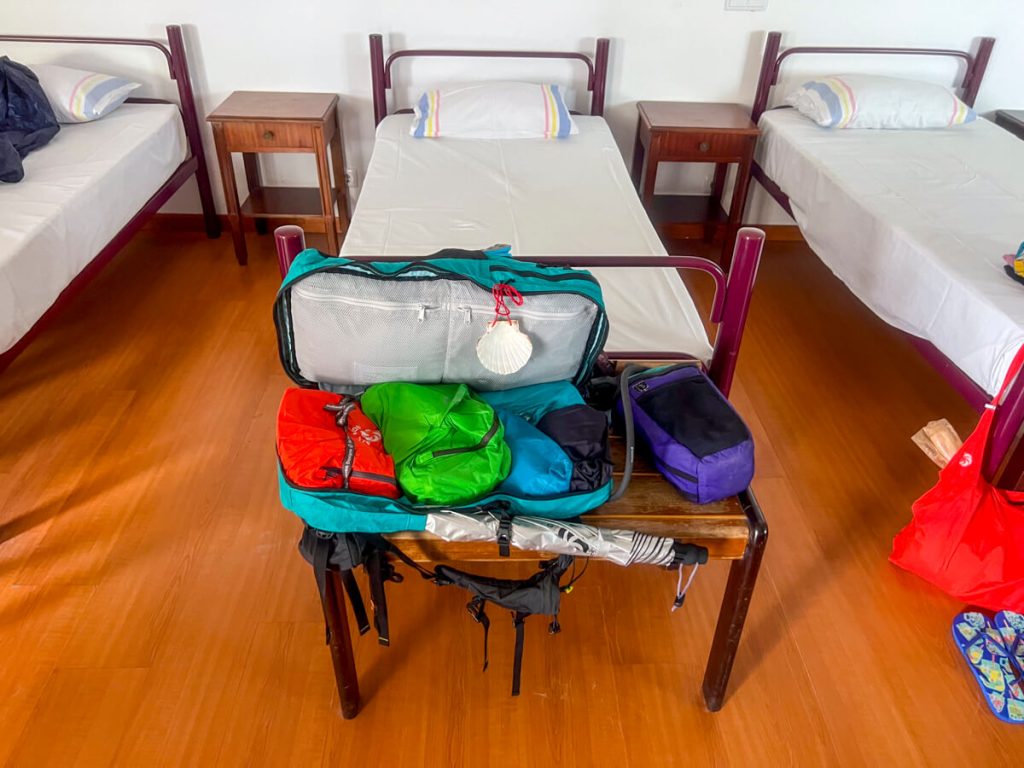
If you do find an unsealed wood baseboard, take care not to put your backpack against it.
I have personally gotten bed bugs this way because they’ve entered my backpack. I’ll describe how to get rid of them further in this post.
This is one reason why it’s against Camino etiquette to put your backpack on the bed. You might not even realize bed bugs are in your backpack yet. But bed bugs could transfer locations to the new that way.
Essentially, find a place for your backpack that’s not on the bed or against the wood baseboard.
How to Get a Refund if You Find Bed Bugs on the Camino de Santiago
Your best chance to get a refund, if you check for bed bugs and find them, is to check FIRST.
By that, I mean get into the albergue and complete your 8-point check.
Don’t drop your bag and shower.
No jumping into the laundry because the machines are open.
Don’t cook in the kitchen.
👏 Do 👏 the 👏 bed 👏 bug 👏 check 👏 first! 👏
If you use the other services first, the albergue can argue that you still need to pay because those things cost money.
If you find bed bugs or signs of bed bugs in your first 15 minutes without using anything, the albergue has no ground to stand on and should refund you.
When I mentioned finding bed bugs on the Camino on Instagram, I had many conversations with others about their experiences. One story that stuck with me was that because someone showered and found bed bugs afterward, they were refused a refund because they used the shower.
How to Treat Bed Bug Bites on the Camino de Santiago
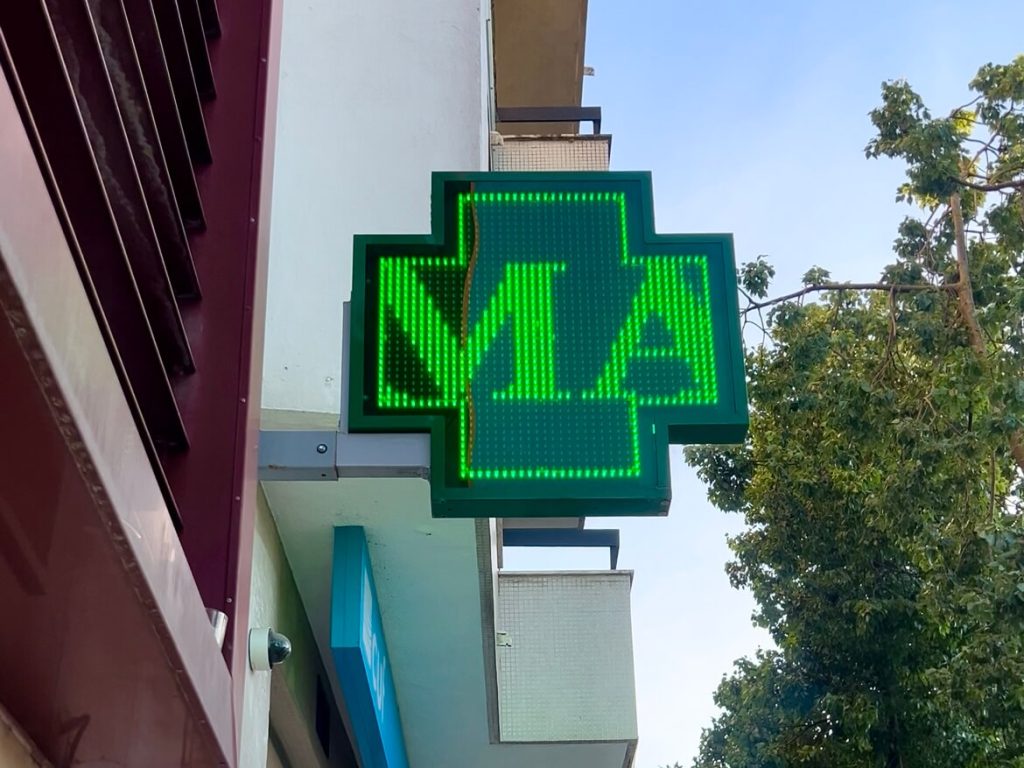
Even if you check for bed bugs, there’s still the possibility that you’ll wake up with bed bug bites.
The first time I got bitten by bed bugs, I thought they were mosquito bites. I get stronger localized reactions to almost any insect bites, so I didn’t think about it. As I checked into an albergue, the Spanish woman running it saw my bites. She told me what they were and took my entire, full backpack. Then, she handed me a spare pair of her clothes and told me to take a shower and bring me the clothes I wore. She cleaned everything for me before she allowed me further into the albergue.
The second time I got bed bugs was on the Portuguese Camino in 2024. It was a warm night, and I slept in shorts and a loose, short-sleeved shirt. I woke up with lines of bites on my calves and a cluster on my shoulder.
Both times, I went to the nearest pharmacy and showed the pharmacist my bites. You can find pharmacies in both Spain and Portugal by looking for the green medical cross. No, they are not pot shops.
Spanish pharmacies differ from US pharmacies because, more often than not, what you need is behind the counter. You need to talk to them or gesture and show them.
In both cases, they had me buy some anti-itch cream and some Benadryl to calm the itching at night.
The second step was to remove all possibility of spreading bed bugs by getting them out of my backpack.
How to Get Rid of Bed Bugs on the Camino de Santiago (Get Bed Bugs Out of Your Backpack!)
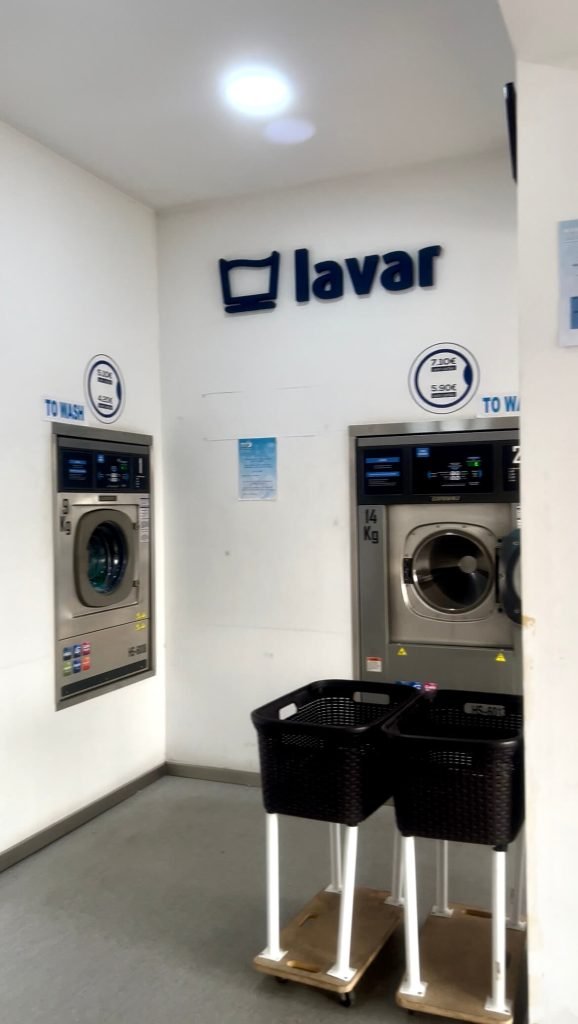

If you’ve gotten any bed bug bites despite doing the 8-point check for bed bugs, you should clean your stuff.
The only foolproof method to get rid of bed bugs is heat.
This means washing everything you can and putting everything in the dryer. Set the drier heat to at least 122 degrees F/50 degrees C for at least 15 minutes.
These temperatures in the dryer for that time will kill all stages of bed bugs from the eggs to the adults.
🚨 Higher than 160 degrees F/70 degrees C can seriously damage and possibly melt your gear!!!
This step is necessary for the sake of protecting the community on the Camino de Santiago. Just because someone else brought bed bugs to where you stayed doesn’t mean you should bring them forward.
If you suspect you have bed bugs in your backpack, tell the albergue host. They will direct you to the nearest laundry service. In Portugal, we found a self-operated laundromat nearby and washed everything ourselves. Just like the albergue washers we saw, the laundromat washers included their own soap.
Things to Do Before Going Home from a Camino
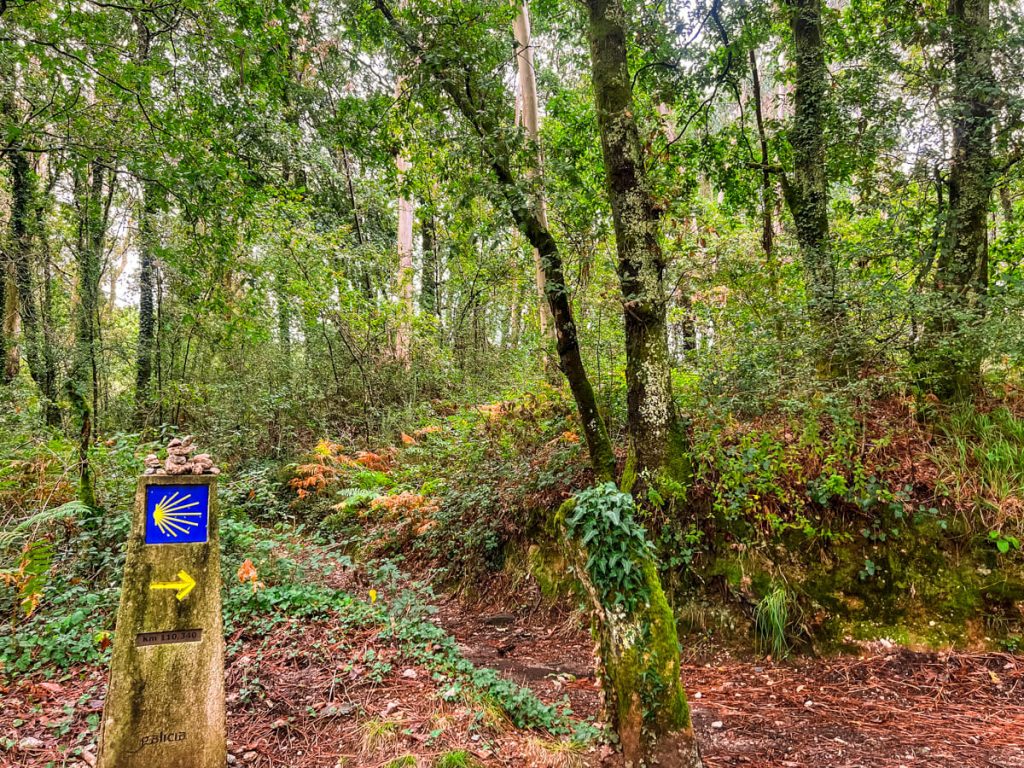
Before leaving to go home, I recommend you wash everything! Pretend you have bed bugs, then wash and dry everything accordingly.
While I’ve never heard of this happening, it’s entirely possible that you could bring bed bugs from the Camino home with you.
When sharing my bed bug experiences on Instagram in 2024, I heard a lot about Santiago having a bed bug problem. By the fall, walkers had brought bed bugs into the city.
To adequately get bed bugs out of an albergue, it has to get heat and/or spray treatment. This means it must be closed (meaning they’d lose money). Albergues don’t like to do this until winter, when they’re closed for the season anyway.
Since most people will fly out of Madrid, I recommend finding a self-serve laundromat there and doing a final wash before returning home.
Final Thoughts

Bed bugs suck. However, if you do my recommended 8-point check, you’re less likely to have a bad experience like I did.
Please remember that while bed bugs on the Camino de Santiago exist, I only encountered them 3% of the time. That 3% was only on 2 of the 4 caminos I hiked, the Camino Frances and the Camino Portugués. I had 2 entire Caminos with zero interactions.
The single best defense you have against bed bugs on the Camino is to do the 8-point check everywhere you stay. If you find them, get a refund, leave, and review it.
If you do check for bed bugs, find nothing, and still get bitten, go through the wash process. It sucks, but it happens. Sometimes, they’re just too small to see, or they’re not fully established in a spot yet, so you don’t see the signs.
If you’ve experienced bed bugs on the Camino, drop your story in the comments. It might help someone else out!
📌 Pin it for later!