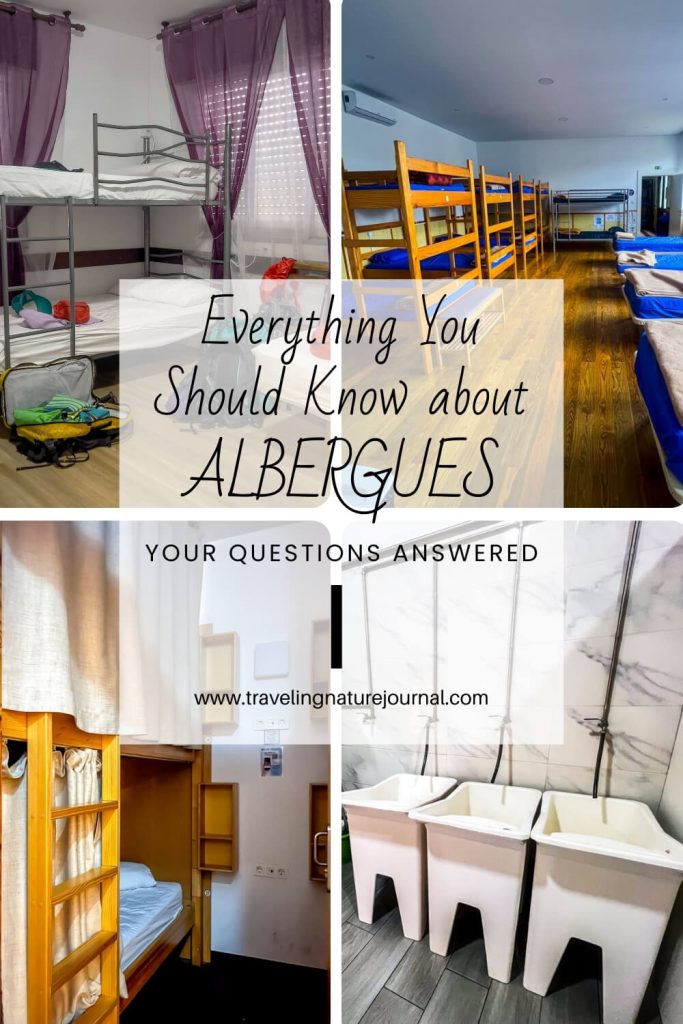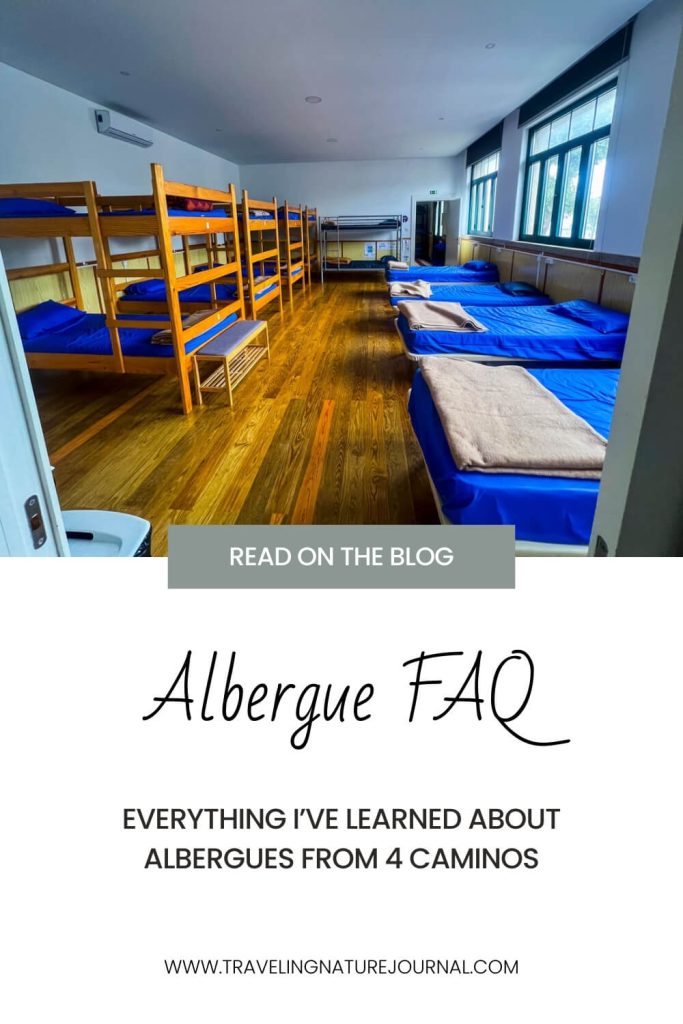
The Caminos de Santiago are cultural walks across Europe that all head toward Santiago de Compostela in Spain. Those who walk a Camino sleep in albergues along the way. Essentially, an albergue is a hostel only for those walking a Camino.
If you’re looking to hike any of the Caminos de Santiago (yes, there are many!), this post is for you! After hiking four of them, I’ve learned a lot about albergues and how to coexist with people from all over the world in the same room.
Let’s get you up to speed so you know what to expect when you stay in an albergue. You’ll learn about the cost of albergues, my strategies to deal with snorers, where to put your pack, what you need to bring to be happy, and how to book them.
This post is applicable to all Caminos de Santiago!
This post contains affiliate links. If you purchase a product or book through these links, I can make a small commission at no cost to you. It helps me to keep writing helpful guides.
List of Contents
What is an Albergue? Your Questions Answered!
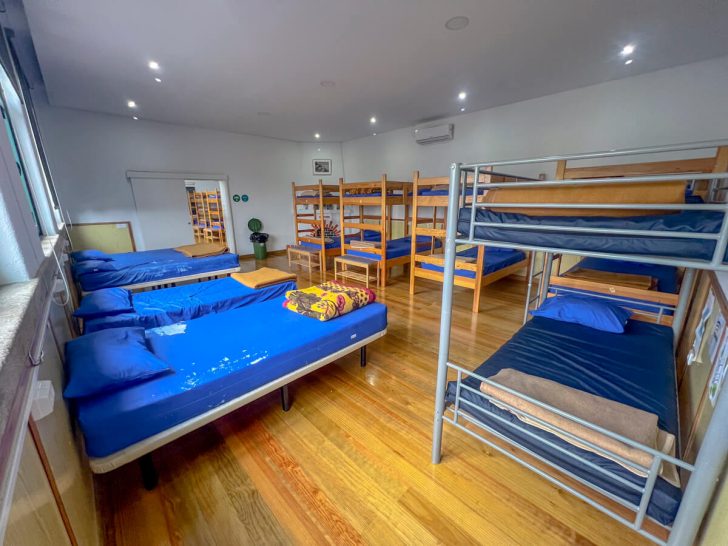
To put it simply: an albergue is a pilgrim hostel.
To go deeper: those hiking a Camino (any of them) are called pilgrims which refers to the history of the routes as religious pilgrimages. Because the journey is long, pilgrims need accommodation along the way. That accommodation has morphed into albergues over time. Thus, Portuguese Camino albergues can vary from old school buildings to people’s houses, monasteries, and regular businesses outfitted into a hostel.
Camino Quick Links
✈️ Book a flight to the start and use this Porto to Santiago Itinerary!
🎒 Grab your Camino Packing List to get ready.
📲 Get an eSIM so you can use the Camino Apps without wifi.
🦺 Protect yourself with a VPN while using the albergue’s Wi-Fi.
⚕️Grab some travel insurance for your trip!
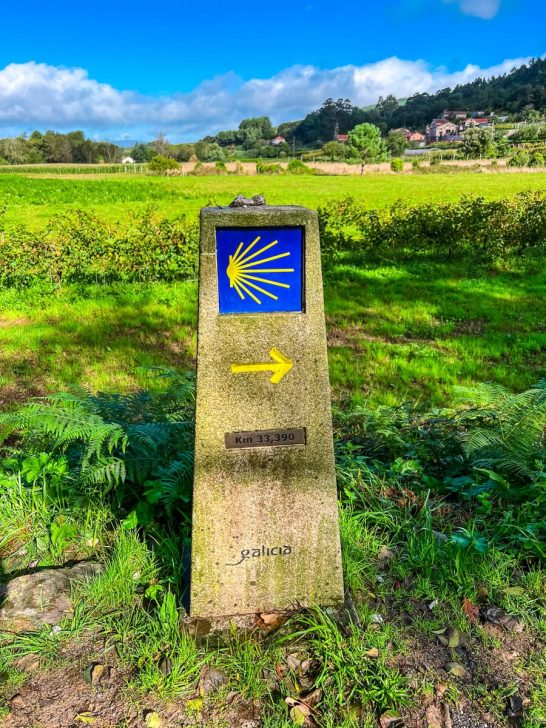
Can anyone stay in an albergue?
Anyone hiking at least 100 kilometers or biking 200 kilometers can stay at an albergue with a pilgrim passport/credential.
There is no age minimum and no age maximum.
You can get a pilgrim passport at the beginning of your hike, usually at the nearest cathedral. You can also get one ahead of time at your country’s Camino headquarters. This sometimes takes over a month.
Albergue vs. Hostel: What’s the difference between an albergue and a hostel?
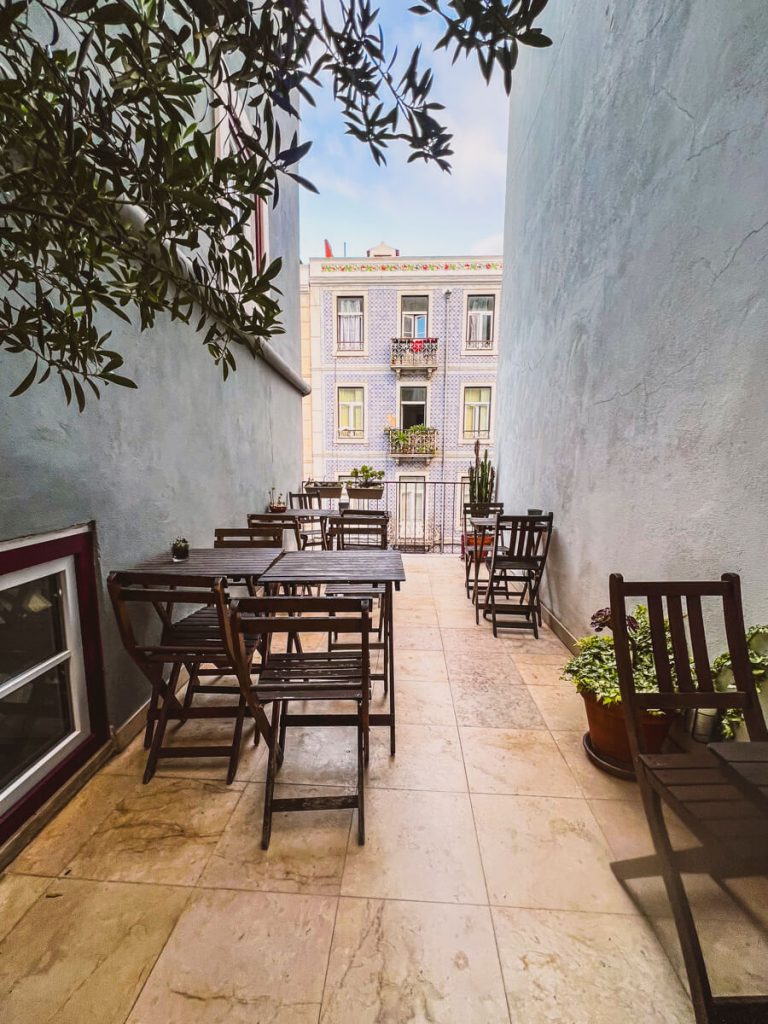
Anyone can stay in a hostel, whereas only anyone with a pilgrim passport can stay at an albergue.
You will sometimes find both options along a Camino.
Often, you’ll find a hostel that acts as an albergue in an area where it can fill beds by accepting everyone. Or, they accept everyone to stay open year-round.
In my experience, hostels usually group Camino hikers together in rooms because they’re more likely to go to sleep early and wake up early.
What’s the difference between a municipal albergue and a private albergue?
A municipal albergue is run by the township or city and is almost always first come, first serve.
Municipal albergue pros:
- They are usually the most affordable option.
- You don’t have to make a schedule ahead of time.
- They’re usually run by local volunteers who can answer questions about the area.
Municipal albergue cons:
- You cannot book them ahead of time. Thus, if you don’t get there early enough, they can fill up, and you may have to find another accommodation or hike more.
- They’re usually not the cleanest of options. Low cost = low maintenance
- ALWAYS check for bed bugs before settling in and showering.
In contrast, a private albergue is a business and is run as such. Essentially, a private albergue is a hostel, but only for those hiking the Camino.
Private albergue pros:
- You can book ahead of time and walk slower knowing that you have a bed for the night.
- They’re usually cleaner because they have a cleaning budget.
- They often (but not always) have more services like laundry or kitchens.
- The wifi is usually (but not always)
Private albergue cons:
- They’re more expensive than municipal albergues.
- Although they’re cleaner, they’re not immune to bed bugs. You should still check for them.
Are albergues free?
No, albergues are not free. However, they are usually less expensive than a hostel.
Municipal albergues generally run from 10-20€ per person per night, while the private albergues range more toward 18-28€ per person per night.
Do albergues take credit cards?
Some albergues will take credit and debit cards. However, many still do not, especially the municipal albergues.
In my opinion, cash is still king in Spain, and it’s often easier to pay with cash there.
What should you NEVER do at an albergue?
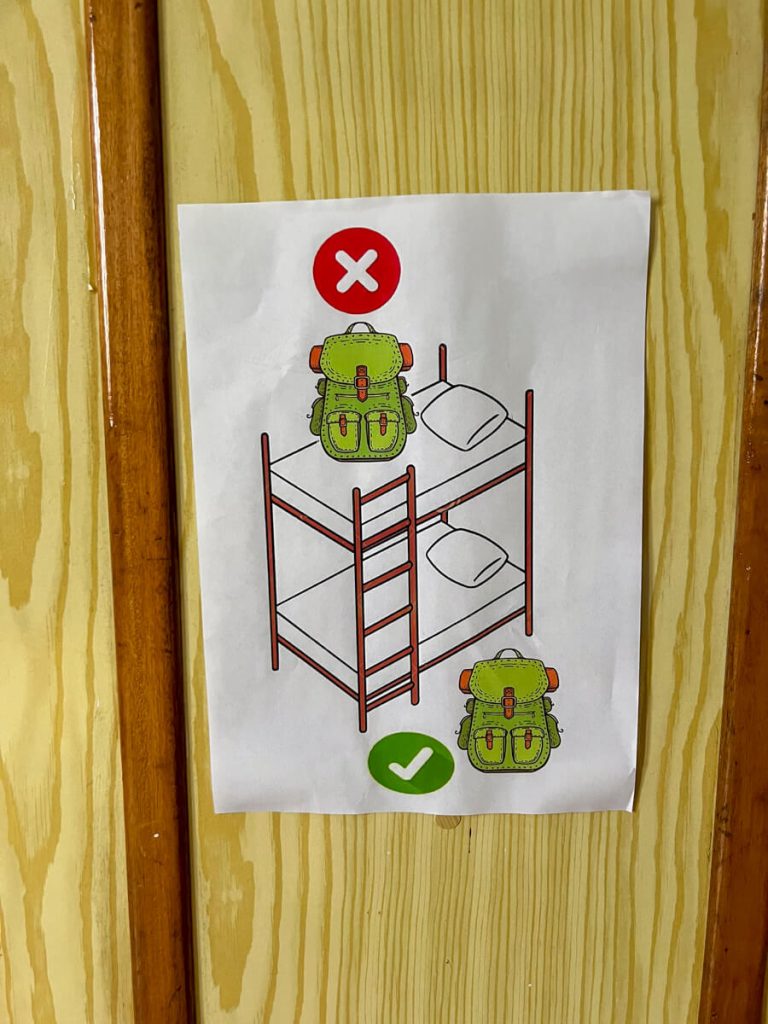
You should NEVER put your backpack on the bed! It is Camino etiquette to keep your backpack on the floor or on benches if provided.
Why? Because backpacks can transfer bed bugs. Yup. Gross. But, true. Bed bugs like to hide in dark places and will creep right into your backpack.
Plus, you’ve set that backpack down in the dirt, on the floor of restaurants, and all over the place. That just doesn’t need to go on the bed.
Lastly, do all foot tending outside. Blisters with fluid should always be drained well away from beds. The same goes for cutting toenails. Just go outside.
How many nights can you stay at an albergue?
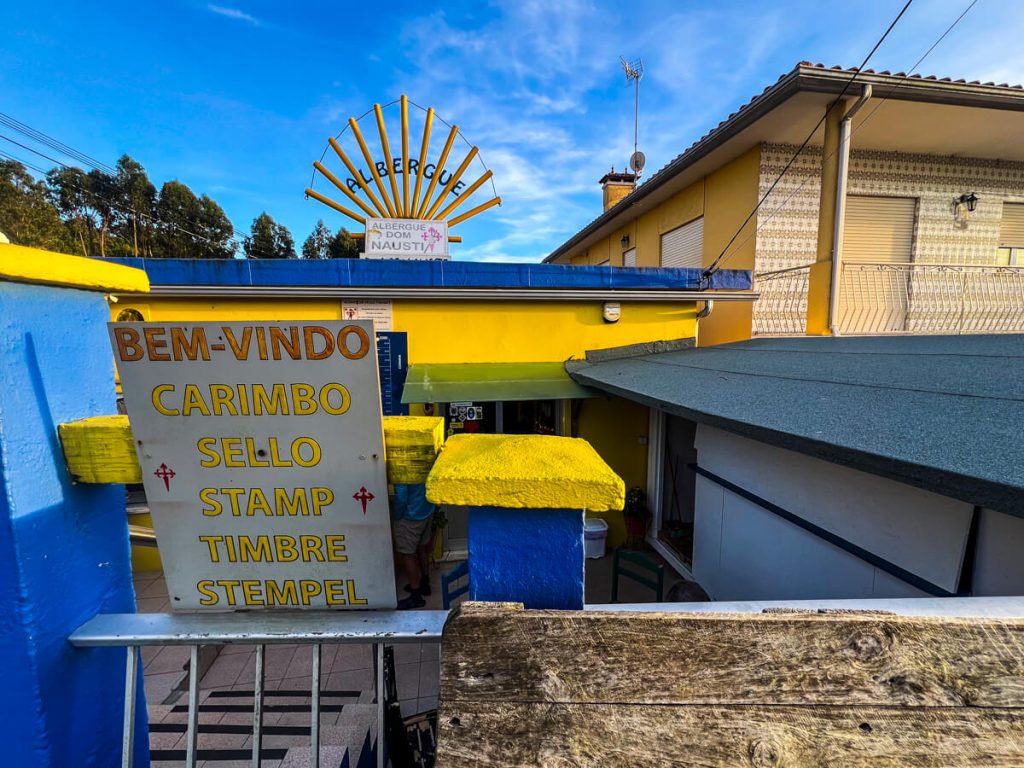
You can only stay one night at a municipal albergue without a doctor’s note saying otherwise. However, some private albergues allow you to stay two nights if you need a rest day.
To keep your costs low, you can always stay at an albergue for the first night, then a hostel, hotel, pension, or guesthouse the second night.
If you know you need a rest day, it’s easiest to book a hostel or guesthouse for two nights so you don’t have to leave after check-out and awkwardly wander around until check-in.
How many beds are in the average albergue?
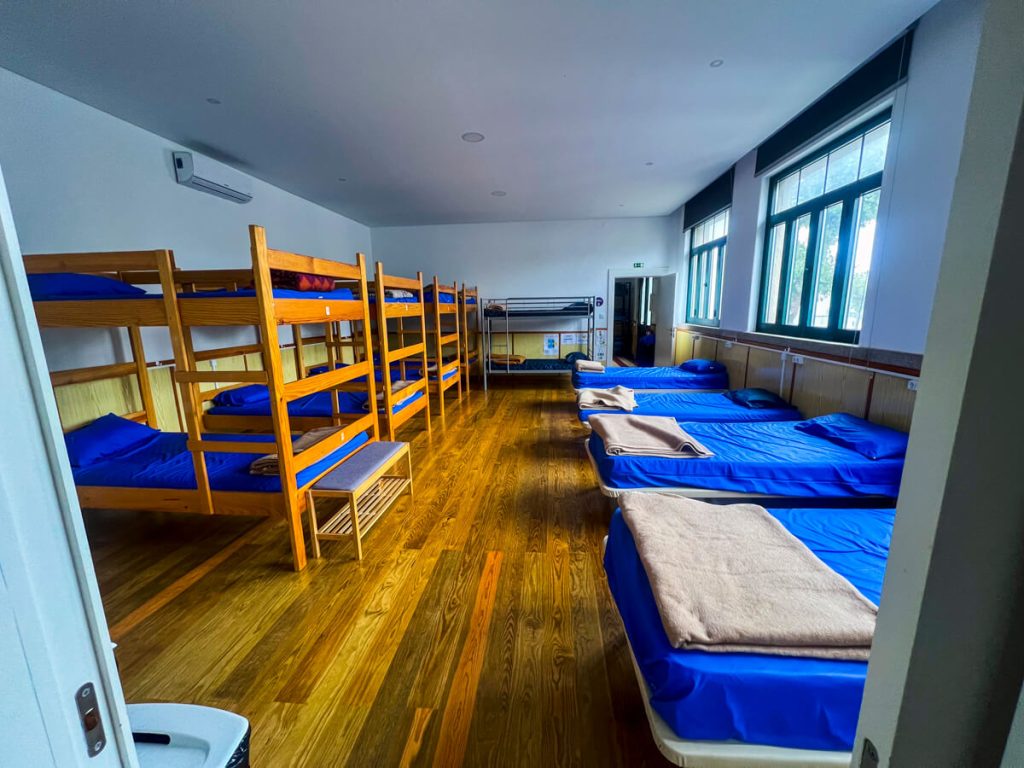
In the average albergue, I would say there is between 20-40 beds based on my experience over 4 Caminos.
There will always be a few small albergues with 6-10 beds and large albergues with 50-100 beds.
If you’re looking at photos online, check to see if all the beds are in one room or multiple. That can drastically affect your overall experience, especially with those pesky snorers.
How do you deal with the snoring in albergues?
I have a two part strategy for snorers.
First, bring ear plugs. The good wax reusable ones, not the basic single-use ones. This will help with the low-level snoring and background shuffling.
Second, this is why I only ever book albergues one day in advance. If I have a particularly bad night of sleep one night, I’ll go to my next booked accommodation, and book a private room for the following night. It’s an imperfect system, but booking a private room every few nights really does help.
With the increasing ability to taxi a bag forward, I have seen an interesting new trend that I think is fantastic. Some of those bad snorers used the bag taxi service to send a CPAP machine forward. While it has a slow hum, it doesn’t sound like someone’s choking themselves with snoring at night.
Do albergues have enough electrical plugs for everyone?
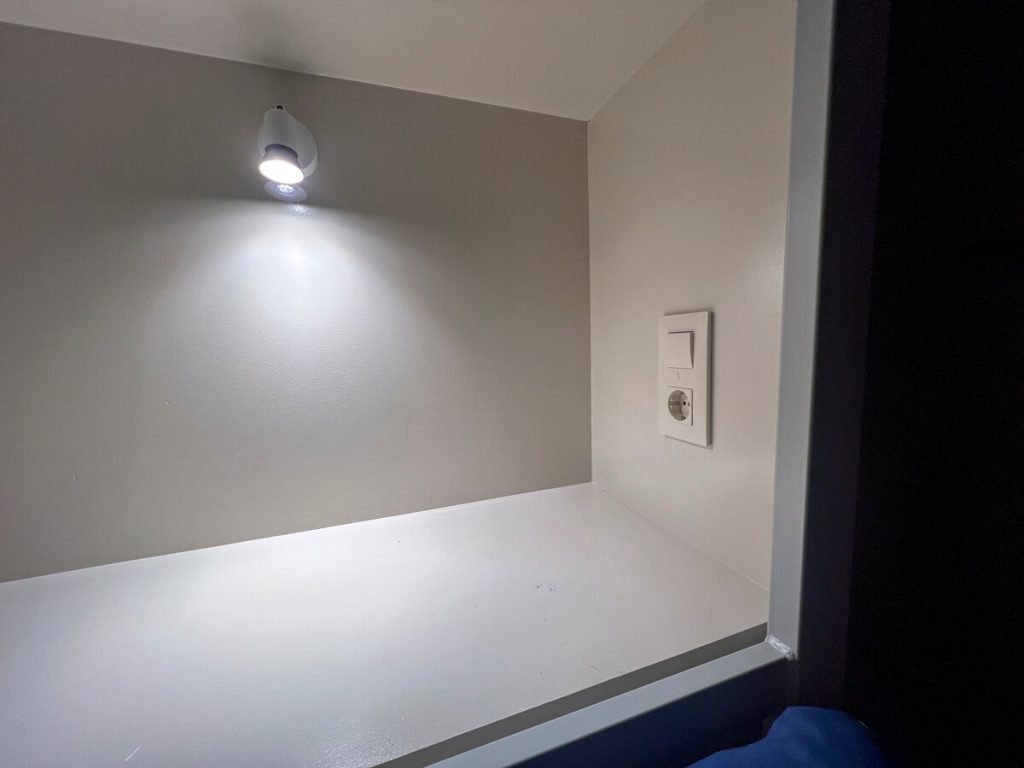
Usually, yes. However, that’s only the case if everyone uses one plug each. Often, with newer albergues, each bunk has it’s own plug.
I highly recommend getting a multi-port plug like this one or something similar. That way, you can charge multiple devices with one plug. I loved the one linked above because I could use it at every airport before and after the trip!
Do albergues have wifi?
Most albergues have wifi now. That doesn’t necessarily mean it’s good wifi, but it exists. You will usually notice it slow down between 4-9pm when everyone is on it at the same time. I also noticed that it often only worked well in certain areas of the albergue.
Recently, on the Portuguese Camino, I used a 10gb Airalo eSIM for 30 days and it worked fantastically. I used it to navigate between towns and whenever the albergue wifi slowed too much when I needed internet. It was super easy to install, had easy ways to monitor the data, and top off packages if I got close to running out.
For reference, I only used 8.83 GB over 30 days, and I managed to do an IG vlogging reel each day, navigate between towns, read reviews on booking, and Google Translate. I used the albergue’s Wi-Fi whenever possible, but shifted to the eSIM as needed.
While on the albergue’s Wi-Fi, I protected myself using Nord VPN.
If you’ll be in more than one country, type “Europe” in to get a regional eSIM. Since we traveled between Portugal and Spain, we used the regional version. That same regional eSIM worked during our 7 hour Dublin layover as well.
Do all albergues have kitchens?
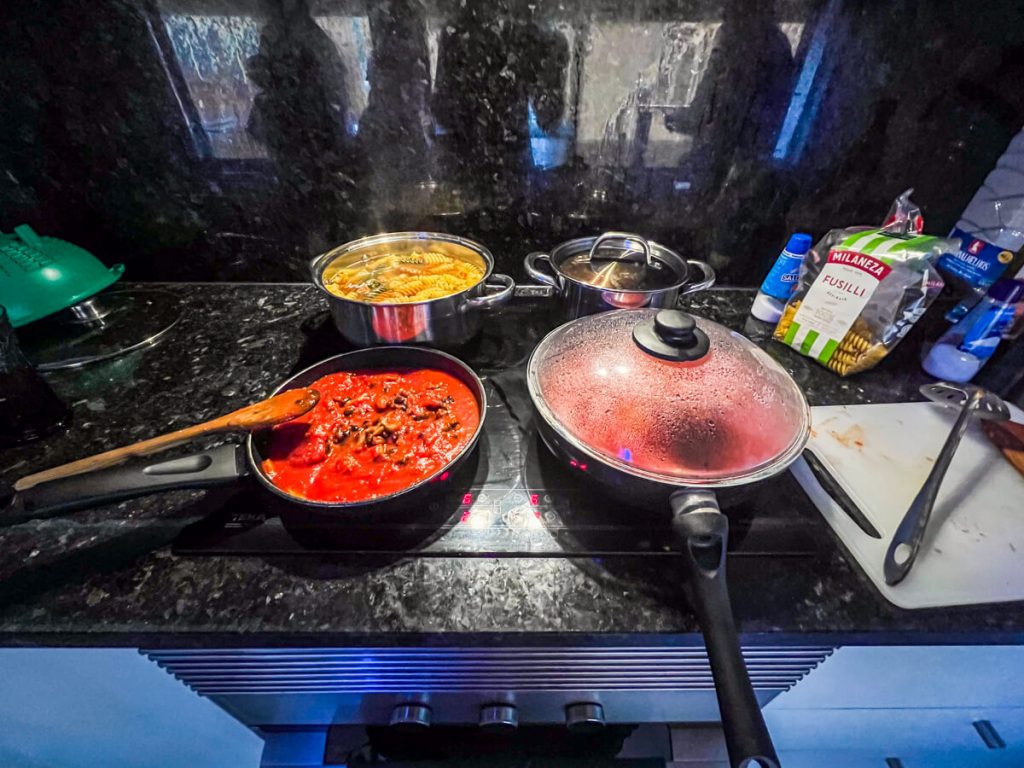
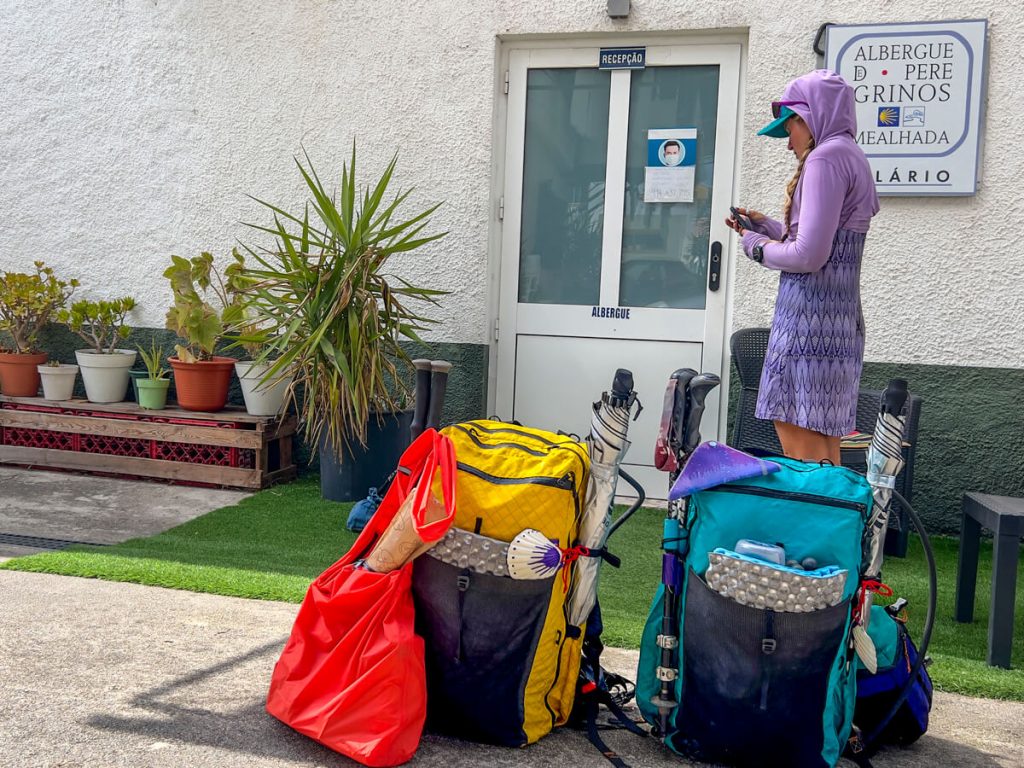
No, only some have full kitchens. More often than not, albergues will have only a microwave and/or an electric kettle.
Most times, they will have a refrigerator. Make sure to label your food with a Sharpie (that you bring) or place it inside the fridge in your reusable grocery bag. We loved zipping our refrigerated items into our bag and putting the whole thing in the fridge.
If you are walking the Camino de Santiago on a plant-based diet, I recommend aiming for albergues with kitchens. Here are all my vegan Camino recommendations!
What laundry facilities do albergues have?
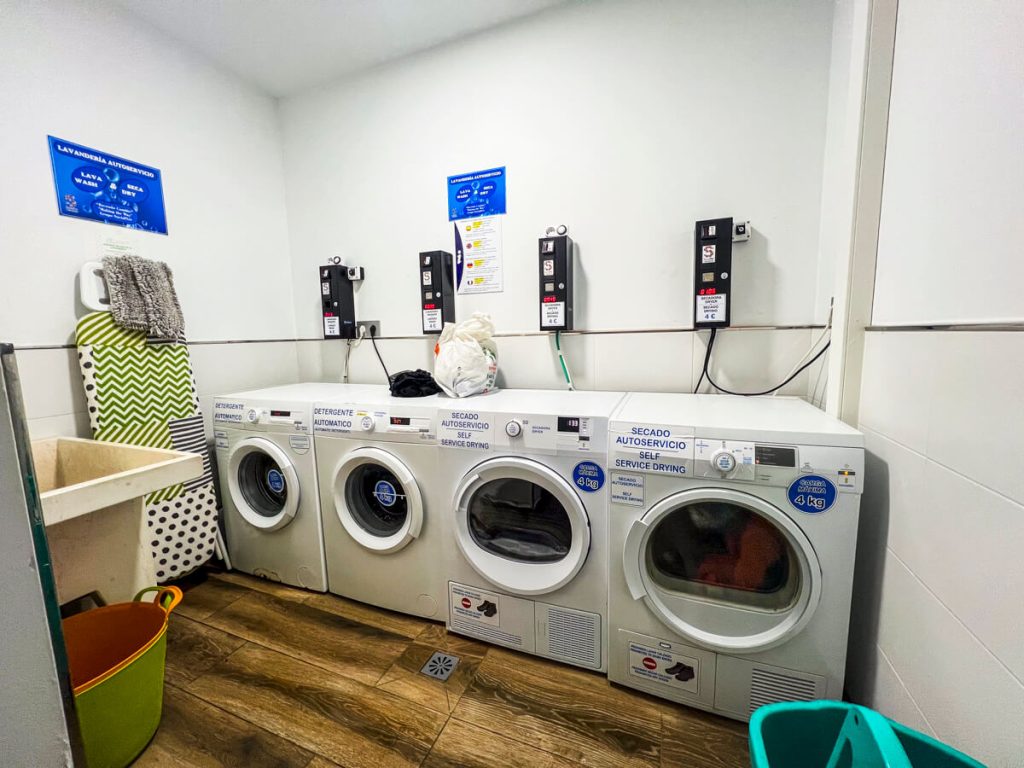
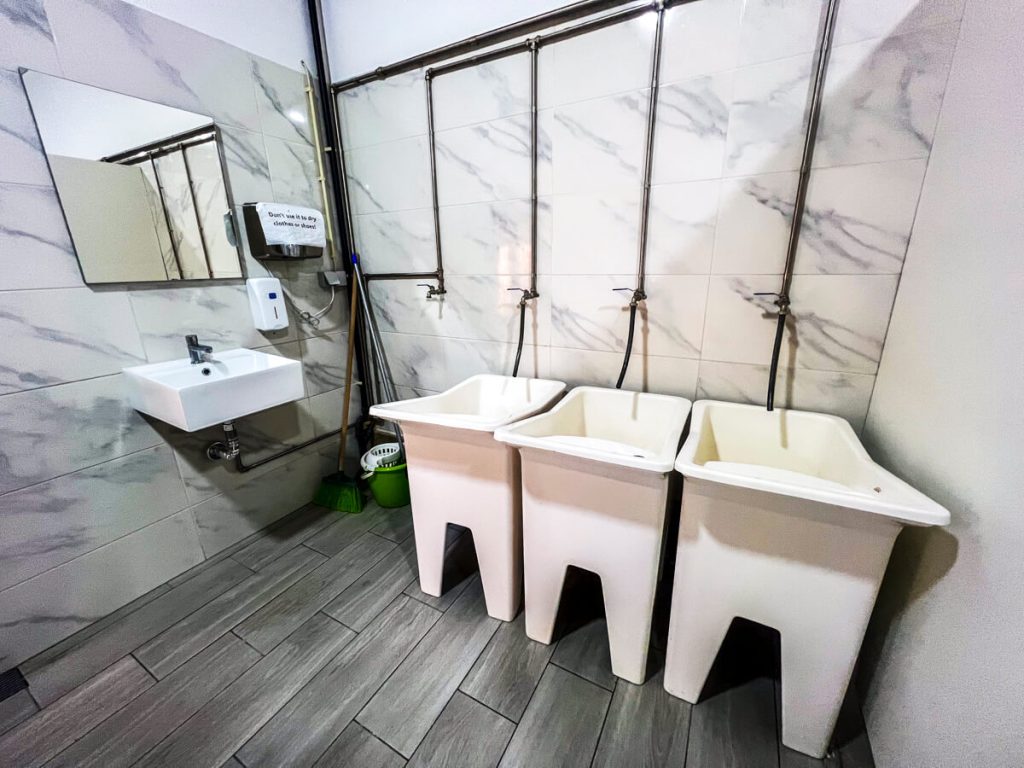
There is almost always an area to hand wash your clothes with your own soap in a utility sink. Then, you can hang it dry on a clothesline or drying rack. This was the norm 15 years ago that’s slowly giving way to modern washers and dryers.
Now, more and more albergues are introducing 1-2 washers with pre-loaded soap. Basically, you put in your 3-5 euros and press start. The albergue host is usually available to help.
Dryers are less available. I saw more dryers in the fall of 2024 on the Portuguese Camino than in the summer of 2017 on the Camino primativo.
Strategically wash clothes when you get to an albergue earlier or if washers happen to be available.
Do albergues have blankets? / Do you need to bring a sleeping bag?
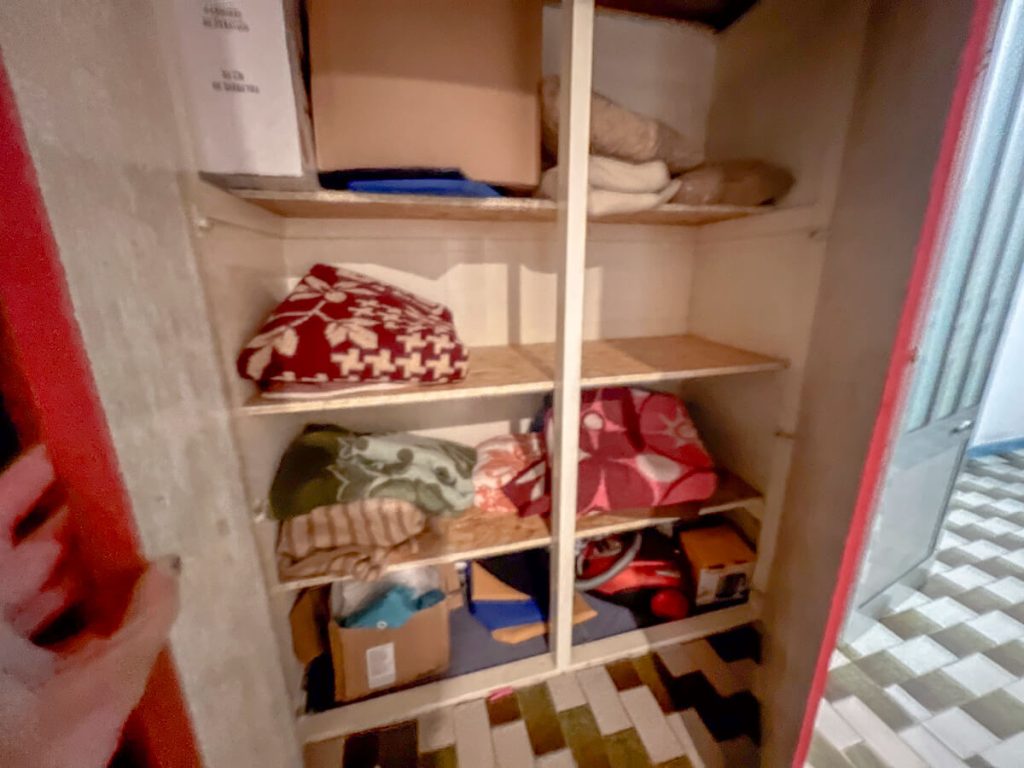
Yes, albergues usually have some blankets. However, they hardly ever have enough blankets for all the beds. Moreover, the albergue blankets hardly ever get washed and are the most likely spot for bed bugs.
Unfortunately, I know this from personal experience. I found bed bugs hiding in the blankets of two separate albergues in 2024. It was gross!
I HIGHLY recommend bringing a silk sleeping bag liner (which acts as a lightweight sheet) and a lightweight sleeping bag (a 40-degree F will work fine for most people, but a 20-degree F if you’re a very cold sleeper).
Should you book every night on the Camino in advance?
In my opinion (after 4 caminos), NO, you should not book your entire Camino.
However, with its increased popularity, I do recommend booking 1-2 nights in advance. This way, you can make adjustments based on your pace, hiking with others, good or bad weather adjustments, or varying your accommodation.
When you arrive at your albergue, settle in, then book the next night’s albergue before you sleep. If you’re approaching a weekend, you can book two nights in advance to ensure you have a spot.
With each new Camino that I walk, I encounter more and more people who have booked their entire experience ahead of time. Every single person who I’ve spoken with who has done this has regretted it. Either they misjudged their pace (they wanted to go faster or slower), got separated from their new friends, or wanted different accommodation than they originally booked (too many or too few private rooms).
Definitely do research ahead of time and have a game plan. I like to make a spreadsheet up ahead of time so I have to do less research later.
If you want a complete itinerary for the Portuguese Camino, here are three based on my personal experience:
- Porto to Santiago at a 9-14 miles per day pace
- Lisbon to Santiago at a 17-23 miles per day pace (you can use this one just from Porto as well)
- Is it worth continuing to Finisterre and/or Muxía?
What is the best way to book albergues?
After 4 Caminos, I’ve found the best way is to use Booking.com to book albergues in advance. By 2024, most albergues were on there. You do still need to show your pilgrim passport upon arrival.
That being said, a few only used WhatsApp. I called and booked some using WhatsApp audio calls, and others I texted to book. This is not my favorite method, but it works.
For some old-school private albergues, you can only book ahead by a regular phone call. I usually just chose another because I only had data using my Airalo eSIM.
The only albergues that you can’t book are municipal albergues. Those are first come, first served.
Do albergues have lockers?
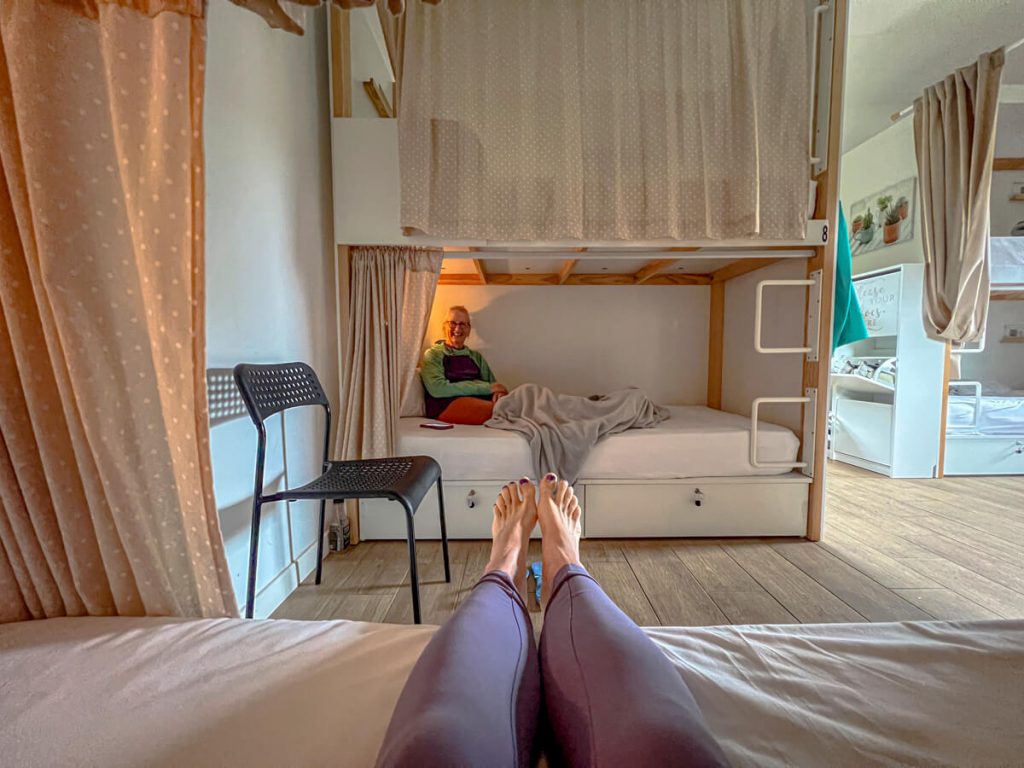
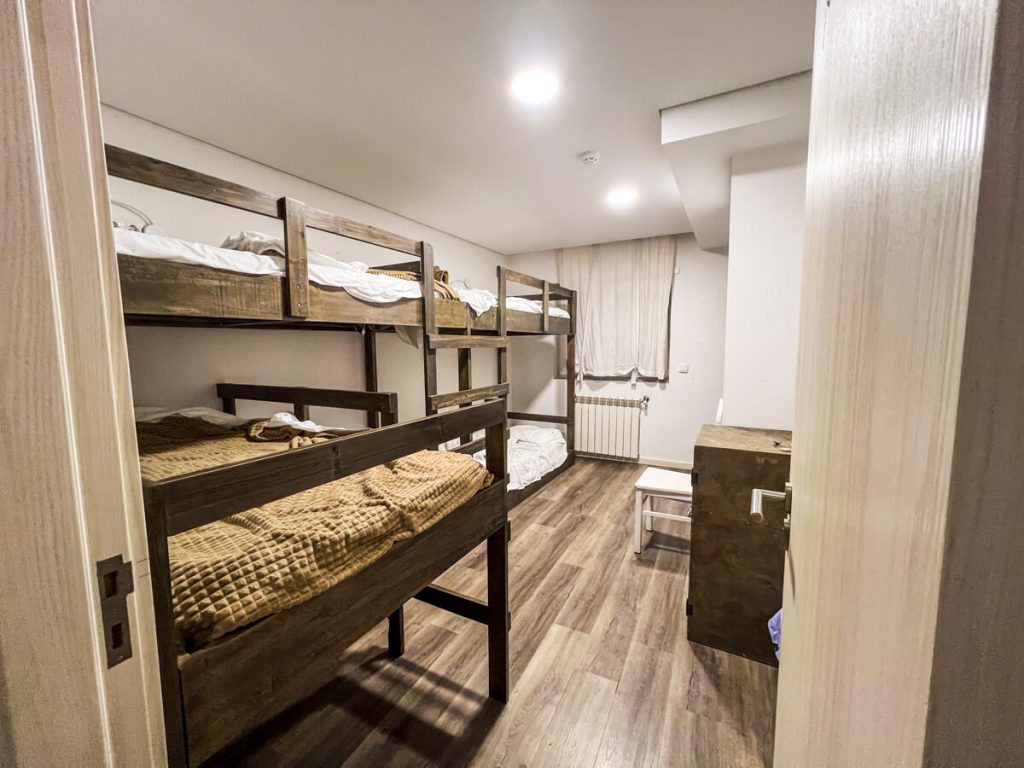
A few albergues have lockers, but they’re in the minority. I have seen some that give you a key and others that give you a key for a one-euro coin.
The photo above shows a private albergue that had lockable drawers underneath the bunk beds. Each bunk and drawer was labeled with a number. It was just an honor system that you left the key behind.
In my experience on 4 Caminos, I always have a small bag to carry my important things with me at all times. Previously, I used a small hip pack (we call them fanny packs in the US) for my wallet, phone, and passport. In 2024, on the Portuguese Camino, I used this zippered lightweight grocery bag to carry my wallet, phone, passport, and camera gear. Karma had a second one that we used for groceries.
Do people ever sleep outside on the Camino? / Is it worth bringing a tent on the Camino?
No, people do not sleep outside or tent camp on the Camino, with one exception that I know of.
First, “wild camping,” or camping outside of a designated paid campground, is illegal in both Spain and Portugal. Therefore, you would have to stealth camp. I’ve stealth camped a lot over the years, and I look for those spaces when hiking. I haven’t seen many good stealth options in recent years.
Second, most albergues do not have space for tent camping anymore. A few might make it available, but for the few that do, it’s not worth the weight of carrying a tent.
Lastly, the only camping exception that I’m aware of is if you take the Trilho das Areias between Lisbon and Porto. On that route, there are paid campgrounds. However, there is very little information on that route in general.
Final Thoughts
Albergues can be wonderful places to meet new people, eat together, and gather, but they are not for everyone. And that’s ok.
To anyone heading out on your first Camino and thinking about avoiding the albergues, please try at least one or two. Try a small one and try a big one. It’s an experience every Camino hiker should have.
To those of you who love albergues, please drop any additional advice in the comments that you think is lacking here.
¡Buen Camino!