Food on the Camino de Santiago: Plant-Based Options
When planning your Camino de Santiago bucket list trip, you’ll plan flights, gear, and some accommodation. But…what about food on the Camino? I’m here to tell you that walking a Camino on a plant-based diet is possible because I’ve done it multiple times!
With a bit of extra effort, you, too, can walk a Camino as a vegan. It won’t be as easy as the omnivores around you, but it’s possible.
Despite Spain being a country that loves ham on everything, they carry more and more plant-based products. And if you’re hiking the Portuguese Camino, there are even more options!
My best trick to a successful vegan Camino is a little extra planning! Scope out the grocery stores along your route and opt for albergues with kitchens wherever possible. I also highly recommend always carrying snacks.
I’ll lay out all my tricks so you can feel comfortable finding food that suits you on your adventure!
This post contains affiliate links. If you purchase a product or book through these links, I can make a small commission at no cost to you. It helps me to keep writing helpful guides.
How I’ve Completed Multiple Caminos de Santiago Vegan
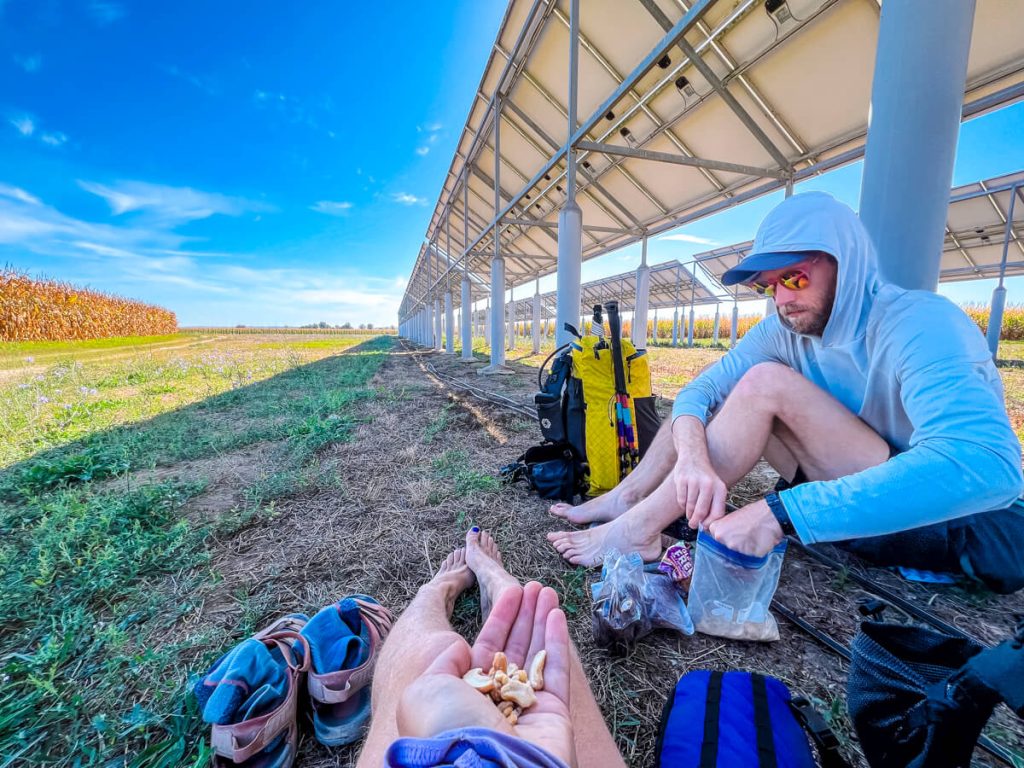
My first Camino in 2008 was a crash course in hiking and figuring out rural Spain on a vegan diet. Back then, I ended up eating mostly nuts, fruit, PB & J sandwiches, and pasta with tomato sauce. Yes, you can find peanut butter in El Corte Inglés in any larger city.
When I came back in 2009, I knew what I was getting into, and I prepared better. I brought my own protein powder and a 4lb tub of peanut butter, which I rationed out for the whole Camino.
Do I recommend that now? No.
After figuring out plant-based food on the Camino from several routes, I have a system.
That system is to:
- Scan the upcoming route for grocery stores, especially how far they are from the albergue I want to stay at.
- Always carry snacks between grocery stores instead of relying on small cafes. Bread and jam with coffee or tea is only awesome if it’s not every day.
- Bring a to-go food container. If you make food the night before at your albergue…then you can have a picnic later!
- Scan the Happy Cow website for possible vegan options in the upcoming towns. Plan your day to eat lunch there for stop at an albergue in that town.
- Check the Uber Eats app. This was a new one I used in 2024 that made life better in several very small towns.
- Know the menu items should be vegan, but actually are not. Learn how to ask for a dish without meat, fish, or dairy in Spanish or Portuguese.
Now that you have an overview of the system, let’s dive into its intricacies! We don’t want any salads with that pesky tuna the Spanish seem to love.
Use Grocery Stores (Look Ahead using Google!)
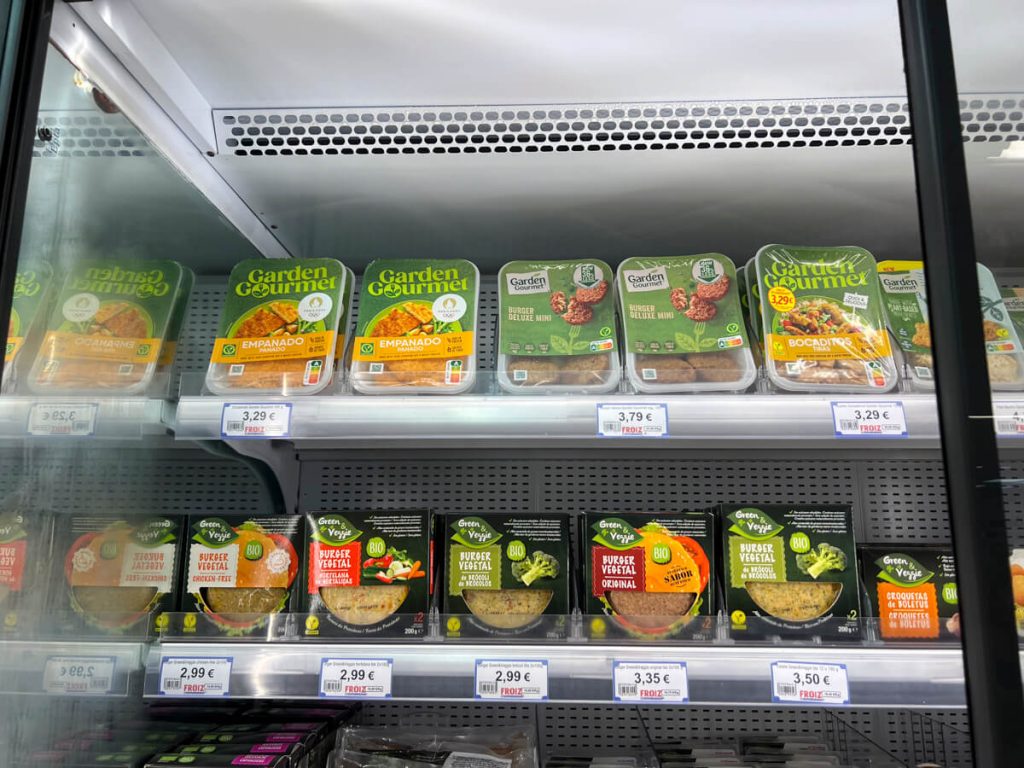
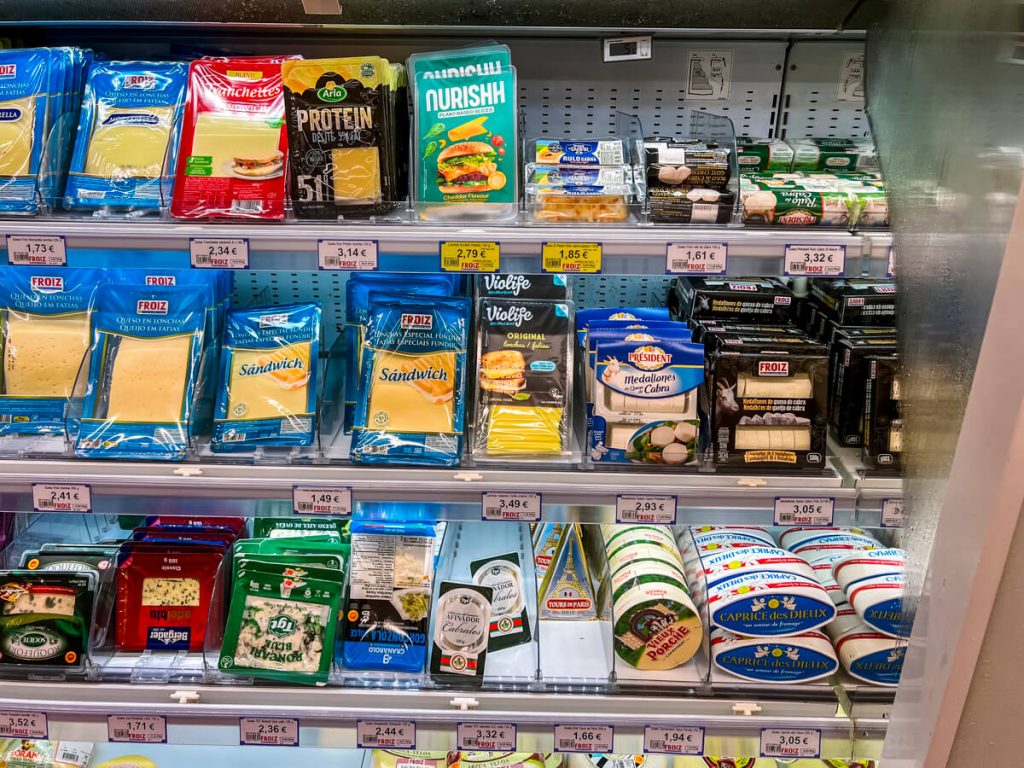
Using grocery stores to your advantage is my number one trick to getting plant-based food on the Camino!
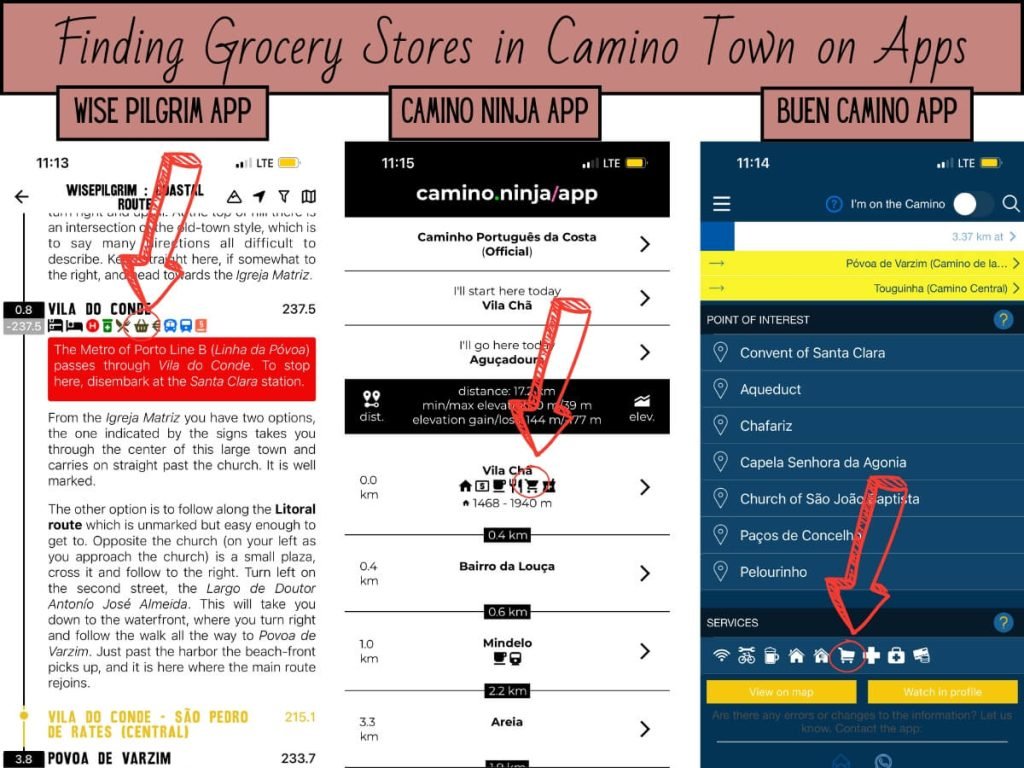
First, in your Camino guidebooks and apps, look for the grocery store symbols as you’re planning. Here’s what they look like in the most popular apps:
Second, use Google Maps to investigate the grocery stores more thoroughly. That grocery symbol can mean anything from a Mom and Pop local store to a full supermarket.
To do this, start by typing the town’s name into Google Maps. Then, search “grocery” and view the results. I always skim the photos of each grocery store to guess the plant-based food possibilities. Next, check the hours of the store! Many of the smaller grocery stores close one day a week, close for lunch, or close earlier in the evening.
Vegan Food on the Camino in Every Grocery Store
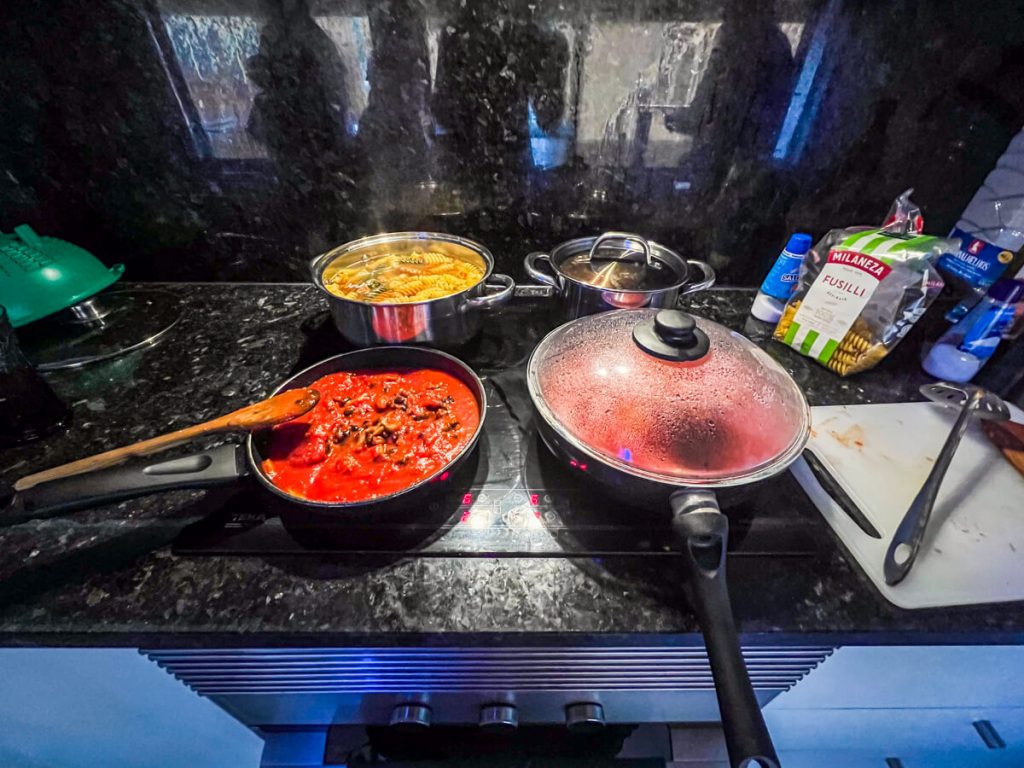
You will always find certain vegan options even in the smaller grocery stores in rural Spain and Portugal.
If you can, I highly recommend checking into the Albergue first so you can see what’s available. Even Albergues without kitchens sometimes have electric kettles and/or microwaves.
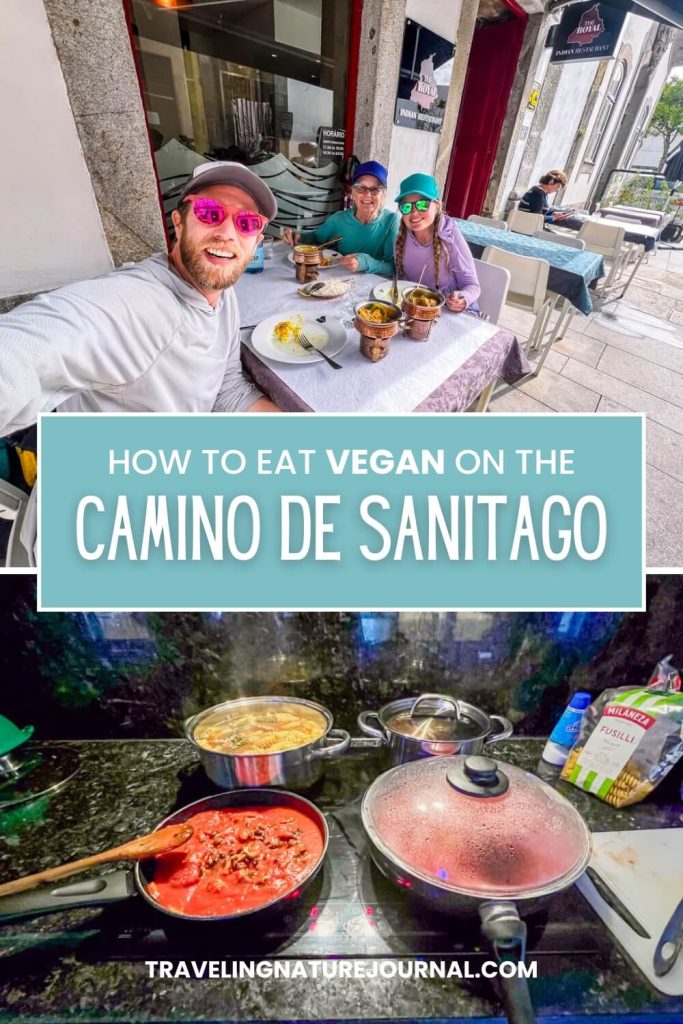
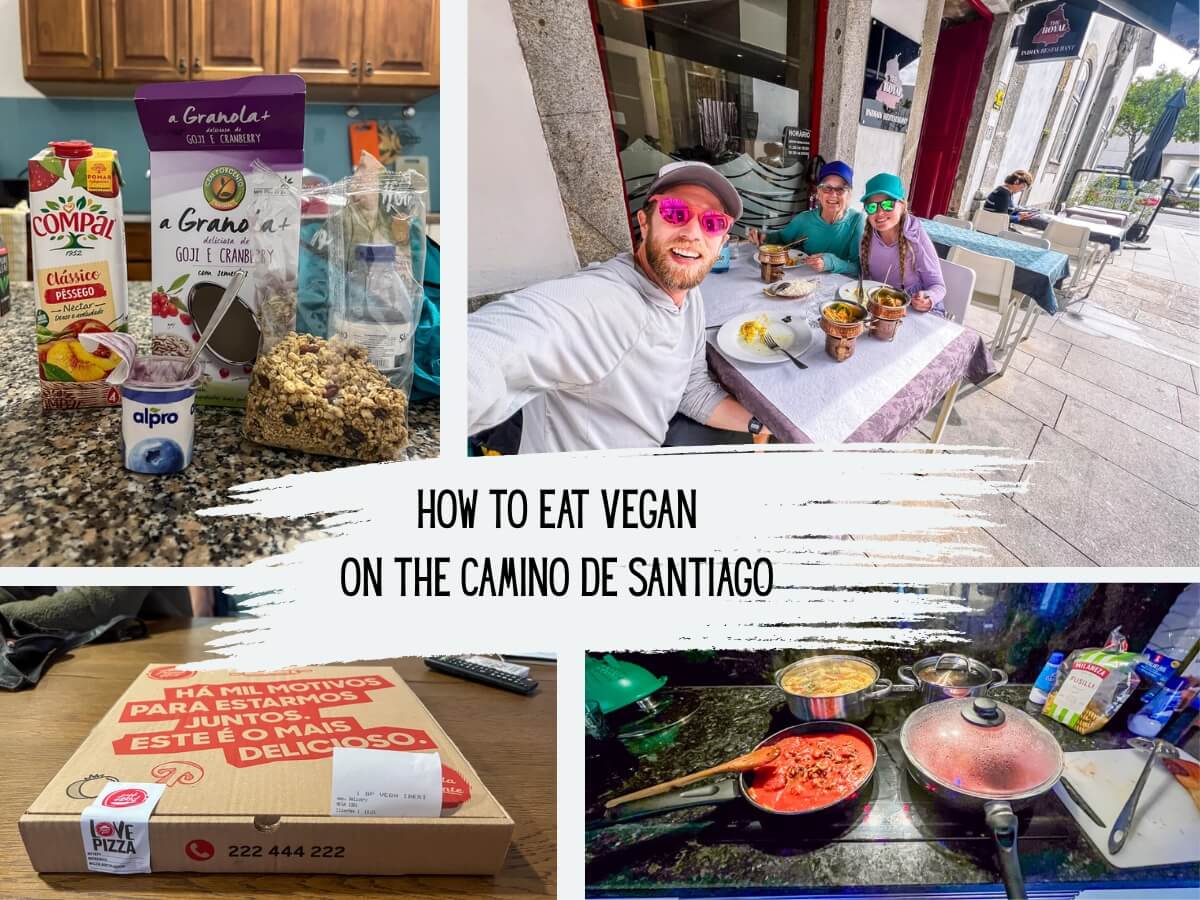
Sometimes, you’ll luck out with a full, legit kitchen as pictured above. If that’s the case, cook whenever it’s available rather than waiting until “dinner time.” Everyone wants to cook at dinner time, so it will get busy fast!
Karma and I checked into an albergue with a super small grocery store nearby. It had no true kitchen, but it did have a microwave. We got some potatoes, beans, carrots, and plant-based butter. It took some time, but we made a hearty vegan meal with that in the microwave! This was preferable to a crappy salad at the only restaurant…and cheaper!!
For meal-making options:
- Pasta
- Tomato Sauce
- Jars of Vegetables
- Beans
- Potatoes
- Rice
- Some spices are always available
For Snack Options:
- Nuts
- Dried Fruit and Dates
- Digestive Biscuits (a kind of cross between a cookie and a cracker…only some are vegan!)
- Fruit, usually bananas and apples.
- Granola or Muesli
Vegan Food on the Camino in Mid-Sized Groceries and Supermarkets
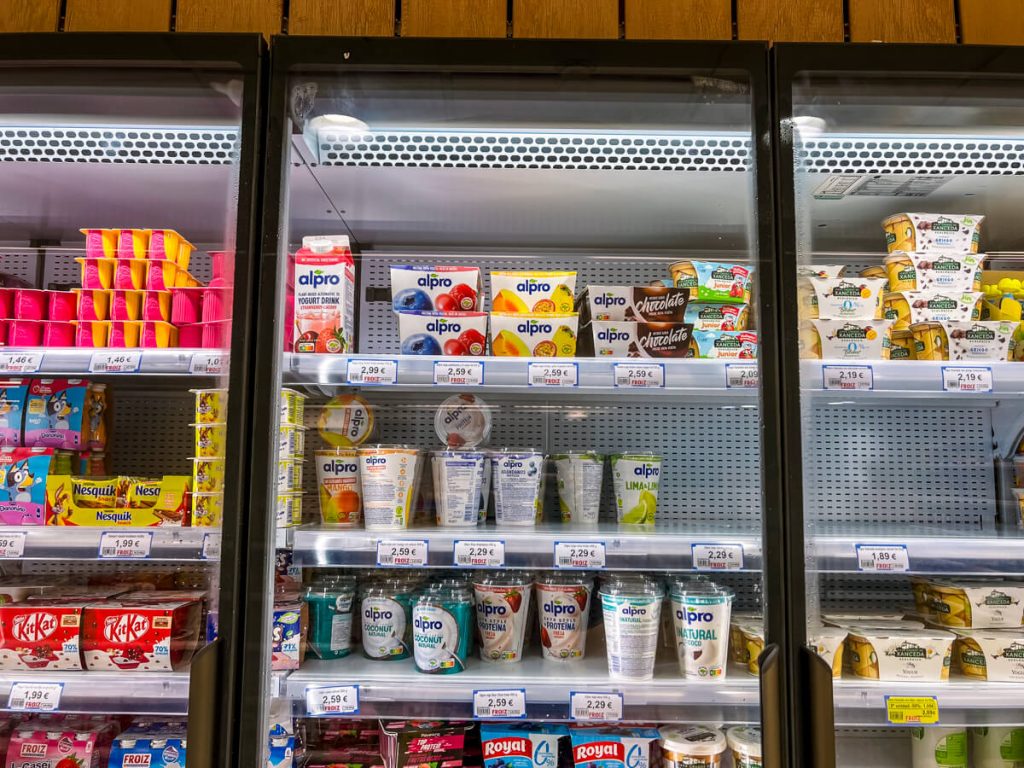
You can find more and more plant-based options in larger grocery stores or supermarkets!
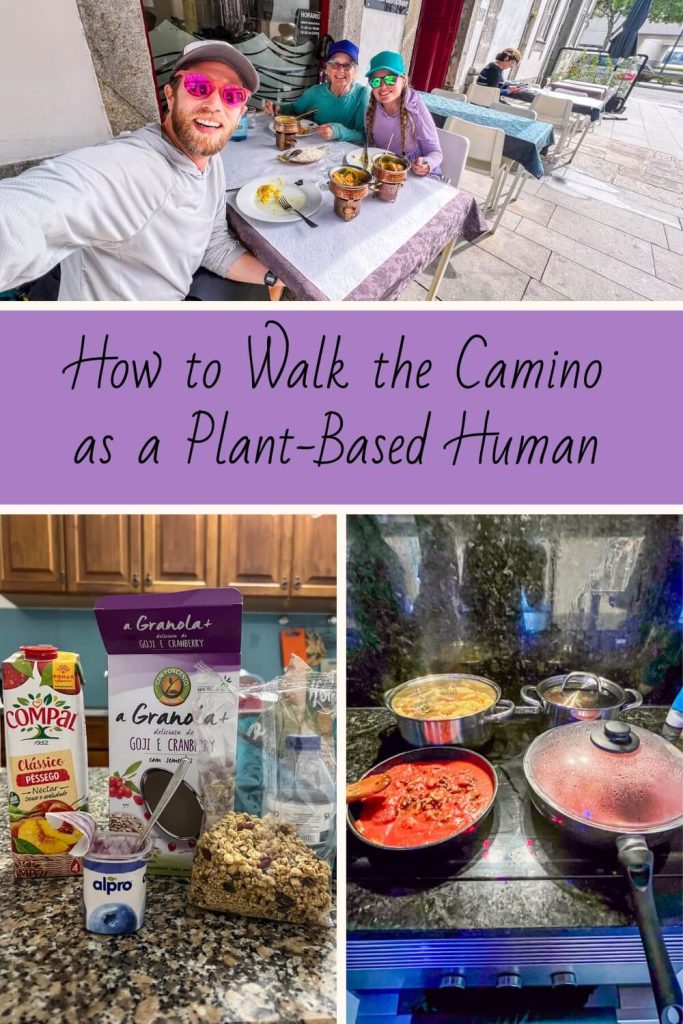
For example, vegan yogurt is often found in mid-sized grocery stores. Look for the Alpro brand, then you’ll find the vegan ones! I found it readily available even back in 2008, well before the US.
Now, you can find even more vegan products than ever before. I saw lots of plant-based cheese, imitation meats of all sorts, veggie burgers, cream “cheese,” and even some pre-made meals.
I tried some plant-based tuna in a jar on the Portuguese Camino, and I’m not exactly sure how I felt about it. However, I did not get sick…so I called it a success!
Make sure to look at the refrigerated sections and the frozen sections. That’s where you will often find the best plant-based options.
Aim for Albergues with Kitchens Whenever Possible
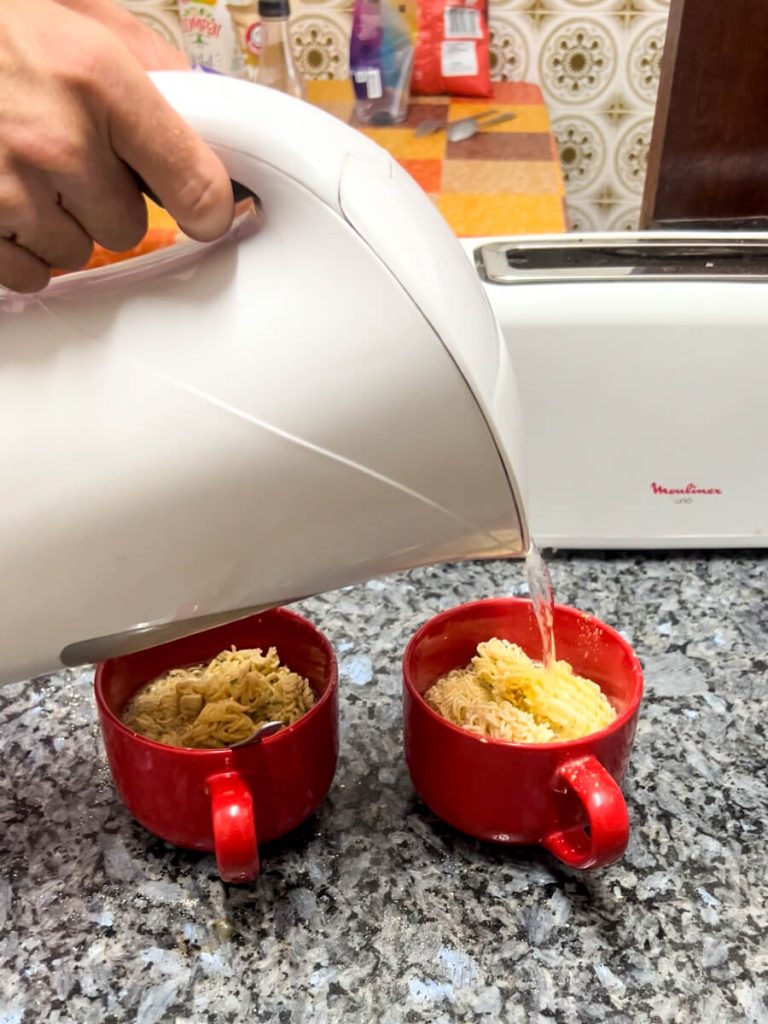
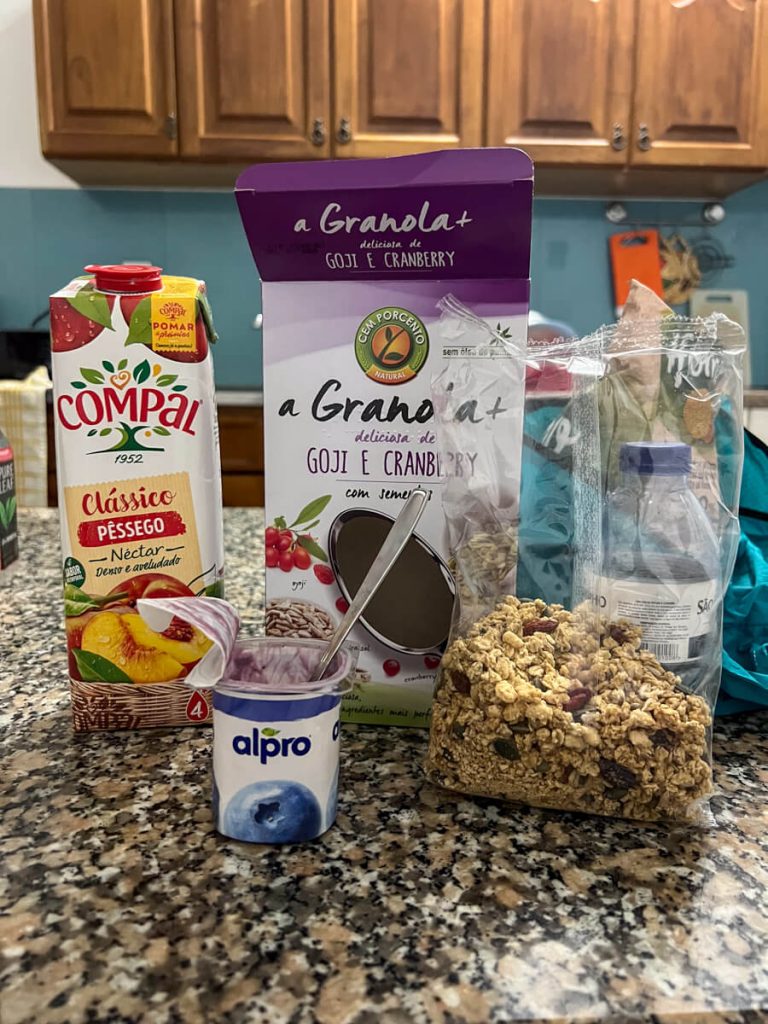
When you scan the apps and guidebooks for grocery stores, look into the albergues more than just their location – check to see if they have a kitchen!
You can often find this in the description of the albergue or the comment/review section.
Please note that albergues can have wildly different ideas of a kitchen. Some will call a sink and a microwave a kitchen. Others will have a 4-burner cooktop, a wide array of pots and pans, a microwave, and an electric kettle. That’s why you should always check into the albergue before going to the grocery store so you know what you’re working with!
Sometimes, especially in more rural areas, that’s not always an option. I’ve had to carry groceries the last few miles in a few cases. In that case, sometimes you can send them a WhatsApp message or call them to ask. If you can’t reach them, think epic cold sandwich vibes to be on the safe side!
For example, one albergue pictured above said it had a kitchen. In reality, it had a microwave, an electric kettle, and a toaster. So, we found some vegan instant noodles. From packing these out in the US and needing to save camp stove fuel, we knew that we could pour boiling water on them and wait 5 minutes. It was a great, easy dinner.
Always Carry Snacks Between Grocery Stores!
Most Camino hikers don’t carry any food with them. As a plant-based person, that strategy is a gamble.
I’m not saying you need to carry a full day of food, but always carrying a few snacks can really save you.
I always carry some nuts, often some chips, and some digestive biscuits between grocery stores. Sometimes, I’ll bring some fruit if it looks especially good.
More energy bars are popping up in mid-sized to large grocery stores. However, they’re nothing like you might be used to in the U.S., like Cliff Bars, Luna Bars, Bobo Bars, etc. They’re much more like Kind Bars and don’t usually have a ton of energy. They’re also quite expensive compared to many of the U.S. options.
While you should not eat your own snacks at a café, you can eat them in between cafés.
I’ve had good luck asking for bread with tomato and olive oil at cafés, even if it’s not on the menu.
While the term “vegan” (vegana/vegano in Spanish) is more known than before, it’s not widespread. Older folks, especially, will think vegan is pescatarian and give you tuna. You can get better nutrition by bringing snacks along and finding a good picnic spot.
If you’re on the Portuguese Camino, you’ll find fewer food options at cafés but more at restaurants. You can also say “vegan” in most of Portugal, and it will be understood.
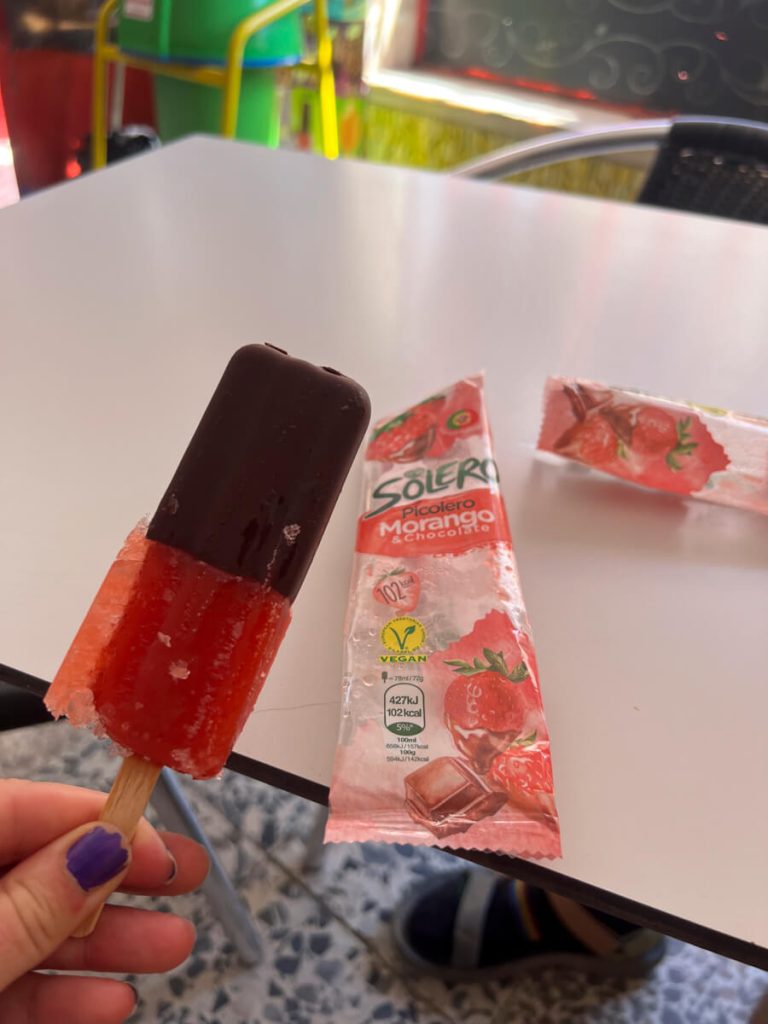
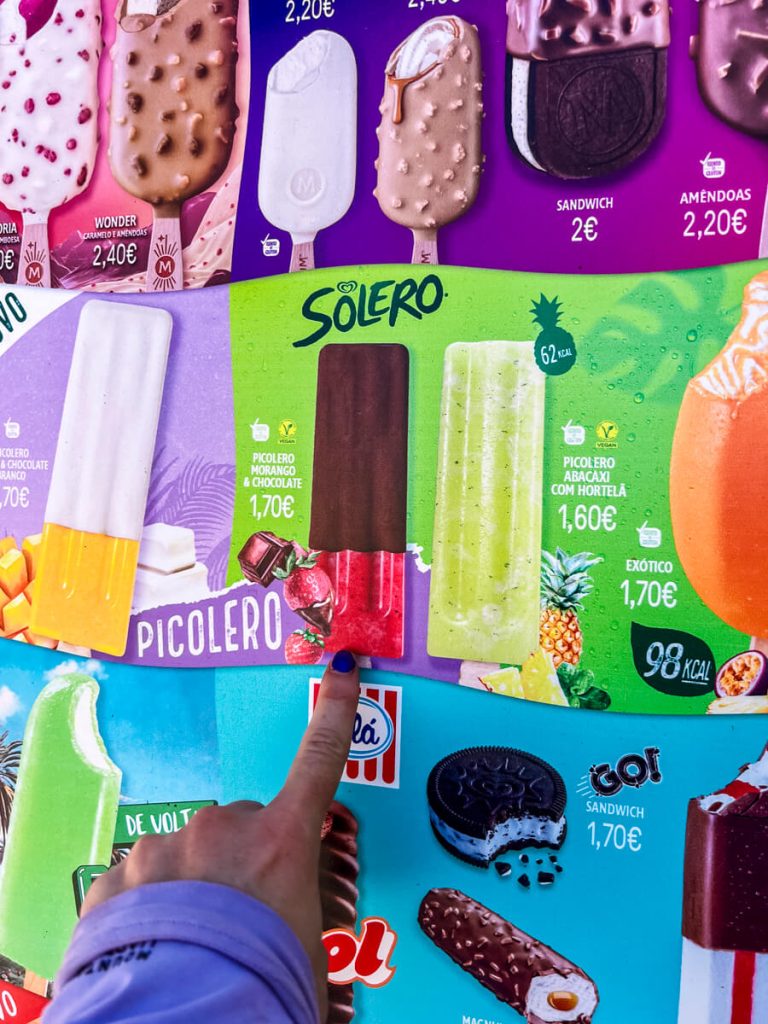
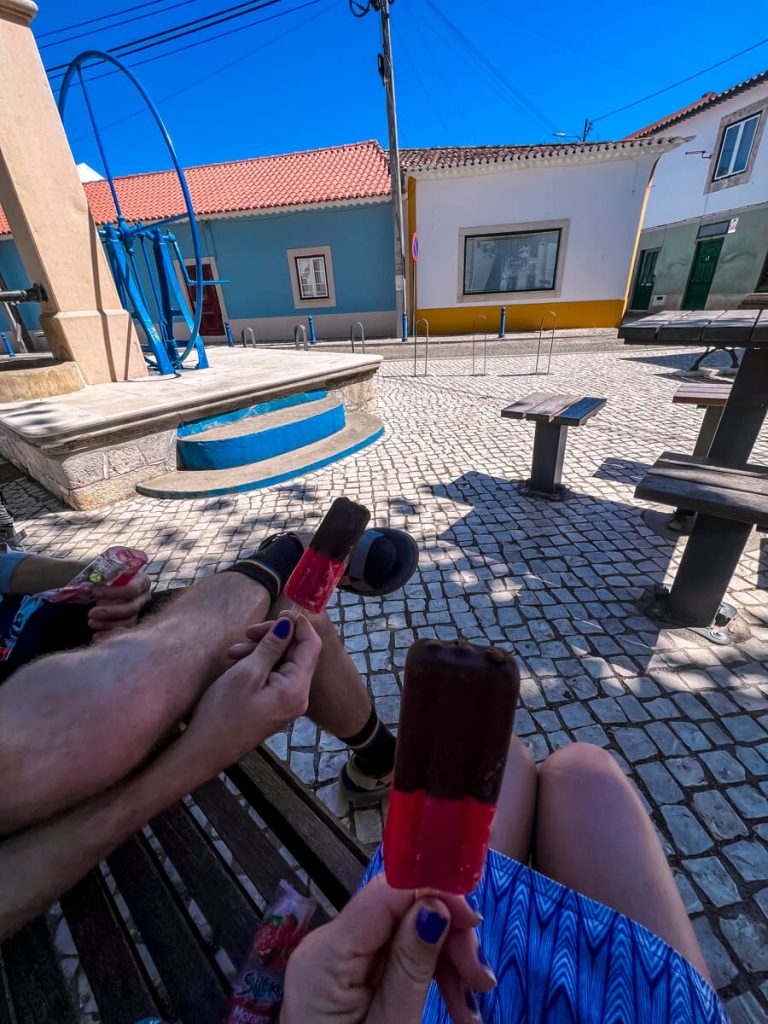
I also found two vegan popsicles on the Portuguese Camino. The strawberry with chocolate one was AMAZING in the heat, and we got it everywhere!
Typical café food on the Camino in rural Spain includes:
- Toast with Jam and Butter (you can ask for it without butter)
- Ham Sandwich
- Vegetable Sandwich (which often has egg or tuna on it)
- Tortilla (egg and potato)
- Salad (usually with egg and/or tuna)
- Chicken Salad
- Ice Cream/Popsicles
Bring a Lightweight, Reusable Food Container
Bringing a lightweight, reusable food container goes hand in hand with using grocery stores and albergues with kitchens.
If you go to the trouble of making dinner at an albergue kitchen, make extra and take it with you the next day.
Likewise, you can get items from the grocery store to make a more nutritious sandwich.
You can still participate in the Camino café culture by getting tea and coffee. Then, have a small picnic at (arguably) a more scenic location along the walk.
The reusable food container allows you to be more versatile with your plant-based food on the Camino.
Check the Happy Cow Website/App Each Day
If you’re plant-based or gluten-free and don’t know about Happy Cow, I highly recommend it. This is one of the best ways to find plant-based restaurant food on the Camino!
Each evening at the albergue, I pull up Happy Cow to scan the towns we’ll pass through the next day for vegan restaurants or restaurants with vegan options.
Sometimes, you’ll need to stray a few blocks off the Camino to find them, but it’s easy and worth it. I’ve found some amazing vegan options on Happy Cow on Caminos that I would not have otherwise seen because they’re a few blocks out of the way.
Always look at the hours and time of day! Many Spanish restaurants close for a few hours between lunch and dinner for siesta. Plan your arrival based on those hours.
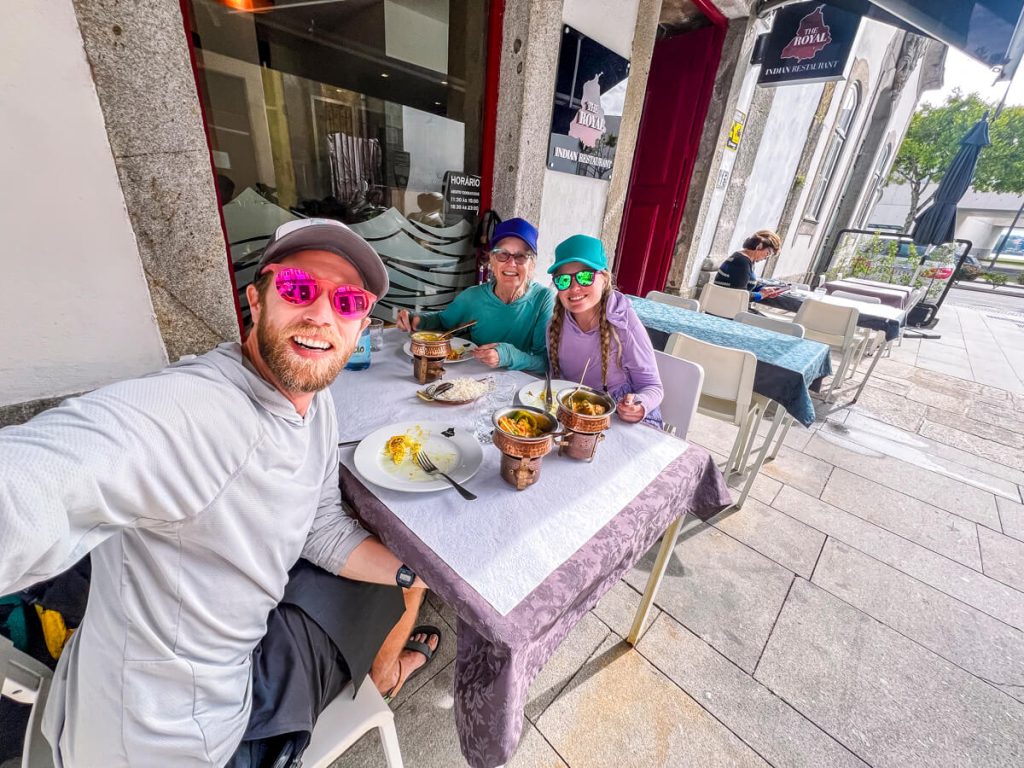
I’ve had great luck with Indian, Mediterranean, Italian, and, surprisingly, pizza places! You can often find plant-based versions of typical Spanish dishes in larger cities.
Check Uber Eats in Small Towns Near Larger Towns
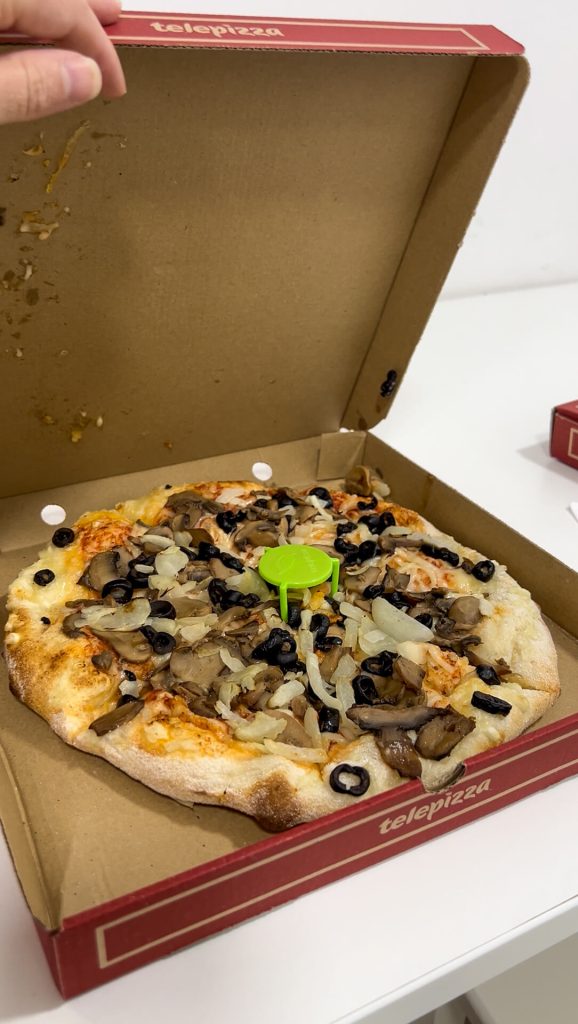
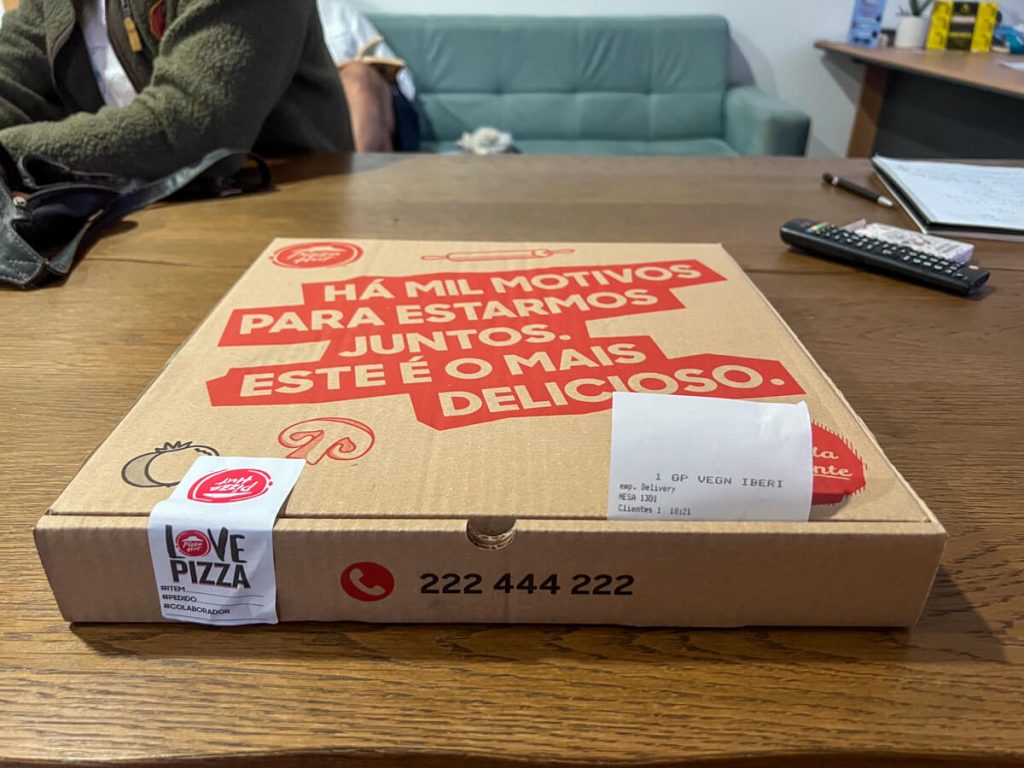
My newest trick to find food on the Camino is Uber Eats! It does not work everywhere, but I was surprised to see it available in and adjacent to larger towns.
I joined the free trial, and it helped significantly with delivery fees.
Sometimes, I used it in cities when the vegan food restaurants were farther than I wanted to walk for dinner.
Other times, I found it calming to stay in the albergues just before or after cities. There, I could often order pizza with vegan cheese straight to those albergues! Moreover, the pizza places frequently had deals only on the app, making it cheaper than in person. Both Telepizza and Pizza Hut had vegan pizza options!
In open honesty, I had one order come in completely wrong, and I had trouble getting help. Because I was using an e-SIM, I didn’t have SMS capabilities to verify my phone in the Uber Eats app. While the s-SIM worked great for everything else, it didn’t help me here. I opened a complaint in their help section. While they never responded, they refunded the cost of my order a few days later.
What You Think Should Be Vegan and is NOT
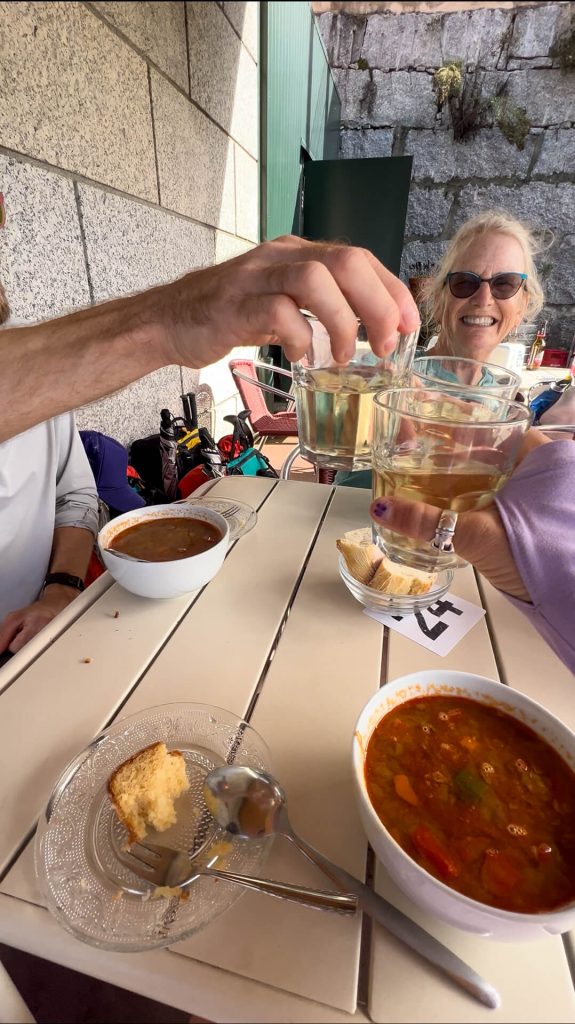
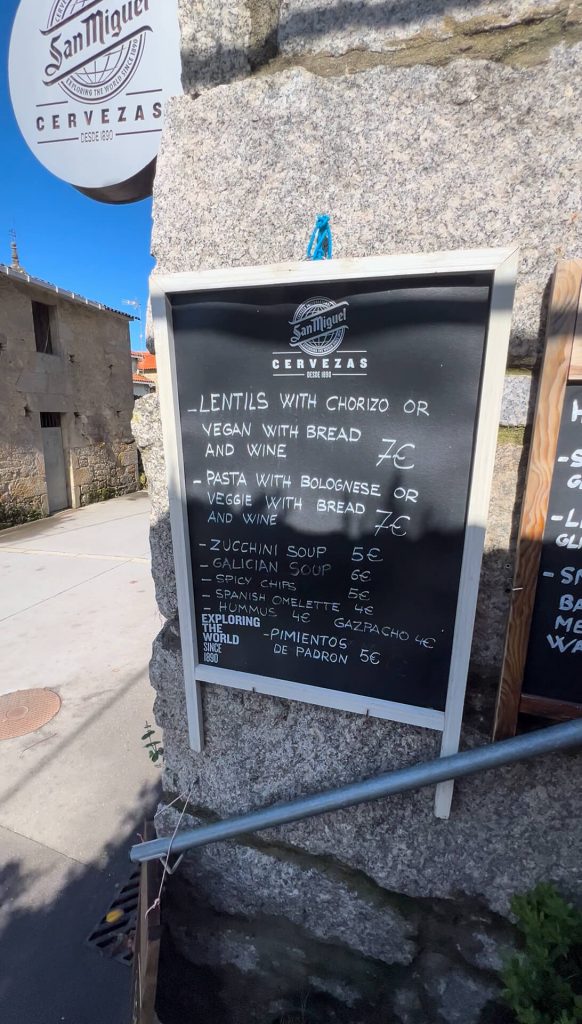
This section is for when you end up at a random restaurant or café, and it’s your only food option. Sometimes, this happens despite excellent planning because local restaurants and groceries can just be inexplicably closed.
While it’s fantastic when you do find a vegan pilgrim menu (pictured above), it’s infrequent.
When you look at the menu, some dishes that should be vegan will jump out at you, but they aren’t.
I speak enough Spanish that I can ask more specific questions about food on the Camino. I ask the same questions every time this happens, and these are the dishes that constantly come up.
Lentil Soup. Unless it states “vegan,” assume it’s not. Often, the Spanish make their lentils with meat. If they don’t make it with meat, they usually use meat or chicken broth.
You need to ask specifically, ¿Tiene carne? Does it have meat? ¿Estaba hecho con caldo de res o pollo? Is it made with beef or chicken broth?
Ensalada Mixta. Just because it’s a salad…it’s not necessarily vegan! You can order this, but ask for it without egg or tuna! Sometimes it has egg, sometimes it has tuna, and sometimes it has both. ¿Por favor, puedo tomar la ensalada mixta sin huevo ni atún? Please, can I have the ensalada mixta without egg or tuna?
Bocadillo Vegetal. This is like a veggie sub of sorts. However, it almost always includes fish, usually tuna. Before ordering, be sure to ask, ¿tiene pescado? If so, ask for ¿Por favor, puedo tomar un bocadillo vegetal sin pescado/atún?
Tostada Con Mermelada y Mantequilla. This one is easier. Even if it doesn’t say mantequilla (butter), ask for it sin mantequilla (without butter).
Ask These Questions When Ordering Plant-Based Food
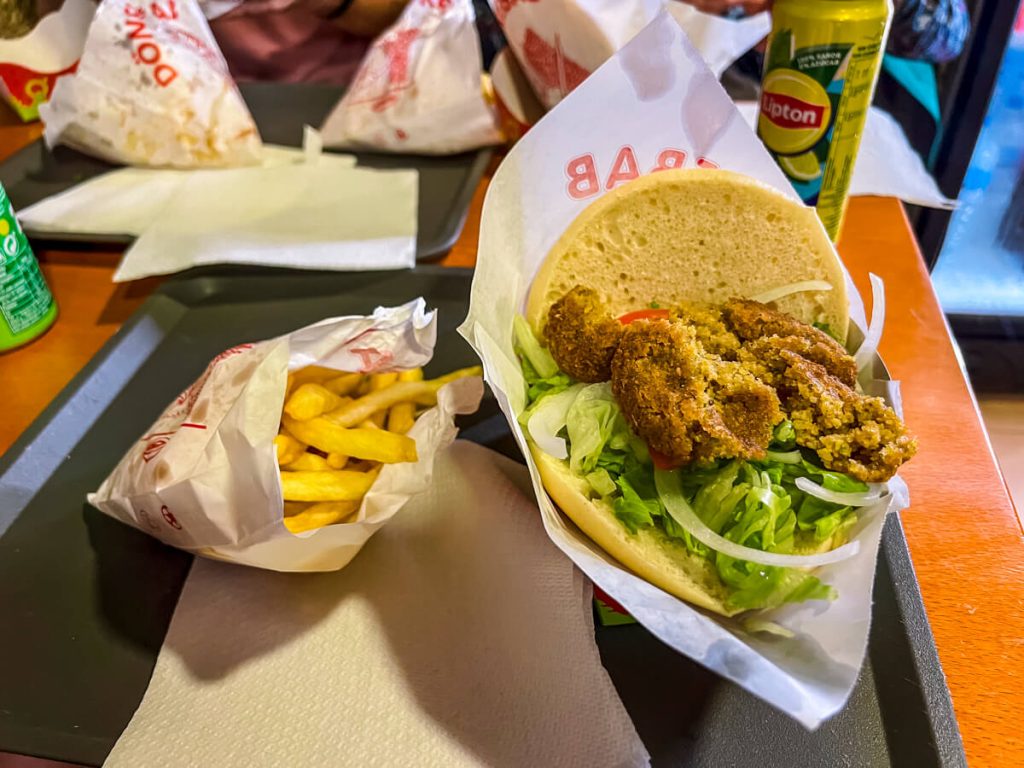
When ordering plant-based food on the Camino, always state that you’re vegan.
Soy vegana/vegano = I’m vegan
Remember, in rural Spain…that might not be enough. To many, they think that you just don’t eat red meat. You might have to explain more.
No como carne, pollo, pescado, huevos, mantequilla, ni leche. I don’t eat meat, chicken, fish, eggs, butter, nor milk.
I have actually said I’m allergic to those things to be taken seriously. Try to explain your diet without this, but it is a good last-ditch explanation. Soy alérgica/o a…. I’m allergic to…
Anytime you order soup, ask if it was cooked in beef or chicken broth. You’re looking for vegetable broth.
¿Estaba hecho con caldo de res o pollo? Was it made with beef or chicken broth?
¿Estaba hecho con caldo de verduras? Was it made with vegetable broth?
Another essential tool is the Google Translate app, which can translate photos of menus. This is helpful if you want to know any of the more obscure ingredients listed. I use it in grocery stores whenever I encounter a new ingredient.
Spain VS Portugal: Vegan Camino Options
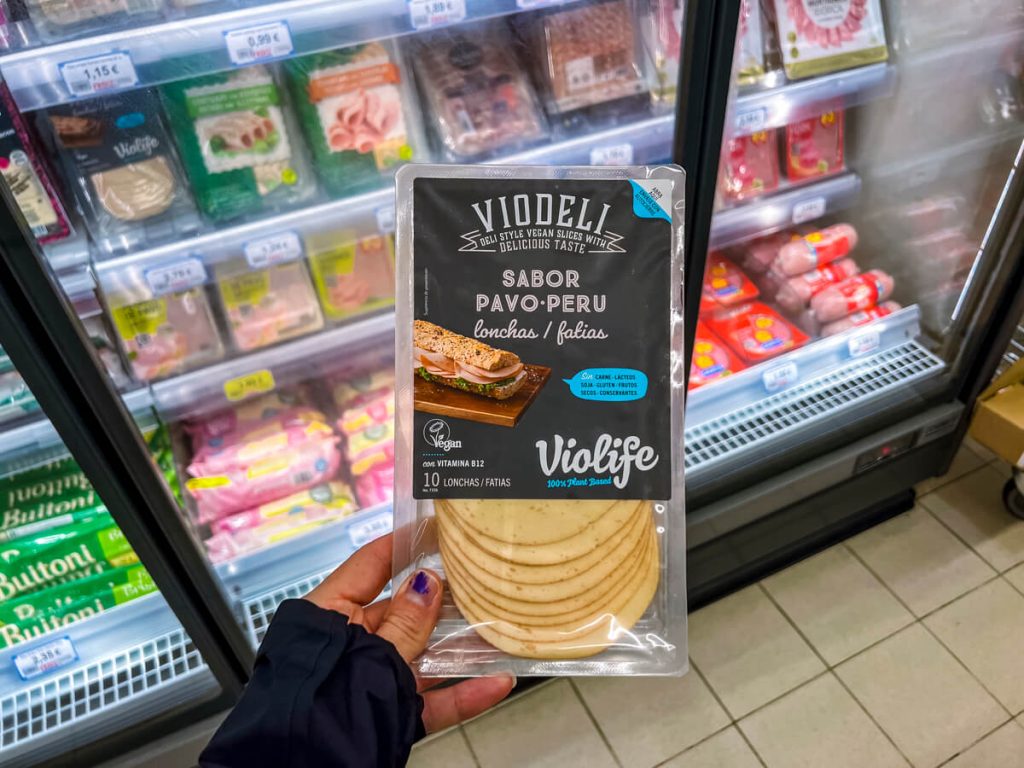
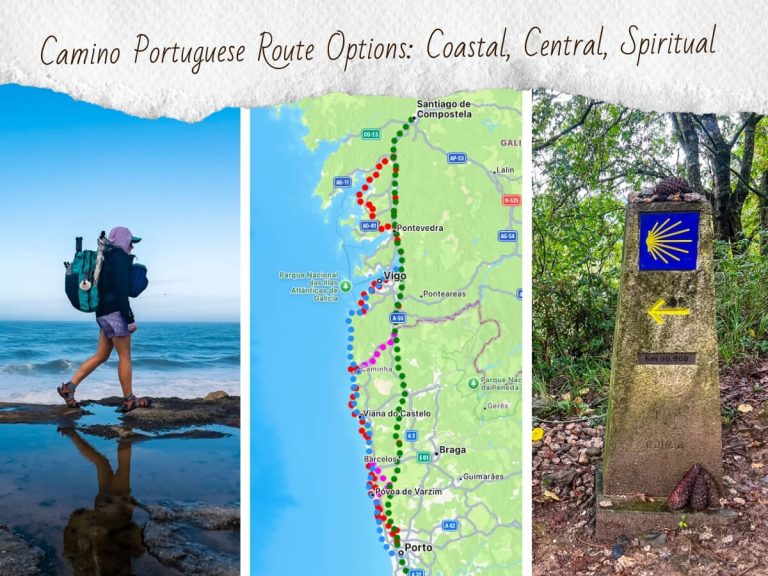
In my experience, Portugal had more vegan food on the Camino in both grocery stores and restaurant options than Spain.
Throughout the whole Portuguese Camino, every time I ordered something and said “I’m vegan,” I was understood. As soon as we crossed into Spain, I had to revert to asking a zillion questions before ordering.
This will depend on which Spanish Camino route you’re walking. However, expect to explain yourself more in Spain than in Portugal.
Grocery stores in Portugal that we had great luck finding plant-based food included Pingo Doce, Continental, and Intermarché Super. Sometimes the Meu Super was big enough to have good options as well.
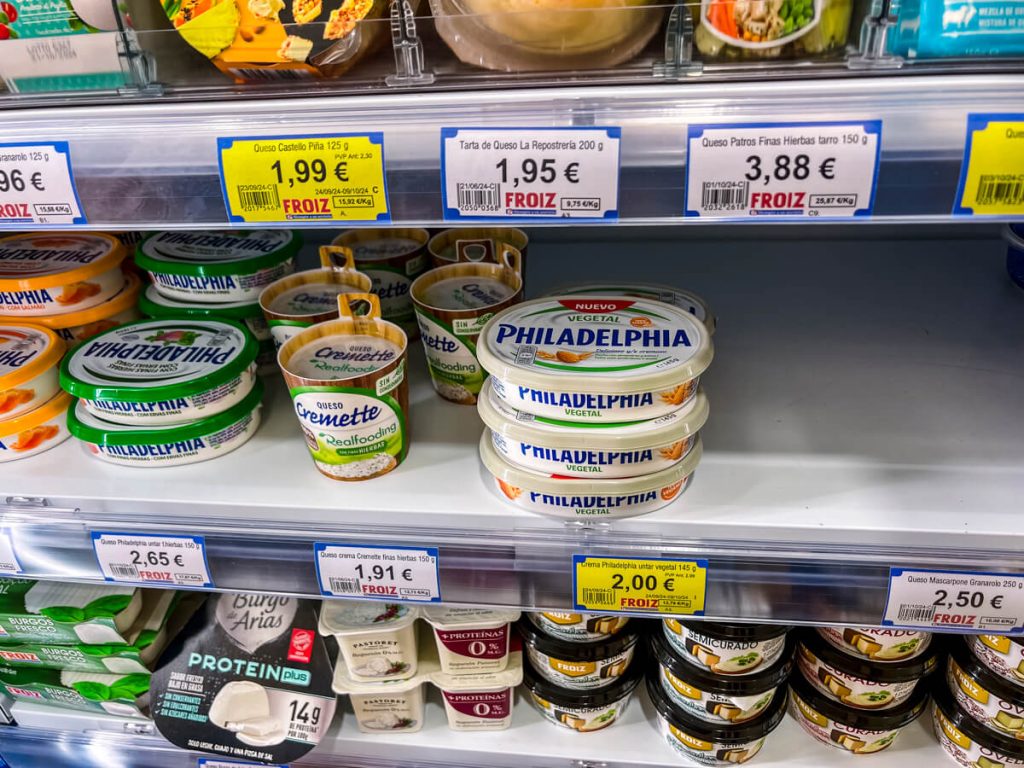
Grocery stores in Spain that we fairly consistently found to include plant-based options included Eroski, Supermercado Frioz, and Corte Inglés (big cities).
Overall, I found the Portuguese Camino more vegan-friendly than the Camino Frances, Camino del Norte, and Camino Primativo. However, the Camino Frances is so big now that vegan pilgrim menus are starting to become a thing.
Final Thoughts about Plant-Based Food on the Camino de Santiago
You can totally do the Caminos de Santiago on a plant-based diet. Like traveling anywhere, you’ll just need to do a little more research and planning. Instead of taking a nap and socializing in the albergues, take 30 minutes and figure out your food plan.
Plant-based food on the Camino exists more than you think it does…you have to find it. Sometimes you’ll need to get inventive, like we did in Rabaçal, by cooking potatoes and beans in the microwave.
Remember to use the grocery stores and pack some snacks along with you!
So many picnic-able spots on the Camino often go unused because others are afraid of carrying food. Be that person!
If you found a particularly great spot for vegans along the Camino, help others out by writing the town, restaurant/store, and which Camino it’s on in the comments!
📌 Pin it to Re-Read Before Your Plant-Based Camino!